
SpaceX Files S-1: A Step Towards Public Listing
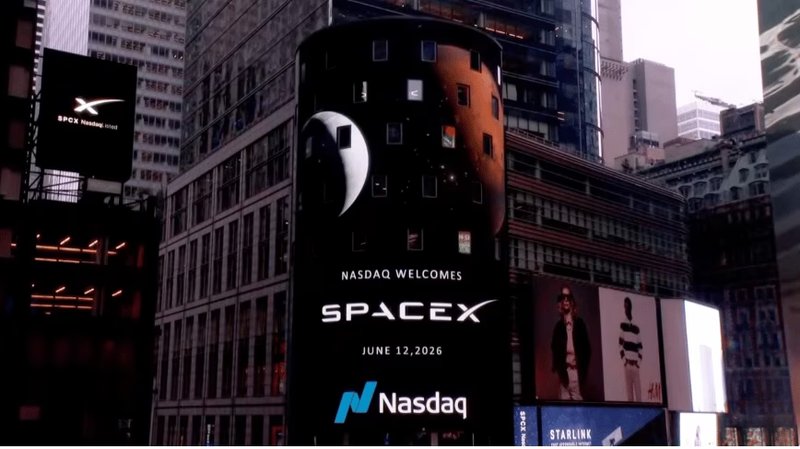
SpaceX has officially filed its S-1 form with the U.S. Securities and Exchange Commission (SEC), a crucial step that paves the way for a potential initial public offering (IPO). This move could mark a historic event in the financial landscape, with the possibility of SpaceX's IPO becoming the largest ever recorded. The listing is anticipated on Nasdaq, where the company will be identified by the ticker SPCX.
The S-1 filing is a critical document providing a detailed overview of a company's financial and operational status prior to its stock market listing. For investors and analysts, it represents the first opportunity to thoroughly examine the economic health and growth prospects of SpaceX, a company that has redefined the aerospace sector with its innovations in rocket reusability and satellite constellation development.
Key Figures from the Financial Prospectus
An analysis of the S-1 prospectus reveals several significant figures. SpaceX projects to achieve revenues of $18.7 billion by 2025, a figure that underscores the company's growth ambitions. However, the document also highlights a net loss of $4.27 billion recorded in the first quarter, accompanied by an accumulated deficit totaling $41.3 billion. These numbers offer a complex view of SpaceX's financial performance, balancing future growth projections with current operational challenges and the substantial investments required for its activities.
An interesting detail emerging from the balance sheet is the holding of cryptocurrency assets. At the end of the quarter, SpaceX owned 18,712 Bitcoin, with a total value estimated at $1.29 billion. This inclusion of Bitcoin on the balance sheet reflects a growing trend among large technology companies to diversify their cash reserves, although the volatility of cryptocurrencies introduces an additional element of risk into the company's overall valuation.
Context and Implications for the Tech Sector
While the details of SpaceX's S-1 filing primarily focus on financial and market aspects, the entry of a company of this magnitude into the public market can have broader implications for the entire technology ecosystem. Large market capitalizations and significant capital injections, such as those resulting from a successful IPO, can fuel investments in research and development in adjacent sectors, including artificial intelligence and the infrastructure required to support it.
For technical decision-makers, such as CTOs and infrastructure architects, the evolution of companies like SpaceX, while not directly related to Large Language Models or on-premise deployments, highlights the increasing interconnectedness between high-tech intensive sectors. The ability of these companies to attract massive capital could, in the future, translate into greater availability of resources for the development of advanced hardware, distributed computing solutions, or platforms for AI model Inference and training, indirectly influencing strategic choices related to Total Cost of Ownership (TCO) and data sovereignty.
Future Outlook and Nasdaq's Role
Anticipation for SpaceX's listing on Nasdaq under the ticker SPCX is high, not only for its direct financial impact but also for the signal it sends to the market. The ability of a company to innovate in complex sectors like space and attract large-scale investments is an indicator of confidence in technological progress.
While immediate attention focuses on the numbers and financial projections, the success of an IPO of this magnitude could unlock new investment and development opportunities across a wide range of emerging technologies. For the industry, this means a potential accelerator for innovation, even in areas not directly mentioned in the prospectus, but which benefit from a robust and well-funded technological ecosystem.






💬 Comments (0)
🔒 Log in or register to comment on articles.
No comments yet. Be the first to comment!