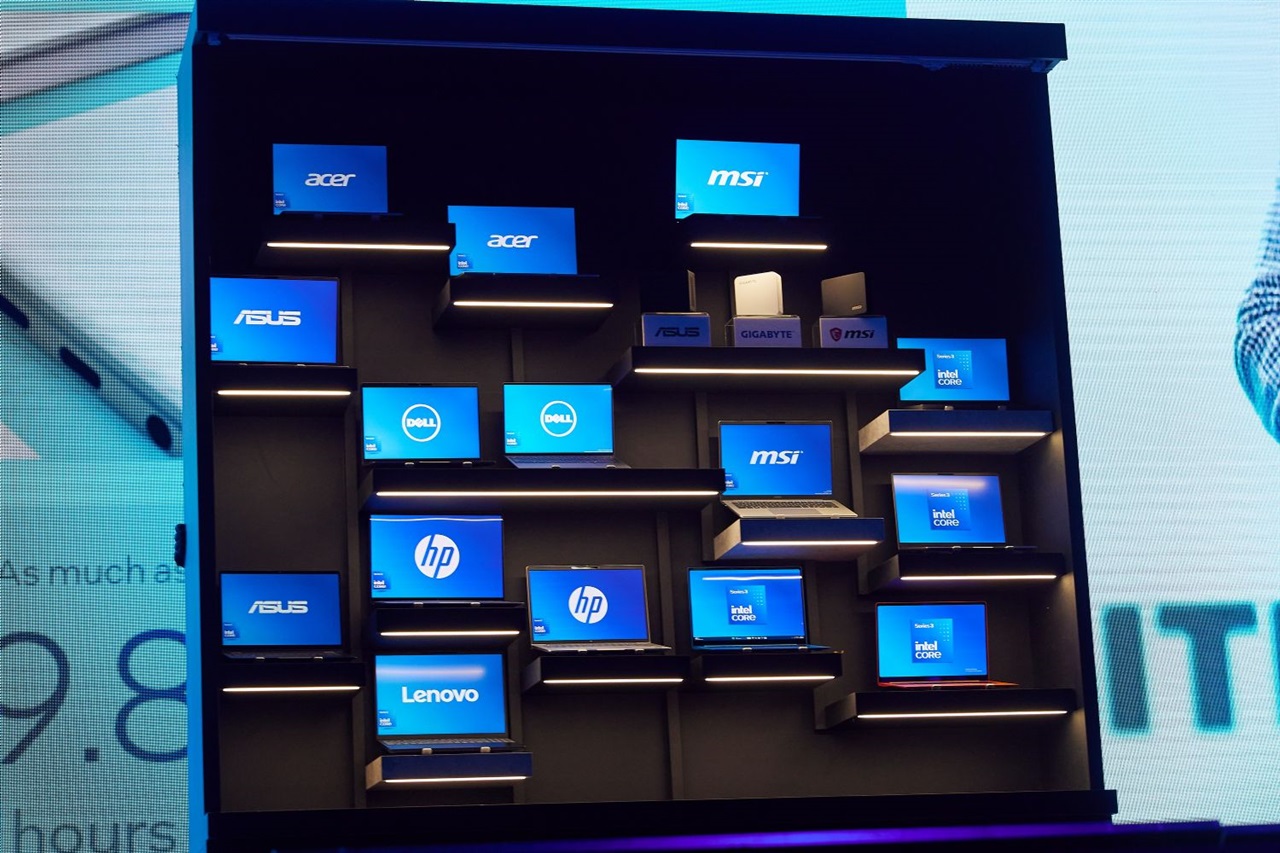
It's not just a matter of latency or privacy. For Multiverse Computing, moving artificial intelligence from remote servers to the devices we use every day is, above all, an economic choice. The Spanish software house is building a concrete argument: the cloud stampede is generating out-of-control bills, and on-device AI is a relief valve.
The thesis comes at a time when companies, after massively adopting cloud services for inference, are beginning to reckon with recurring costs that are far from negligible. Every call to a remote endpoint, every token processed on shared infrastructure, has a price that, as volumes grow, can become unsustainable. Multiverse Computing is not just pointing out the problem; it is proposing an alternative route: AI that runs locally, on smartphones, sensors, industrial PCs, gateways.
The core of the reasoning is Total Cost of Ownership. In the cloud model, the monthly or pay-per-use fee grows linearly (or more) with usage. On-device requires an upfront investment in capable hardware, but it zeroes out the operational costs tied to transmission and processing on third-party servers. It's a calculation that recalls the shift from leasing to ownership, with implications that are not only financial but also strategic, because data stays under the control of whoever generates it. In regulated sectors or where strict GDPR requirements apply, this shifts the center of gravity in deployment decisions.
Of course, running complex models on resource-constrained devices is not painless. It demands compression techniques, aggressive quantization, and optimized architectures. Multiverse Computing, active in quantum-inspired software, brings expertise that could help solve combinatorial optimization problems linked precisely to workload distribution. But beyond the individual company, the signal is clear: the industry is looking for a more sustainable equilibrium. Anyone evaluating on-premise deployment of LLMs today faces similar trade-offs — upfront investment versus operational costs, sovereignty versus convenience. Analytical frameworks exist, also on AI-RADAR, to navigate these choices, but no answer is universal.
The on-device approach does not erase the cloud, but it redraws its boundaries. The heaviest models and training remain the domain of data centers, while everyday inference can migrate to where it is really needed. It's a trend that speaks of market maturity: no longer just performance, but economic efficiency and autonomy. And if Spain, through Multiverse Computing, raises its voice in this debate, it means that the game is not just American or Chinese.







💬 Comments (0)
🔒 Log in or register to comment on articles.
No comments yet. Be the first to comment!