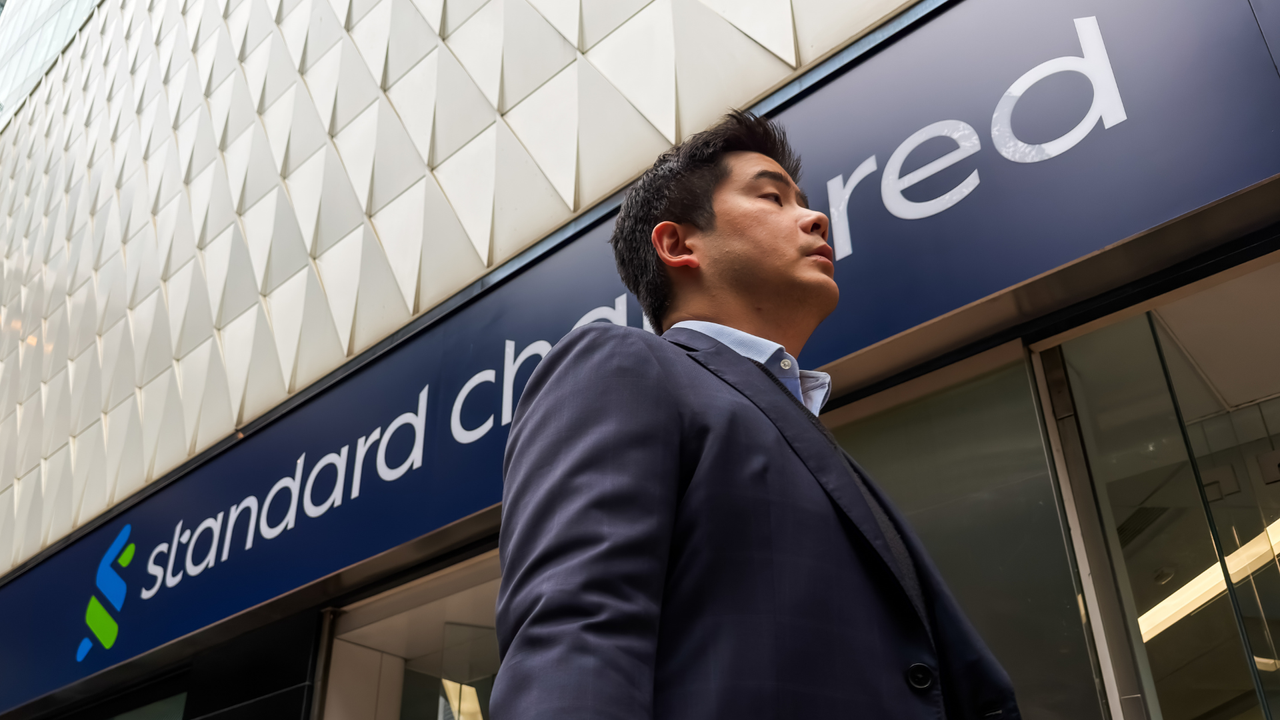
Standard Chartered and the AI Automation Push: A Signal for the Financial Sector
Standard Chartered, a leading global banking institution, has announced its intention to cut approximately 7,000 jobs. This decision is part of a broader strategy that sees the bank decisively focusing on automation and the adoption of artificial intelligence. The stated goal is to replace "lower-value human capital" with advanced technological solutions, reflecting a growing trend in the financial sector and beyond.
Standard Chartered's move highlights how AI integration is no longer a futuristic prospect but an operational reality that is redefining organizational structures and business strategies. For large enterprises, particularly those operating in regulated sectors like finance, AI adoption involves a series of complex considerations that go beyond mere technological implementation.
AI in Banking: Between Opportunities and Infrastructural Challenges
The application of artificial intelligence in the banking sector is vast and continuously expanding. From fraud management to back-office process optimization, and even customer interaction via Large Language Models (LLM)-powered chatbots, AI offers significant opportunities to improve efficiency and reduce operational costs. Robotic Process Automation (RPA) and predictive analytics are just some of the areas where these technologies can generate value.
However, implementing such systems requires a robust and well-planned infrastructure. Banks, as custodians of sensitive data, must adhere to stringent compliance and data sovereignty requirements. This often pushes them towards on-premise or hybrid deployment solutions, where control over data and infrastructure remains with the organization. Managing LLMs and other AI workloads in self-hosted environments implies the need for specific hardware, such as high-performance GPUs with ample VRAM, and an efficient model management pipeline for inference and fine-tuning.
Evaluating Total Cost of Ownership (TCO) and Deployment Choices
The decision to invest heavily in AI automation brings with it the necessity to carefully evaluate the Total Cost of Ownership (TCO) of these solutions. This includes not only initial hardware (CapEx) and software acquisition costs but also operational expenses (OpEx) related to power, cooling, maintenance, and the technical skills required to manage a complex AI infrastructure. For those evaluating on-premise deployment, there are significant trade-offs between the flexibility and scalability offered by the cloud and the control, security, and long-term cost predictability guaranteed by a self-hosted infrastructure.
Hardware specifications, such as the amount of VRAM available on GPUs, inference throughput, and latency, become critical factors in designing an efficient AI architecture. The choice between different deployment architectures, such as bare metal, Kubernetes-orchestrated containers, or hybrid solutions, depends on the company's specific needs in terms of scalability, security, and cost.
The Future of Work and Enterprise AI Strategies
Standard Chartered's strategy, while focused on cost reduction and efficiency, raises broader questions about the future of work and the transformation of required skills in the market. Automating repetitive and "lower-value" tasks frees up human resources that can be retrained for more strategic and creative roles, where human interaction and problem-solving abilities remain irreplaceable.
For companies embarking on similar paths, it is crucial to develop a holistic AI strategy that considers not only technological aspects but also organizational and human ones. The ability to manage and orchestrate complex AI workloads, often with air-gapped environment requirements for maximum security, will be a distinguishing factor. Standard Chartered's experience serves as a reminder for all enterprises: AI is here to stay, and its adoption requires deep reflection on infrastructure, costs, and human capital.






💬 Comments (0)
🔒 Log in or register to comment on articles.
No comments yet. Be the first to comment!