
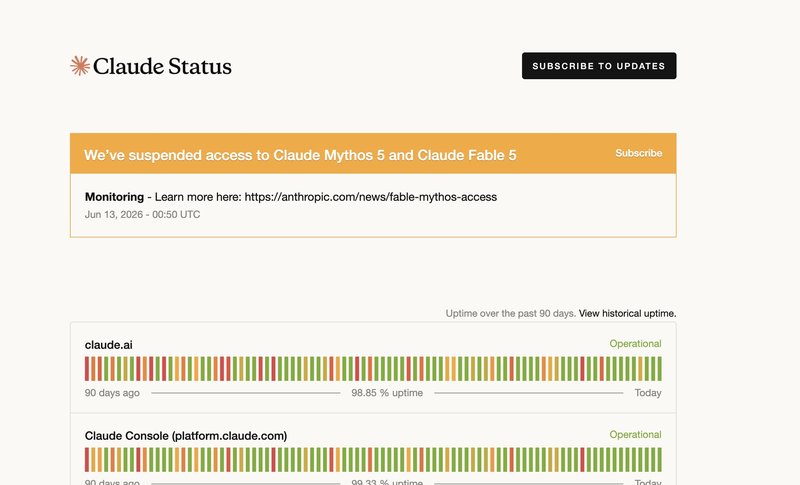
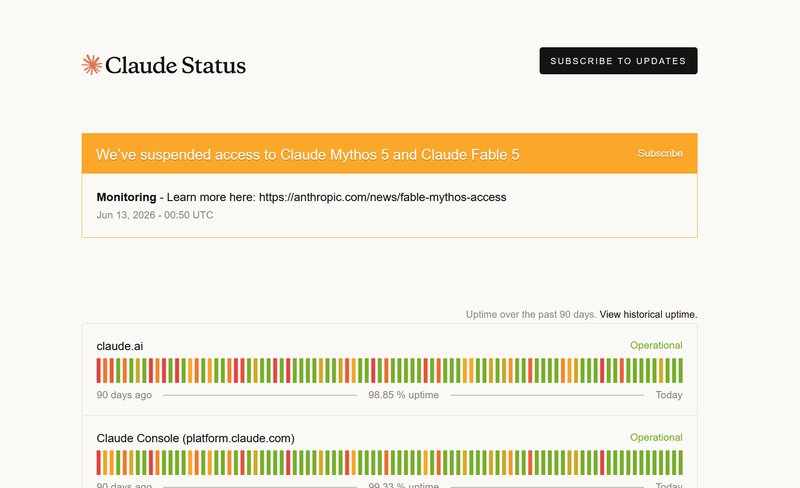
The news doesn’t come as a bolt from the blue, but as the long tail of a geopolitical earthquake: Asian startups are launching large language models (LLMs) that mimic the capabilities of the Mythos series, while the export ban holding Anthropic — and, by extension, the entire American ecosystem — in check shows no signs of resolution. These are not simple clones; the companies involved promise comparable performance with the strategic advantage of operating outside Washington’s jurisdiction.
Mythos: the silhouette of a contested model
We lack official details, but rumors circulating in the industry describe Mythos as an LLM with advanced reasoning capabilities and efficient token management, likely optimized for enterprise workloads. What matters in this game is its absence from the Asian market: US restrictions prevent Anthropic from exporting not just the model, but also the APIs and cloud infrastructure that support it. Startups in Beijing, Singapore, and Seoul have therefore seized the opportunity to fill a gap that analysts say could be worth billions of dollars.
The dynamic isn’t new: NVIDIA chips were already in the crosshairs of controls, and now software is next. In response, local labs are training LLMs on domestic hardware or on GPUs sourced through channels not yet blocked, applying quantization and fine-tuning techniques to approach American models’ performance with more limited resources.
The export ban as a sovereignty accelerator
For companies evaluating self-hosting, this market fragmentation is an unmistakable signal. On one hand, reliance on a US vendor under embargo carries a concrete risk of service disruption: IT teams planning on-premise deployment today must consider not only latency and TCO but also the geopolitical resilience of the supply chain. On the other, the emergence of local alternatives shifts the center of gravity of data sovereignty directly into the data centers of those choosing self-managed stacks.
It’s no coincidence that inference frameworks like vLLM and Ollama are rapidly integrating support for openly licensed models coming precisely from Asia. The message for CTOs is clear: the perimeter of “on-prem feasible” is expanding, but it demands a more sophisticated assessment that crosses technical metrics, compliance constraints, and export control scenarios.
AI-RADAR’s perspective
Those committed to on-premise LLMs know that no universal solution exists. The new Asian models certainly bring competition and potentially lower the barrier to entry for self-hosting in regions so far overlooked by the Palo Alto giants. Yet unknowns remain around documentation, auditing, and the update cycle: an immature ecosystem can erode cost benefits in the medium term.
AI-RADAR constantly monitors this front. The analytical tools available on the /llm-onpremise section help weigh trade-offs such as inference quality in INT8, VRAM consumption, or compatibility with existing orchestration pipelines. It’s not an invitation to pick one side or the other, but to do it with the right information.
The gap between the two worlds — on one side Washington’s hyper-controlled innovation, on the other the pragmatism of Asian startups — is set to widen. In the meantime, every delivery of a “Mythos-like” model is a small piece redrawing the map of enterprise AI.







💬 Comments (0)
🔒 Log in or register to comment on articles.
No comments yet. Be the first to comment!