Capital Injection for Green Steel
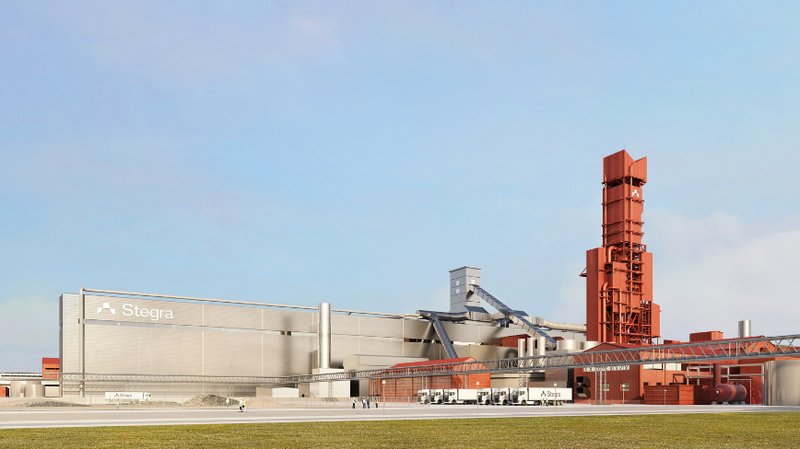
Stegra, the Swedish green-tech startup, has secured €1.4 billion in funding. This capital is earmarked to support the completion of its ambitious green steel plant, which, once operational, will be the largest of its kind globally. The facility is located in Boden, Sweden, and represents a significant step towards the decarbonization of the steel industry.
The agreement follows months of intense negotiations between Stegra, its investors, and lenders. The Swedish startup was seeking additional funds to realize its vision of a large-scale plant capable of producing steel with a drastically reduced carbon footprint compared to traditional methods.
The Consortium and the Path to Completion
The consortium that led this funding operation is spearheaded by the renowned Swedish business dynasty, the Wallenberg family, and also includes Temasek and IMAS. Stegra stated that the consortium will now assume a leading position within the company, emphasizing that the agreement was reached "in principle." The funding also received support from Stegra's existing shareholders, including Altor, Hy24, and Just Climate, demonstrating shared confidence in the startup's business model.
According to Henrik Henriksson, Stegra's CEO, this financing reflects the strong conviction in the company's business model among new and existing investors, as well as lenders. Henriksson highlighted that the operation was concluded in a very challenging macroeconomic environment, resulting from the joint efforts of all parties involved, including investors, banks, the Stegra team, and the extensive network of suppliers, customers, and local partners in Boden. Stegra now has a fully funded path to complete the construction and commissioning of its plant and plans to ramp up construction after a period of slowdown due to the fundraising process.
Implications for Industry and the Role of Technology
Industrial projects of this magnitude, such as Stegra's plant, represent not only an innovation in the manufacturing sector but also a potential fertile ground for the integration of advanced technologies. Although the source does not specify Stegra's use of artificial intelligence or Large Language Models (LLM), it is common practice for modern infrastructures of this complexity to benefit from AI systems for process optimization, predictive maintenance, supply chain management, and quality control.
For CTOs, DevOps leads, and infrastructure architects evaluating the implementation of such solutions in industrial contexts, crucial considerations emerge. The choice between an on-premise deployment or cloud-based solutions for AI/LLM workloads depends on factors such as data sovereignty, compliance requirements, Total Cost of Ownership (TCO), and specific hardware requirements, such as GPU VRAM for inference or training. AI-RADAR offers analytical frameworks on /llm-onpremise to support the evaluation of these trade-offs, ensuring that decisions are based on concrete constraints rather than generic recommendations.
Future Prospects and Industry Challenges
Stegra's success in securing this funding is a positive signal for the green steel sector and the global energy transition. The ability to attract significant capital, even in an uncertain economic environment, underscores the growing importance attributed to sustainable industrial solutions. Green steel is fundamental for reducing carbon emissions in one of the most energy-intensive and polluting sectors.
The completion of the Boden plant will not only position Stegra as a leader in this emerging segment but will also provide a model for future low-emission industrial initiatives. Challenges remain, from technological scalability to managing a complex supply chain, but the capital injection provides Stegra with the stability needed to overcome these obstacles and complete its pioneering project.





💬 Comments (0)
🔒 Log in or register to comment on articles.
No comments yet. Be the first to comment!