The Evolution of AI Infrastructure: Liquid Cooling and CPO
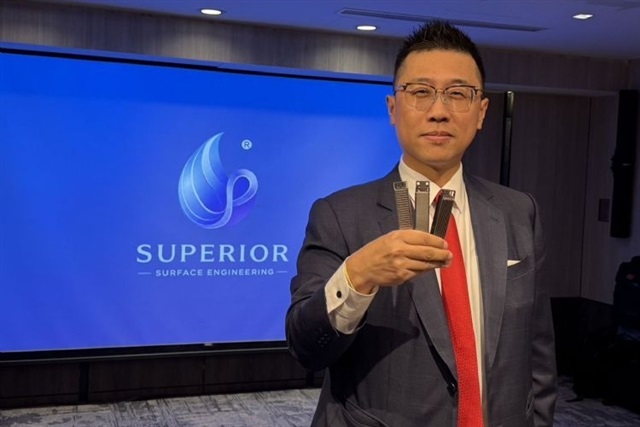
Superior Plating Technology has announced the integration of AI liquid cooling systems and Co-Packaged Optics (CPO) technologies into its infrastructure. This decision underscores an increasingly common strategic direction in today's technological landscape, where power and heat management, alongside connectivity efficiency, have become absolute priorities for sustaining intensive artificial intelligence workloads.
The exponential growth of Large Language Models (LLM) and other complex AI models demands unprecedented computing power. This translates into an increase in the density of hardware components, such as GPUs and accelerators, within data centers. Consequently, the challenges related to heat dissipation and high-speed data transmission intensify, pushing companies to explore innovative solutions beyond traditional air cooling and connectivity methods.
The Role of Liquid Cooling in AI Workloads
Liquid cooling represents an effective response to the growing thermal demands of modern AI systems. Unlike air cooling, which struggles to dissipate the heat generated by high-power chips like latest-generation GPUs (e.g., NVIDIA H100 or AMD Instinct MI300 series), liquid solutions can remove heat directly from the source. This includes approaches such as direct-to-chip cooling or full immersion cooling.
The benefits are manifold: greater operational stability, the ability to increase compute density per rack, and an overall improvement in data center power usage effectiveness (PUE). For on-premise deployments, adopting liquid cooling means being able to host more powerful and compact AI infrastructures, reducing physical footprint and long-term operational costs associated with energy consumption and climate control.
Co-Packaged Optics: A Leap in Connectivity Efficiency
Alongside cooling, connectivity efficiency is another crucial pillar for AI. Co-Packaged Optics (CPO) represent a significant innovation in this area. This technology integrates optical transceivers directly into the same package as the processing chip (such as CPU, GPU, or ASIC), rather than using external pluggable optical modules. This proximity drastically reduces the distance traveled by electrical signals, minimizing losses and power consumption.
For AI workloads, where low-latency, high-bandwidth communication between GPUs is fundamental for distributed training and large-scale inference (often via interconnects like NVLink or InfiniBand), CPO offers substantial advantages. They improve throughput, reduce latency, and significantly decrease overall interconnection power consumption, contributing to a more favorable TCO and greater operational sustainability.
Implications for On-Premise Deployments and Data Sovereignty
The joint adoption of liquid cooling and Co-Packaged Optics by companies like Superior Plating Technology highlights a clear trend towards building increasingly high-performance and efficient on-premise AI infrastructures. These technologies are key enablers for organizations that wish to maintain complete control over their data and models, ensuring sovereignty, compliance, and security in air-gapped or hybrid environments.
The ability to manage intensive AI workloads locally, with efficiency comparable to or superior to cloud solutions, offers a strategic advantage. While the initial investment (CapEx) can be significant, long-term savings on operational costs (OpEx) related to energy, cooling, and connectivity, combined with the benefits of control and privacy, make these infrastructure choices increasingly attractive to technical decision-makers. For those evaluating on-premise deployments, there are trade-offs that AI-RADAR explores in detail on its analytical frameworks available at /llm-onpremise.







💬 Comments (0)
🔒 Log in or register to comment on articles.
No comments yet. Be the first to comment!