The Strategic Post-Acquisition Integration
The acquisition of Ansys by Synopsys marks a significant moment in the electronic design and simulation landscape. With the transaction now complete, Synopsys has promptly initiated the process of merging the two entities' technology stacks. This phase is crucial for realizing the synergies promised by the acquisition and for offering a unified solution to customers.
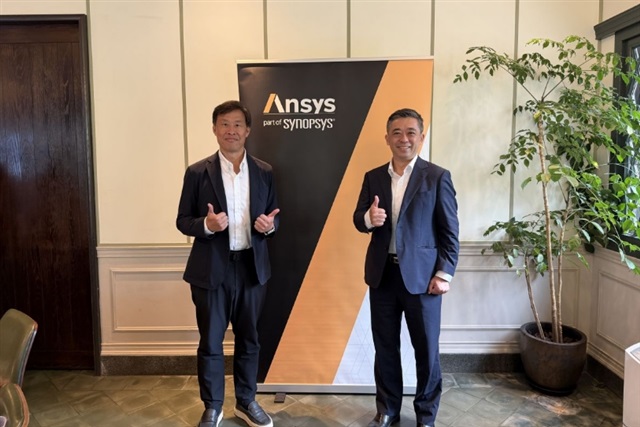
The decision to integrate the stacks is not merely technical but strategic. Roger Lee, Ansys Taiwan country manager, and Benson Wei, Ansys senior director of applications engineering, represent key figures in this process, highlighting the importance of a smooth and well-orchestrated transition to maintain operational continuity and innovation.
Technical Details and Workflow Implications
The merger of two complex technology stacks, such as those of Synopsys and Ansys, involves integrating diverse software architectures, data models, user interfaces, and development methodologies. The goal is to create a more cohesive ecosystem that can support end-to-end workflows, from chip design to physical simulation and verification.
For companies operating with intensive workloads, such as the development of Large Language Models (LLM) or advanced hardware design, the availability of integrated tools can significantly reduce friction and improve efficiency. This is particularly true for self-hosted or bare metal deployments, where Framework compatibility and interoperability are essential for optimizing performance and resource management, such as the VRAM of GPUs dedicated to Inference or training.
Strategic Context, TCO, and Data Sovereignty
The integration of stacks can have a direct impact on the Total Cost of Ownership (TCO) for client companies. A unified offering can simplify license management, reduce the need for custom integrations, and optimize technical support. This translates into potential savings and greater operational agility.
For organizations prioritizing data sovereignty and compliance, especially in air-gapped environments or with stringent regulatory requirements, software tool cohesion is fundamental. For those evaluating on-premise deployments of complex solutions, integrating diverse stacks presents unique challenges and opportunities, often analyzed through specific frameworks for TCO and data sovereignty assessment. The ability to keep data and processes within one's own infrastructure perimeter is a critical selection factor.
Future Prospects and Integration Trade-offs
The success of this integration will depend on Synopsys's ability to harmonize the different product and development philosophies while maintaining the innovation and quality that have characterized Ansys. Trade-offs include the technical complexity of the operation, the potential impact on existing customers during the transition, and the need for significant investments in research and development.
In a rapidly evolving market, where the demand for artificial intelligence solutions and advanced simulation is constantly growing, an integrated offering can position Synopsys as an even more dominant player. However, the challenge will be to balance innovation with stability, ensuring that the benefits of integration outweigh the inevitable complexities.







💬 Comments (0)
🔒 Log in or register to comment on articles.
No comments yet. Be the first to comment!