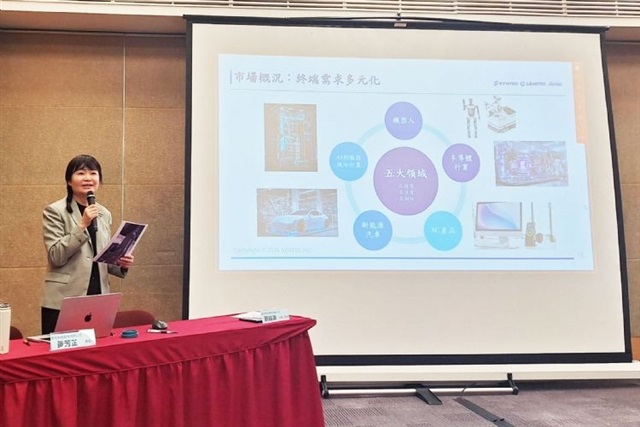
AI as a Growth Engine for Industrial Automation
Syntec Technology has announced an exceptional financial performance, achieving record profits. This success is largely attributable to the surge in demand for industrial automation solutions, a sector undergoing profound transformation thanks to the integration of artificial intelligence. The news underscores how AI is no longer a niche technology but a crucial enabling factor for operational efficiency and competitiveness in manufacturing.
The adoption of AI in factories ranges from optimizing production processes to predictive maintenance, from automated quality control to advanced robotics. These systems often require high processing capabilities and low latency, characteristics that steer many companies towards on-premise or edge deployment solutions. Syntec's ability to capitalize on this trend reflects a broader market evolution, where businesses seek to leverage AI to improve productivity and reduce operational costs.
On-Premise AI and the Challenges of Automation
Integrating artificial intelligence into industrial automation raises significant questions regarding the necessary infrastructure. For critical applications, such as real-time machine control or the analysis of sensitive production data, on-premise deployment offers distinct advantages. It ensures greater data sovereignty, reduces latency, and allows for stricter security control, all fundamental aspects in industrial environments.
Companies implementing AI-based automation solutions must carefully consider the hardware for Inference and model training. This includes selecting GPUs with adequate VRAM, processing power, and network connectivity to handle large volumes of data generated by sensors and machines. The need to process data locally, often in air-gapped environments, makes self-hosted architectures a preferred choice for many industry operators.
Implications for TCO and Data Sovereignty
The decision to adopt on-premise AI automation solutions has a direct impact on the Total Cost of Ownership (TCO). While the initial investment in hardware and infrastructure can be significant, long-term benefits may include predictable operational costs, greater data control, and regulatory compliance. In-house management of AI infrastructure allows companies to maintain full ownership and control of their data, a crucial aspect for protecting intellectual property and complying with privacy regulations.
Furthermore, the ability to customize Large Language Models (LLM) or other AI models through Fine-tuning with proprietary data, without the need to transfer them to external cloud service providers, strengthens companies' competitive position. This approach minimizes the risks associated with third-party dependency and offers the flexibility needed to quickly adapt AI capabilities to changing production requirements.
Future Prospects for AI in Industry
Syntec Technology's success is a clear indicator of AI's growth trajectory in the manufacturing sector. As AI technologies become more mature and accessible, the demand for solutions that can be efficiently integrated into existing production environments will continue to grow. This will drive innovation not only in software Frameworks but also in dedicated hardware, with an increasing emphasis on energy efficiency and performance for specific workloads.
For organizations evaluating the deployment of AI systems for automation, it is crucial to consider the trade-offs between cloud and self-hosted solutions. AI-RADAR offers analytical Frameworks on /llm-onpremise to help assess these aspects, providing tools for an in-depth analysis of infrastructural requirements, costs, and data sovereignty implications. The future of industrial automation will be increasingly shaped by AI, with a growing focus on resilience, security, and local control.






💬 Comments (0)
🔒 Log in or register to comment on articles.
No comments yet. Be the first to comment!