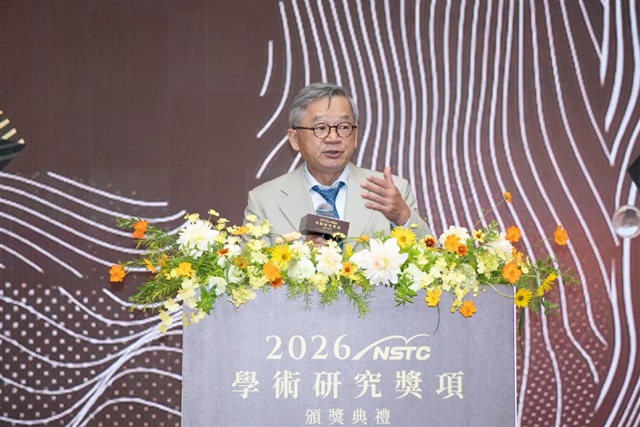
Taiwan Aims for Multimodal AI Development with National Task Force
The National Science and Technology Council (NSTC) of Taiwan has announced the formation of a strategic task force, with the primary objective of leading the development of multimodal AI foundation models. This initiative, under the guidance of Minister Cheng-Wen Wu, marks a significant step for the island in strengthening its position within the global AI landscape. The move reflects a growing awareness of the strategic importance of owning and controlling fundamental artificial intelligence technologies.
Multimodal AI models represent an advanced frontier in artificial intelligence, capable of processing and understanding information from various modalities, such as text, images, audio, and video. This capability makes them extremely versatile for a wide range of applications, from robotics to medical diagnostics, content creation to cybersecurity. The development of such models requires massive investments in research, talent, and, crucially, cutting-edge computational infrastructure.
The Strategic Context and Technological Challenges
The establishment of a national task force for the development of multimodal foundation models underscores the importance Taiwan places on technological sovereignty. Many nations are recognizing that reliance on models developed elsewhere can entail risks in terms of data security, algorithmic control, and alignment with specific cultural values. A local initiative allows for maintaining control over the entire model lifecycle, from the training phase to Deployment.
From a technical perspective, creating multimodal foundation models is a complex undertaking. It requires access to enormous, diverse datasets and the availability of high-performance computing hardware, particularly GPUs with large amounts of VRAM and high-Throughput interconnections. Training these models can take months or years, consuming significant amounts of energy and resources. The challenge is not only technological but also economic, considering the Total Cost of Ownership (TCO) of such infrastructures.
Implications for On-Premise Deployment
For organizations and national infrastructures, the development and Deployment of such critical AI models raise fundamental questions regarding the choice between cloud and self-hosted solutions. A national initiative like Taiwan's tends to favor an on-premise or hybrid approach to ensure maximum data sovereignty and control over the entire AI pipeline, from training to Inference. This is particularly relevant for sensitive sectors such as defense, finance, or healthcare, where compliance and security are absolute priorities.
On-premise Deployment of LLMs and multimodal models offers advantages in terms of hardware customization, performance optimization for specific workloads, and direct management of long-term operational costs. Although the initial investment (CapEx) can be high, the TCO may prove lower than recurring cloud costs for intensive and persistent workloads. For those evaluating on-premise Deployment, AI-RADAR offers analytical frameworks on /llm-onpremise to assess the trade-offs between control, performance, and cost, considering factors such as GPU availability, network latency, and scalability requirements.
Future Prospects and Taiwan's Role in Global AI
Taiwan's commitment to developing multimodal foundation models positions the island not only as a key manufacturing hub for silicio but also as a significant player in the creation of advanced artificial intelligence. This strategy could foster the emergence of a robust local AI ecosystem, stimulating innovation and the creation of new applications based on these technologies.
Future challenges will include attracting and training specialized talent, managing the enormous energy demand, and the ability to compete with global technology giants. However, the coordinated approach through a national task force can provide the necessary direction and resources to overcome these obstacles, solidifying Taiwan's role as a pioneer in the era of multimodal AI.








💬 Comments (0)
🔒 Log in or register to comment on articles.
No comments yet. Be the first to comment!