
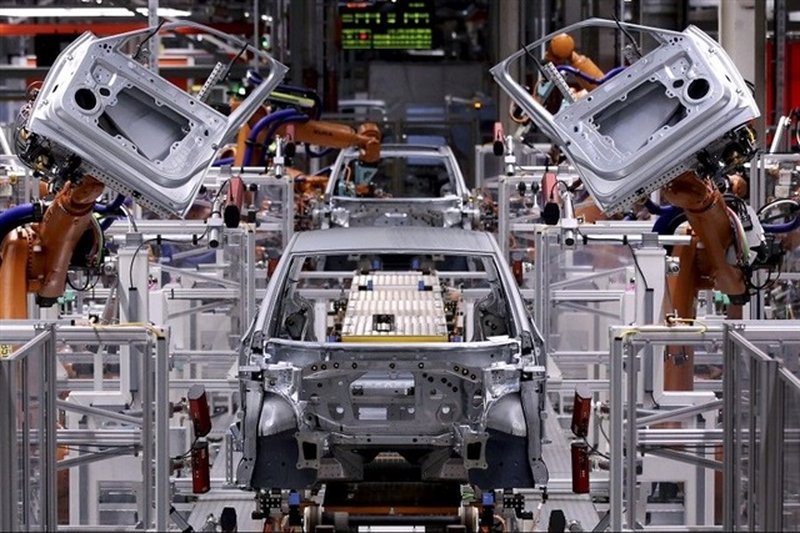
Taiwan and Japan have decided to step up their cooperation on end-of-life vehicle recycling, aiming to turn an environmental obligation into new circular economy opportunities. The move, reported by international press, strengthens a path already taken by both countries, which can count on complementary industrial skills: advanced dismantling and recovery processes on the Japanese side, and the refining and reinsertion capabilities typical of Taiwan’s manufacturing ecosystem.
The news is not just about the automotive sector. If we shift our gaze to what happens in data centers and inference racks, the topic of recycling touches raw nerves. Chips, graphic cards, memory modules: the hardware that today powers Large Language Models and self-hosted stacks contains rare earths, precious metals and composite materials whose extraction carries mounting environmental and geopolitical costs. The Taiwan-Japan partnership shows that it’s feasible to build regional recovery chains, reducing reliance on single suppliers while improving the sustainability profile of entire value networks.
For those operating on-premise, the lesson is immediate. When an organization chooses to keep inference on its own machines, it must consider the full component lifecycle, not just throughput benchmarks or the VRAM on offer at the time of purchase. Total Cost of Ownership also spans disposal and potential material recovery — a dimension that European ecodesign regulations are making increasingly binding.
The hidden weight of GPUs in the circular balance
Training and inference for ever-larger models push computational loads toward cutting-edge GPUs, often replaced after two or three years to keep up with framework evolution and latency requirements. This turnover generates significant volumes of retired equipment, whose management remains opaque in many jurisdictions. The example set by Taiwan and Japan suggests that cross-border partnerships, backed by public incentives and shared environmental targets, can create secondary markets for strategic metals like tantalum, cobalt and rare earths for high-performance magnets.
This is no footnote for IT decision-makers. The availability of recycled materials stabilizes prices in supply chains otherwise subject to shocks, with a direct impact on the CapEx of on-premise infrastructure. Moreover, framework agreements with hardware vendors could include take-back and recycling clauses, following the model already tested in the automotive industry. If standardized, such an approach would help companies report on ESG goals without relying entirely on hard-to-verify offsets.
The closer ties announced by the two Asian governments, however removed from the world of servers, point in a clear direction: circularity is not an added cost but a competitive lever. For those designing local LLM deployments or inference pipelines, embedding this variable into hardware selection criteria may tip the balance when negotiating renewals and expansions in the years ahead.






💬 Comments (0)
🔒 Log in or register to comment on articles.
No comments yet. Be the first to comment!