Introduction
Geopolitical dynamics and security requirements are reshaping global supply chains, particularly within the semiconductor industry. A significant example emerges from the drone sector, where major manufacturers are actively seeking alternatives to their dependence on China for chip procurement. In this scenario, Taiwan is positioning itself as a key player, offering a path towards diversification and continuity assurance.
This transition is not merely a logistical matter but reflects a broader risk mitigation strategy. Companies aim to strengthen the resilience of their operations, ensuring that critical components for their products, especially those incorporating advanced artificial intelligence functionalities, originate from sources considered stable and reliable.
The Role of Chips in AI for Drones and Edge Challenges
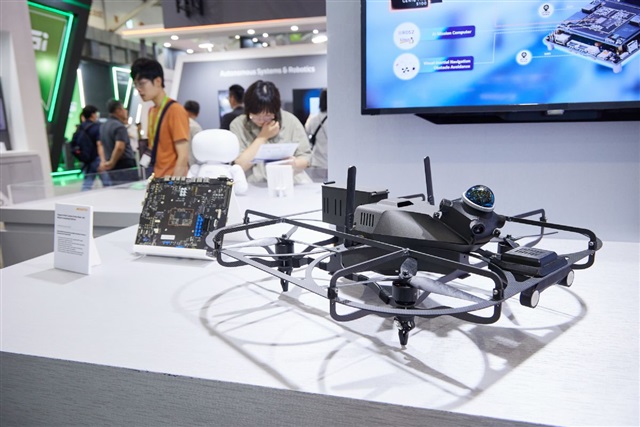
Modern drones are increasingly reliant on artificial intelligence capabilities for crucial functions such as autonomous navigation, real-time image analysis, and flight management. These tasks demand specialized chips, often with stringent requirements for computing power, energy efficiency, and size. The ability to perform AI Inference directly on the drone's hardware, i.e., at the edge, is fundamental for reducing latency and operating in environments with limited or no connectivity.
The choice of silicon for these applications is not trivial. It requires careful evaluation of hardware specifications, such as the available VRAM for AI models, processing capacity in tokens per second, and overall power consumption. For CTOs and infrastructure architects designing AI solutions, the availability of high-performance and reliable chips from secure supply chains becomes a critical factor for the success of edge deployments.
Data Sovereignty and Supply Chain Security
The decision to shift supply chains goes beyond mere economic efficiency. For companies operating with sensitive data or in regulated sectors, data sovereignty and the security of the entire supply chain are absolute priorities. This includes not only where data is processed or stored but also the origin and integrity of the hardware components upon which these processes rely. A chip from an unverified source could pose a security risk, compromising the reliability of the entire system.
For on-premise or air-gapped deployments, where total control over the infrastructure is a non-negotiable requirement, the provenance of silicon takes on even greater importance. The ability to trace and validate the origin of hardware components is essential for ensuring compliance and mitigating potential vulnerabilities. This approach aligns perfectly with the AI-RADAR philosophy, which emphasizes control and security in deployment decisions.
Implications for TCO and Future Deployment Strategies
Supply chain diversification, while potentially entailing higher initial costs or logistical complexities, can lead to a more favorable TCO (Total Cost of Ownership) in the long run. The reduction of geopolitical risks, greater stability in procurement, and assurance of component integrity contribute to minimizing disruptions and unforeseen costs. For companies investing in AI infrastructure, supply chain resilience is a key factor for the sustainability and scalability of their projects.
This trend suggests that decisions regarding hardware and its origin will become increasingly strategic. Organizations will need to balance performance, cost, and security, carefully evaluating the trade-offs. For those considering on-premise deployments, AI-RADAR offers analytical frameworks at /llm-onpremise to evaluate these trade-offs, providing tools to make informed decisions that prioritize data sovereignty, control, and TCO.








💬 Comments (0)
🔒 Log in or register to comment on articles.
No comments yet. Be the first to comment!