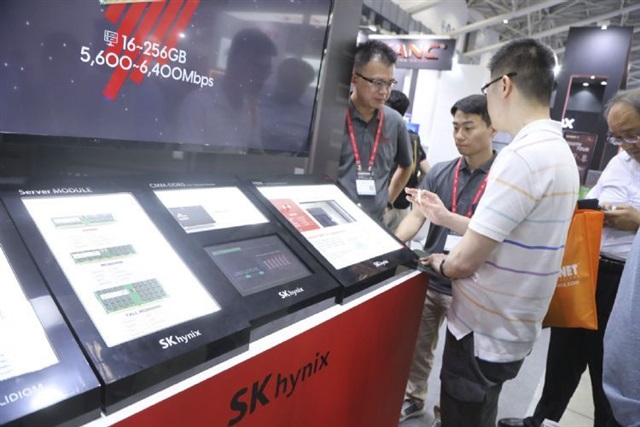
Taiwan's Exports Hit Record $80 Billion, Driven by AI Demand
Taiwan's monthly exports have exceeded the US$80 billion mark for the first time, a historic achievement that underscores the growing influence of artificial intelligence on the global economy. This significant increase is primarily attributable to the surge in demand for AI-related components and technologies, positioning Taiwan at the center of a technological transformation that is redefining international supply chains.
The data, reported by DIGITIMES, highlights how the push towards enterprise-level AI adoption is generating a wave of demand for specialized hardware, from advanced silicio to high-performance graphics cards. For companies evaluating on-premise deployment strategies for their AI workloads, this trend has direct implications for costs, component availability, and long-term infrastructure planning.
Taiwan's Role in the AI Supply Chain
Taiwan has established itself as an indispensable player in the global technology ecosystem, particularly for the production of semiconductors and advanced electronic components. Companies based on the island are world leaders in chip manufacturing, including those essential for accelerating Large Language Models (LLM) workloads and other artificial intelligence applications. This technological leadership makes Taiwan a crucial hub for the supply of high-performance silicio, indispensable for the inference and training of complex AI models.
Taiwanese manufacturing capacity is critical to meeting the global demand for GPUs, VRAM, and other critical components. The increase in exports reflects not only the island's industrial strength but also the global market's reliance on this production capacity. For CTOs and infrastructure architects, understanding this dynamic is essential for mitigating supply chain risks and ensuring the availability of necessary hardware for their AI projects.
Implications for On-Premise Deployments
The strong demand for AI components, which has pushed Taiwanese exports to record levels, has a direct impact on on-premise deployment decisions. Companies opting for self-hosted solutions must navigate a hardware market where availability can be limited and prices subject to fluctuations. This scenario makes Total Cost of Ownership (TCO) analysis even more critical, including not only the initial purchase cost (CapEx) but also long-term operational expenses such as energy consumption and maintenance.
Strategic planning therefore becomes fundamental. For those evaluating on-premise deployments, it is crucial to consider hardware lead times, scalability options, and the resilience of their infrastructure. The choice between purchasing proprietary hardware and using cloud services for AI is increasingly influenced by these market dynamics, with data sovereignty and control over the execution environment remaining decisive factors for many organizations. AI-RADAR offers analytical frameworks on /llm-onpremise to evaluate these trade-offs in a structured manner.
Future Outlook and Challenges
The current boom in Taiwanese exports, fueled by AI demand, suggests a sustained growth trajectory for the sector. However, this reliance on a single region for such critical components also raises questions about the resilience of the global supply chain. Companies will need to continue to closely monitor market dynamics and, where possible, diversify their sourcing.
The race for AI shows no signs of slowing down, and Taiwan's ability to keep pace with innovation and production will be crucial for the sector's evolution. For technology decision-makers, this means navigating a complex environment, balancing the need for high performance with the necessity of control, security, and effective TCO management, within a constantly evolving market context.






💬 Comments (0)
🔒 Log in or register to comment on articles.
No comments yet. Be the first to comment!