Taiwan's AI Revenue Boom: Growth with Underlying Divisions
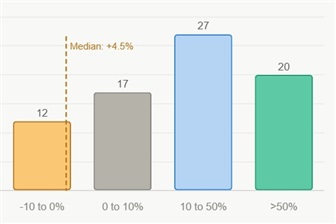
Taiwan's artificial intelligence industry is experiencing a period of remarkable expansion, marked by a significant increase in revenue. This positive trend was highlighted by data analysis for the first quarter of 2026, as reported by Digitimes. The dynamism of the Taiwanese market, known for its centrality in the global technology supply chain, confirms its role as a key indicator for the entire AI sector.
However, behind this apparent prosperity, the analysis reveals a more complex reality: the industry is deeply divided. This fragmentation suggests that growth is not uniform and may conceal significant structural challenges, which warrant careful evaluation by industry players and technology decision-makers.
Structural Divisions within the AI Ecosystem
The internal division within Taiwan's AI industry can manifest in various forms. It might reflect a clear separation between segments focused on hardware production, such as AI-specific chips and servers, and those dedicated to software development, algorithms, and services. Taiwan is a crucial hub for advanced silicio manufacturing, including Graphics Processing Units (GPUs) with high amounts of VRAM, essential for Large Language Models (LLM) Inference and training.
This dichotomy can lead to imbalances, where some players benefit more from the demand for physical components, while others struggle to monetize their software solutions or find the right positioning in the global market. A company's ability to offer comprehensive solutions, ranging from hardware to software Frameworks, becomes a critical success factor and a way to overcome these divisions.
Implications for On-Premise Deployment and Data Sovereignty
For companies evaluating the deployment of LLMs and AI workloads in self-hosted or air-gapped environments, the dynamics of the Taiwanese industry have direct implications. The availability and cost of advanced silicio, such as GPUs with high VRAM specifications (e.g., A100 80GB or H100), are decisive factors for the TCO of an on-premise infrastructure. A divided production chain could affect the supply chain, leading to delays or price fluctuations for critical components.
The choice between a cloud and a self-hosted infrastructure is often driven not only by TCO but also by data sovereignty and compliance requirements. A fragmented industry could complicate planning for CTOs and system architects, who must balance access to cutting-edge technologies with the need to maintain control over their data and operations. For those evaluating on-premise deployment, analytical frameworks are available at /llm-onpremise that offer tools to assess these trade-offs.
Future Outlook and Sustainable Development
The revenue boom in Taiwan's AI sector is undoubtedly a positive sign of growth and innovation. However, the presence of deep internal divisions suggests the need for strategic evolution to ensure more balanced and sustainable development. Addressing these fragmentations could mean promoting greater integration between hardware manufacturers and software developers, or encouraging the creation of more cohesive ecosystems that support the entire AI Pipeline, from training to Inference.
For global technology decision-makers, understanding these dynamics is fundamental. It allows them to anticipate potential supply chain challenges, optimize procurement strategies for AI hardware, and plan their infrastructure investments with greater awareness, whether for bare metal solutions or hybrid environments. Transparency regarding industrial structures is crucial for navigating the rapidly evolving landscape of artificial intelligence.








💬 Comments (0)
🔒 Log in or register to comment on articles.
No comments yet. Be the first to comment!