Taiwan's Push for Supply Chain Diversification
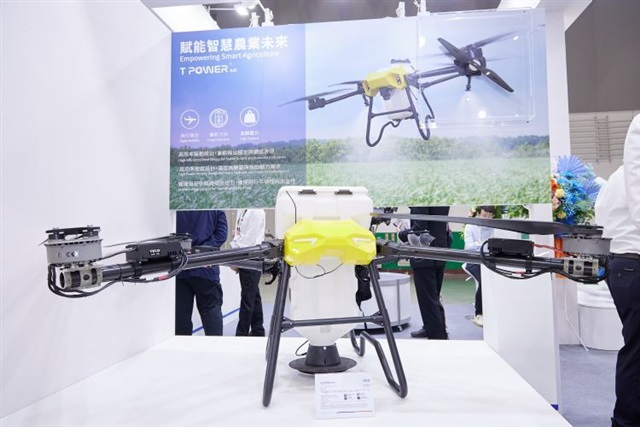
The Taiwanese industry continues to actively support the drive towards diversifying its supply chains, aiming to reduce reliance on China. This strategic direction remains firm, despite a recent setback in the budget allocated for drone development programs. The news, reported by DIGITIMES, highlights how resilience and security of supply have become absolute priorities for the global technology sector in an increasingly complex geopolitical landscape.
The search for alternatives for the production and assembly of critical components is not new, but it has gained particular urgency in recent years. For companies operating in high-tech sectors, such as artificial intelligence, supply chain stability is a decisive factor for long-term planning and the ability to innovate without interruption. Taiwan's decision to persist in this direction, even in the face of specific financial obstacles, reflects a strategic vision that goes beyond immediate contingencies.
Resilience and AI Hardware: An Indissoluble Link
Supply chain stability has a direct and significant impact on the availability and cost of essential hardware for artificial intelligence workloads, particularly for on-premise deployments. Components such as high-performance GPUs, VRAM, and specialized silicon are fundamental for LLM inference and training. A fragmented or disrupted supply chain can cause delivery delays, price increases, and difficulties in obtaining desired hardware configurations, compromising companies' ability to implement their AI strategies.
For CTOs, DevOps leads, and infrastructure architects, choosing an on-premise deployment is often motivated by the desire for greater data control, regulatory compliance, and long-term Total Cost of Ownership (TCO) management. However, these benefits can be eroded if hardware procurement becomes uncertain. Reliance on a limited number of suppliers or geographical regions introduces risks that must be carefully evaluated, pushing organizations to consider diversification as an integral part of their risk mitigation strategy. The ability to access a constant flow of reliable hardware is a pillar for building robust and scalable AI infrastructures.
Implications for On-Premise Deployments and Data Sovereignty
Global supply chain dynamics have profound implications for on-premise deployment decisions. The availability of hardware from diversified sources not only ensures greater operational resilience but can also strengthen data sovereignty. For organizations handling sensitive information or operating in regulated sectors, the ability to control the entire hardware supply chain, from production to installation, is crucial. This reduces potential attack vectors and ensures that the components used comply with required security and privacy standards.
A strategic approach to hardware procurement, which considers supply chain diversification, can significantly influence the TCO of an on-premise deployment. While the initial investment (CapEx) for hardware can be high, the stability of operational costs (OpEx) and predictability of deliveries can lead to significant long-term savings. Conversely, supply chain uncertainty can result in unforeseen costs, project delays, and reduced operational efficiency. For those evaluating on-premise deployments, trade-offs exist that AI-RADAR explores with analytical frameworks on /llm-onpremise, to assess resilience and TCO impact.
Future Outlook and Strategic Decisions
The Taiwanese industry's persistence in supporting supply chain diversification, despite challenges, is a clear signal of the direction the technology sector is taking globally. Companies will increasingly need to integrate supply chain analysis into their strategic decisions regarding AI infrastructure. This includes evaluating not only the technical specifications of the hardware but also its origin, supplier stability, and the ability to ensure reliable deliveries over time.
For decision-makers, this means adopting a holistic view that balances technological innovation, costs, and geopolitical risks. The ability to build and maintain robust and secure AI infrastructures will increasingly depend on foresight in supply chain management. In an era where AI is at the heart of digital transformation, ensuring stable and secure access to necessary hardware is not just an operational matter, but a strategic imperative for competitiveness and technological sovereignty.






💬 Comments (0)
🔒 Log in or register to comment on articles.
No comments yet. Be the first to comment!