
Taiwan Investigation: Suspected NVIDIA Chip Smuggling to China via Japan
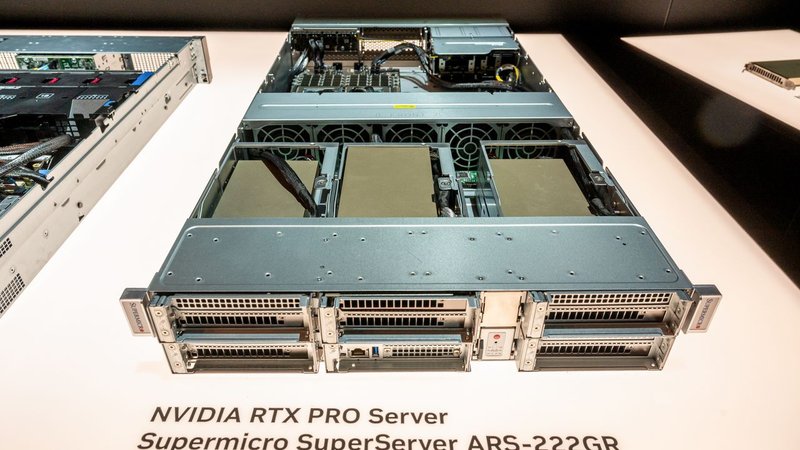
Taiwanese authorities have launched an investigation into an alleged case of smuggling of NVIDIA artificial intelligence chips, which are suspected of having been illegally exported to mainland China. According to a Bloomberg report, Taiwanese prosecutors suspect that at least one shipment of these critical components was transshipped through Japan before reaching its final destination. The investigation involves three individuals, including a senior vice president at Super Micro, a leading server manufacturer.
The accused are suspected of using false documents to circumvent stringent US export restrictions on servers and other sensitive technologies. This scheme allegedly allowed the transfer of advanced computing hardware, essential for the development and deployment of Large Language Models (LLM) and other artificial intelligence applications, in violation of international regulations.
The Context of Restrictions and the Relevance of AI Chips
This incident occurs within a complex geopolitical framework, characterized by increasing tensions and ever-tighter control over advanced technology, particularly that related to artificial intelligence. NVIDIA AI chips, although not specifically mentioned in the source, are considered strategic due to their ability to accelerate intensive LLM training and inference workloads. Their availability is crucial for the development of cutting-edge AI capabilities.
For organizations evaluating self-hosted LLM deployment, the hardware supply chain represents a critical factor. The availability, compliance, and security of components are fundamental aspects for ensuring data sovereignty and control over the infrastructure. Events like this alleged smuggling incident highlight the risks associated with reliance on complex global supply chains and the need for rigorous due diligence in selecting suppliers and shipping routes.
Implications for the Supply Chain and Data Sovereignty
This alleged illicit trafficking raises significant questions about the robustness of global supply chains and the ability to enforce regulations on the export of sensitive technologies. For CTOs, DevOps leads, and infrastructure architects dealing with AI workloads, the origin and traceability of hardware are key elements. The possibility that critical components could be diverted or counterfeited introduces risks not only for compliance but also for security and performance.
Data sovereignty and the need for air-gapped or self-hosted environments for sensitive AI applications make the issue of control over the entire hardware pipeline even more pressing. The choice of on-premise solutions is often motivated by the desire to maintain full control over data and infrastructure, but this requires constant vigilance over the supply chain. For those evaluating on-premise deployment, AI-RADAR offers analytical frameworks on /llm-onpremise to assess the trade-offs between control, security, and TCO in volatile market contexts.
Future Outlook and Increased Controls
The ongoing investigation in Taiwan underscores the intensification of global efforts to monitor and regulate the transfer of advanced AI technologies. It is likely that incidents like this will lead to a further strengthening of customs controls and export verifications, with potential impacts on delivery times and costs for acquiring AI hardware. Companies operating in the sector will have to face an increasingly stringent regulatory environment and greater complexity in managing their supply chains.
This scenario highlights the need for businesses to adopt resilient strategies for AI hardware procurement, considering not only technical specifications and TCO but also geopolitical and compliance risks. The ability to navigate this complex landscape will be a distinguishing factor for those aiming to build and maintain robust and secure AI infrastructures, particularly for on-premise deployments where direct control is a priority.








💬 Comments (0)
🔒 Log in or register to comment on articles.
No comments yet. Be the first to comment!