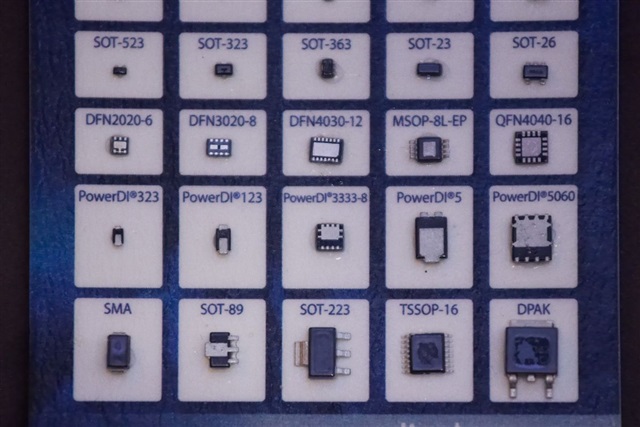
The report comes from DIGITIMES and adds a piece to the global supply chain reconfiguration puzzle. Taiwanese power device makers – producing essential components for energy management in electric vehicles, ADAS systems, and chargers – are seeing a demand uptick driven by two factors: automakers building up inventories after the chip crisis, determined not to be caught short again, and order shifts away from Chinese players or other regions, as customers seek geopolitical certainty and manufacturing quality.
Behind the headline lies more than a cyclical rebound. The automotive sector has become a proving ground for the entire power semiconductor supply chain – IGBTs, silicon-carbide MOSFETs, integrated modules – and Taiwan, with its ecosystem of specialized foundries and advanced packaging, is carving out a role that until a few years ago belonged almost exclusively to a handful of European and Japanese names.
The structural weight of automotive on power devices
Aggressive electrification and autonomous driving systems multiply the number of power devices per vehicle. It's not just a volume game: the technology mix is shifting from silicon to silicon carbide (SiC) and gallium nitride (GaN) to handle higher voltages and temperatures. This transition absorbs manufacturing capacity on mature nodes – 200 mm and 300 mm – the same ones used for many server infrastructure components, from voltage regulators to DC-DC converters.
For those managing on-premise or edge data centers, the connection isn't theoretical. Every GPU rack used for Large Language Model inference or training depends on power stages that must deliver efficiency and stability under variable loads. Power components affect density and energy cost, two critical items in Total Cost of Ownership calculations. When a thirsty sector like automotive captures growing shares of wafers and packaging lines, IT procurement inevitably enters a competitive arena.
Order shifting and the risk landscape
Geopolitical realignments and trade restrictions are driving designers to diversify their sources geographically. Taiwan, along with other Asian hubs, is absorbing orders that previously flowed to mainland China on cost grounds. The immediate benefit goes to Taiwanese manufacturers, whose customer portfolios fill up and who can invest in additional capacity. But the trend has a sting: a supply chain that concentrates further, even on players deemed more reliable, creates new dependencies. For AI infrastructure managers, this means tracking not only GPU availability but also the power electronics that keep servers running.
Distributors report extended lead times for certain power discrete and module families, a sign that the market is far from relaxed. The automotive sector, with its long qualification cycles and multi-year contracts, tends to lock in suppliers once they are approved. This rigidity reduces flexibility for segments with more immediate needs, such as system integrators assembling on-premise LLM nodes.
A gain that redefines priorities
The inventory buildup and order shifts are not just a revenue opportunity for Taiwan. They trace a trajectory where data sovereignty and local compute capability hinge on the resilience of links that seem distant from the AI stage. Taiwanese power device makers become, almost without intending it, a piece of the contest for control of the hardware running ever-larger models. From this angle, the DIGITIMES headline takes on a meaning that stretches beyond quarterly balance sheets.







💬 Comments (0)
🔒 Log in or register to comment on articles.
No comments yet. Be the first to comment!