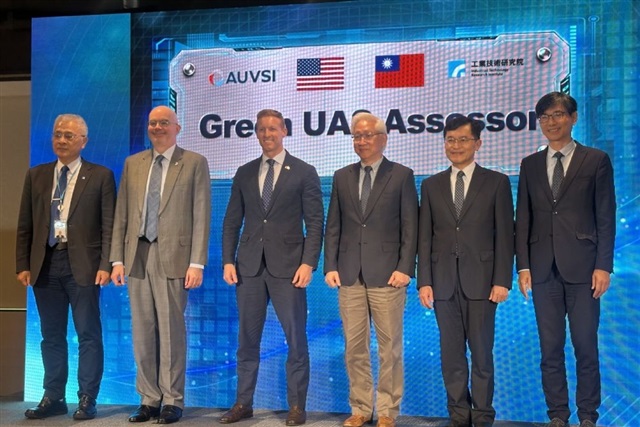
Taiwan at the Core of US Drone Supply Chain Security
Taiwan has been officially designated as the first overseas hub for US drone supply chain certification. This decision marks a significant step in the United States' efforts to strengthen the security and resilience of its supply chains for critical technologies. In an increasingly interconnected and complex global landscape, the ability to guarantee the integrity and provenance of technological components has become a strategic imperative, especially for sensitive sectors such as defense and critical infrastructure.
This initiative highlights a clear trend towards the regionalization and diversification of supply chains, with the aim of mitigating risks associated with excessive reliance on single geographic areas or suppliers. For technology decision-makers, this move underscores the importance of considering not only performance and TCO, but also the security and traceability of every component, from silicon to software, that powers modern systems.
Supply Chain Security: A Technological Imperative
Supply chain certification goes far beyond mere logistics; it involves a thorough verification of the integrity and authenticity of each component, from the design phase to final assembly. This process is crucial for preventing the introduction of tampered hardware, malicious software, or manufacturing defects that could compromise the functionality, security, or privacy of critical systems. In the context of drones, which increasingly integrate artificial intelligence capabilities for navigation, visual analysis, and autonomous decisions, the integrity of silicon and software is a non-negotiable requirement for inference reliability and operational integrity.
An uncertified or dubious-origin component can introduce significant vulnerabilities, exposing systems to risks of cyberattacks, espionage, or critical malfunctions. The ability to trace provenance and verify compliance with security standards throughout the entire supply chain thus becomes a cornerstone for trust and operational resilience, especially for technologies operating in sensitive or air-gapped environments.
Implications for On-Premise Deployments and Data Sovereignty
For organizations evaluating on-premise deployments for AI/LLM workloads, the lessons learned from drone supply chain certification are directly applicable. The choice of self-hosted, bare metal, or hybrid infrastructures is often driven by the need to maintain total control over data, security, and compliance. However, this control can be compromised if hardware components (GPUs, CPUs, storage) or software (firmware, operating systems, AI frameworks) do not originate from verified and secure supply chains.
An on-premise infrastructure, however robust and isolated, is vulnerable if its constituent elements have been compromised upstream. Data sovereignty, compliance with regulations like GDPR, and operational resilience intrinsically depend on trust in the supply chain. For those evaluating on-premise deployments, AI-RADAR offers analytical frameworks on /llm-onpremise to assess the trade-offs between control, security, and TCO, emphasizing the importance of considering the entire technological value chain. Ignoring supply chain security can lead to significant hidden costs related to security breaches, operational disruptions, or regulatory penalties.
Future Outlook and Strategic Resilience
The establishment of Taiwan as a certification hub for the US drone supply chain is a clear indicator of a global trend towards building more resilient and secure technological ecosystems. This model of verification and certification, focused on integrity and provenance, is set to extend to other critical sectors that rely on advanced technologies, including AI and LLM systems. For CTOs, DevOps leads, and infrastructure architects, awareness and management of supply chain risks will become increasingly central to investment and architectural decisions.
Security is no longer an aspect to be considered only at the data center perimeter, but a principle that must permeate the entire technological value chain, from silicon production to final software deployment. Adopting a proactive approach to supply chain verification is essential to ensure trust, data sovereignty, and the long-term sustainability of on-premise AI infrastructures.








💬 Comments (0)
🔒 Log in or register to comment on articles.
No comments yet. Be the first to comment!