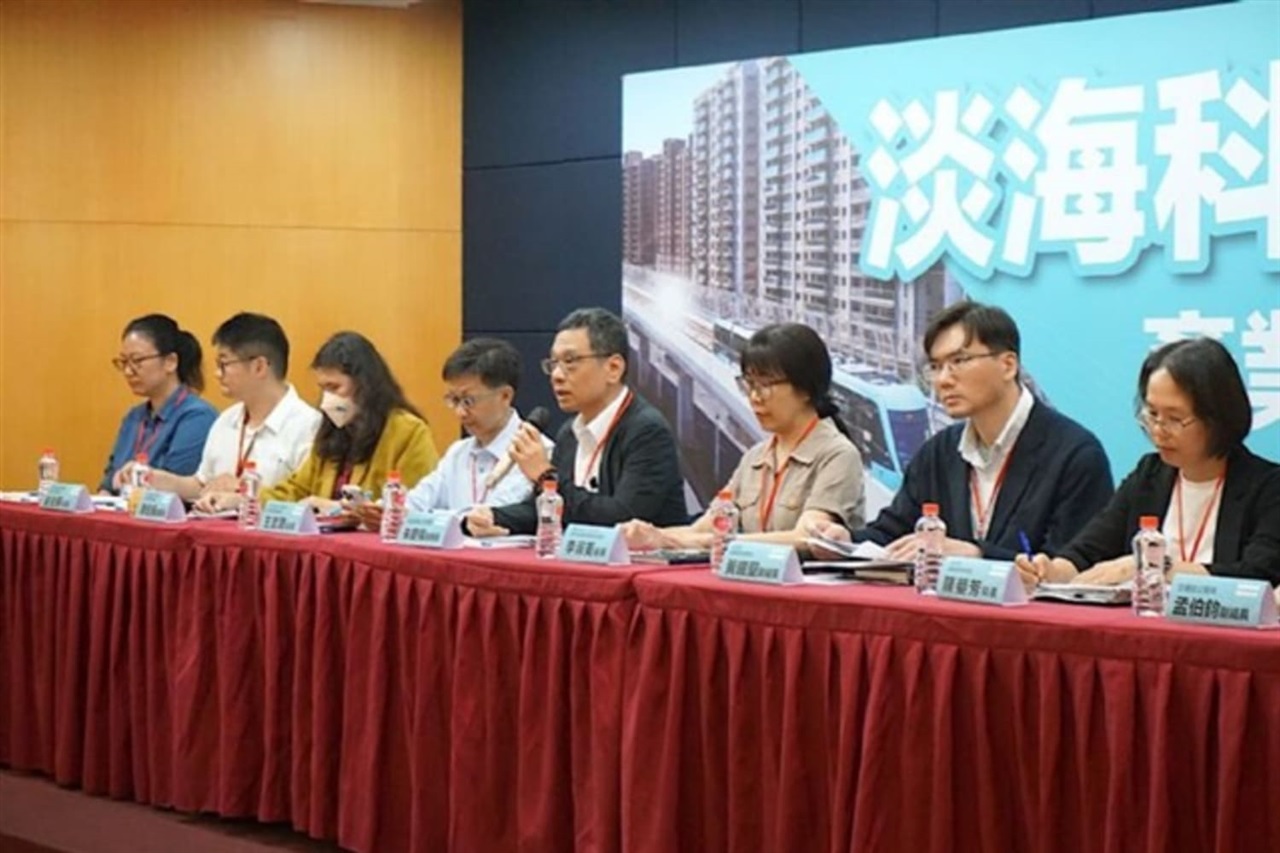
Taiwan Invests in Infrastructure for Tamsui "Science City"
Taiwan has announced ambitious plans for the creation of a new industrial zone, spanning 130 hectares, in the Tamsui region. This project is designed to host a "science city," a hub dedicated to innovation and technological research. The initiative underscores the island's commitment to strengthening its position as a global leader in the high-tech sector, providing the necessary infrastructure to support the growth and development of new technologies.
The establishment of a technology hub of this size reflects a strategy aimed at consolidating the existing industrial ecosystem and attracting further investment. Such areas are crucial for hosting state-of-the-art data centers, research and development laboratories, and manufacturing facilities, all essential components for sectors like artificial intelligence, robotics, and silicio production. The availability of dedicated spaces and modern infrastructure is a key factor for companies looking to scale their operations and innovate.
Implications for On-Premise Deployments and Data Sovereignty
The realization of a "science city" offers fertile ground for the development of advanced technological solutions, with a particular focus on on-premise deployments. For CTOs, DevOps leads, and infrastructure architects, the ability to operate in a controlled environment with direct access to infrastructural resources is of paramount importance. This approach allows for greater control over data sovereignty, regulatory compliance, and security, critical aspects for many businesses, especially in regulated sectors.
A hub like the one planned in Tamsui can facilitate the construction of private data centers and the installation of dedicated hardware for Large Language Models (LLM) inference and training. Proximity to research centers and silicio suppliers can optimize development pipelines and reduce latency, improving operational throughput. For those evaluating on-premise deployments, there are significant trade-offs in terms of initial costs (CapEx) versus the operational costs (OpEx) of cloud services, and the availability of local infrastructure can positively influence the Total Cost of Ownership (TCO) in the long term. AI-RADAR offers analytical frameworks on /llm-onpremise to evaluate these trade-offs.
Strategic Context and Infrastructural Challenges
Taiwan's decision to invest in a "science city" is part of a global context of increasing technological competition. The ability to attract and retain talent, along with the availability of reliable and sustainable energy infrastructure, will be crucial for the project's success. Planning a 130-hectare industrial zone requires careful evaluation of water, energy, and logistical resources, essential elements to support high-density computing and production needs.
These infrastructural developments are often accompanied by government incentives and collaborations between universities and industry, creating a virtuous ecosystem for innovation. However, managing a project of this scale presents significant challenges, from urban planning to ensuring robust, low-latency network connectivity, indispensable for modern artificial intelligence applications. Taiwan's ability to overcome these challenges will determine the effectiveness of the "science city" in achieving its strategic objectives.
Future Prospects for Taiwanese Innovation
The Tamsui "science city" represents a strategic step for Taiwan, solidifying its reputation as an epicenter of technological innovation. The investment in dedicated physical infrastructure is a clear signal of the intention to support the next generation of discoveries and applications, particularly in the field of artificial intelligence. This type of initiative is fundamental for maintaining competitiveness in a rapidly evolving technological landscape, where access to computing resources and a collaborative research environment is increasingly a key differentiator.
Looking ahead, the "science city" could become a model for the development of technology ecosystems that prioritize local control and data sovereignty, aspects increasingly relevant for global enterprises. Taiwan's ability to integrate research, development, and production within a single geographical area could accelerate the adoption of new technologies and strengthen its position in the global silicio and AI market.






💬 Comments (0)
🔒 Log in or register to comment on articles.
No comments yet. Be the first to comment!