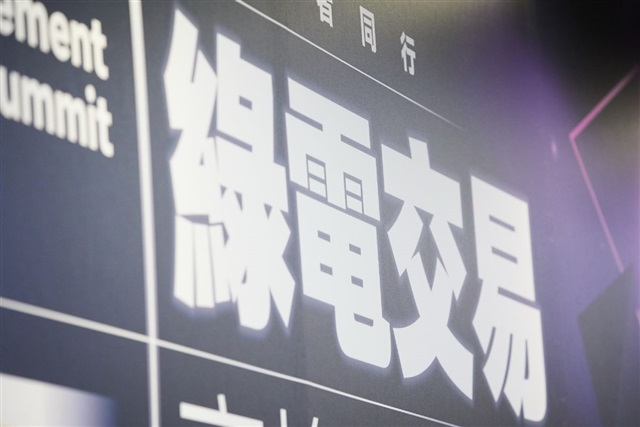
Taiwan and the Future of Energy for AI
Taiwan, a key player in the global technology landscape, is set to introduce a green power spot market by 2027. The primary goal of this initiative is to optimize the management of surplus renewable energy, ensuring greater stability and flexibility for the national power grid. This move, while seemingly distant from the world of Large Language Models (LLMs) and artificial intelligence, is actually a fundamental piece for the future of AI deployments, especially those on-premise.
The availability of reliable, sustainable, and predictably priced energy is a prerequisite for any modern IT infrastructure, and even more so for the intensive workloads of artificial intelligence. A country's strategic energy decisions can directly influence the Total Cost of Ownership (TCO) and the long-term feasibility of self-hosted AI infrastructures, a crucial aspect for CTOs and system architects.
The Energy Context and AI Consumption
Data centers hosting AI infrastructures, particularly for the training and inference of Large Language Models, are known for their high energy consumption. The choice between a cloud deployment and a self-hosted one is often influenced not only by the CapEx and OpEx costs of hardware but also by the overall TCO related to energy. A green power spot market offers the possibility of accessing renewable sources at potentially more competitive prices and with greater flexibility, reducing the carbon footprint and operational costs.
This is particularly relevant for companies seeking to maintain data sovereignty and full control over their infrastructure, opting for on-premise or air-gapped solutions. The stability of the power grid and the predictability of energy costs are critical factors for long-term planning. Significant fluctuations can impact the profitability and scalability of AI projects. A spot market mechanism can help balance supply and demand, providing a more dynamic price signal that can incentivize the adoption of energy storage solutions or the optimization of workloads based on green energy availability.
Implications for On-Premise Deployments
For CTOs and infrastructure architects evaluating on-premise LLM deployments, the availability of green energy at controlled costs represents a significant competitive advantage. This is not just about environmental compliance or corporate social responsibility, but also about operational resilience and TCO containment. AI hardware, such as high-performance GPUs (e.g., NVIDIA A100 or H100 series), requires a constant and robust power supply. The ability to tap into a spot market for renewable energy can make self-hosted deployments more attractive compared to cloud solutions, where energy costs are often included in fixed and less transparent tariffs.
In contexts where data sovereignty and regulatory compliance (such as GDPR) are priorities, the on-premise option is often preferred. However, this entails direct management of all infrastructural aspects, including energy supply. A well-functioning spot market can simplify this management, offering more flexible and sustainable purchasing options. This allows organizations to focus on optimizing their training and inference pipelines, knowing they can rely on an energy supply aligned with their sustainability and cost objectives.
Future Prospects and Strategic Trade-offs
Taiwan's initiative highlights a global trend towards greater integration of renewable energies into power grids and the creation of more dynamic market mechanisms. For the artificial intelligence sector, this means that deployment decisions can no longer ignore the energy component. The trade-offs between performance, cost, and sustainability are becoming increasingly complex and interconnected. Choosing an on-premise infrastructure, while offering greater control and sovereignty, requires careful evaluation of all factors, including energy availability and cost.
AI-RADAR continues to monitor how global energy policies influence LLM deployment strategies, providing analytical frameworks on /llm-onpremise to help companies navigate these complex scenarios and evaluate trade-offs. A country's ability to effectively manage its energy transition will have a direct impact on its attractiveness as a hub for AI innovation and for high-computational intensity infrastructure deployments.








💬 Comments (0)
🔒 Log in or register to comment on articles.
No comments yet. Be the first to comment!