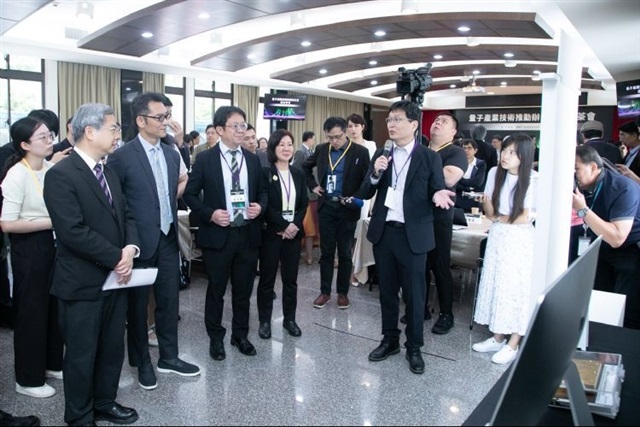
Taiwan's Quantum Ambition
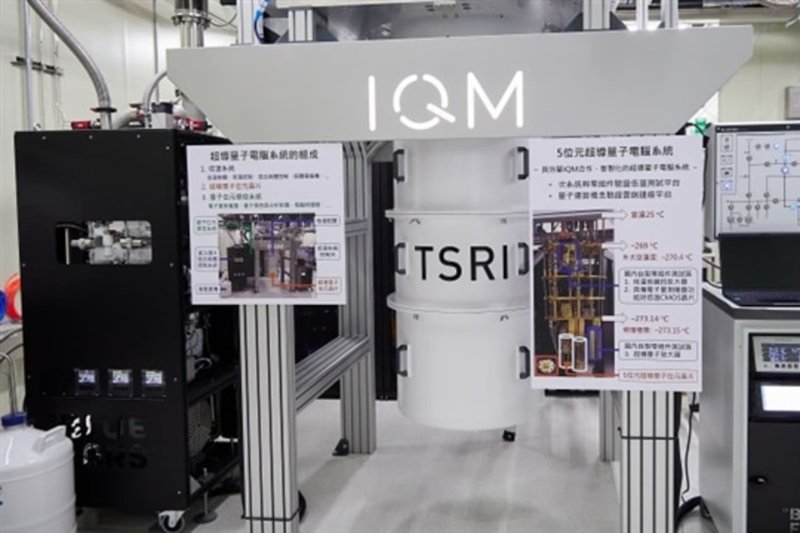
Taiwan has taken a significant step in the global technological landscape, announcing a strategic initiative in the field of quantum computing. This move involves a consortium of eighteen companies, joining forces to explore and develop the potential of one of the most promising and complex technologies of our time. Taiwan's commitment to this sector reflects a global trend towards investing in advanced computing capabilities, considered crucial for economic competitiveness and national security.
The formation of such a large consortium highlights Taiwan's desire to consolidate its position as a technology hub, not only in traditional silicio manufacturing but also at the frontiers of innovation. This collaborative approach aims to catalyze research, development, and practical application of quantum technologies, creating a robust local ecosystem and reducing reliance on external solutions for critical computing infrastructure.
Quantum Computing: Implications for AI and Infrastructure
Quantum computing, though still in a relatively early stage, promises to revolutionize sectors ranging from cryptography to drug discovery, and the optimization of complex algorithms. For the world of artificial intelligence, and particularly for Large Language Models (LLMs), the implications could be profound. Quantum computers could, in the future, drastically accelerate training processes for extremely complex AI models, solve optimization problems that are currently intractable, and even enable new forms of machine learning.
However, the development and deployment of quantum infrastructure present unique challenges. They require highly specialized silicio, operating environments with temperatures near absolute zero, and top-tier engineering and scientific expertise. For organizations evaluating the deployment of AI workloads, the emergence of technologies like quantum computing underscores the importance of considering not only current GPUs but also future computing architectures and their infrastructural needs. This includes evaluating the Total Cost of Ownership (TCO) for hardware, energy, and maintenance, for both on-premise and cloud-based solutions.
Data Sovereignty and Technological Control
Taiwan's investment in quantum computing fits into a broader context of increasing focus on technological sovereignty and data control. For companies and nations, the ability to internally develop and manage advanced computing infrastructures, such as those required for quantum or for LLM training and inference, is fundamental. This allows sensitive data to be kept within specific jurisdictional boundaries, complying with regulations like GDPR and ensuring security in air-gapped environments.
Adopting a self-hosted or on-premise approach for these frontier technologies offers unprecedented control over the entire pipeline, from hardware design to software management. While this entails a higher initial investment (CapEx) and the need for specialized in-house expertise, the long-term benefits in terms of security, customization, and TCO can be significant, especially for strategic or proprietary workloads. The choice between on-premise and cloud deployment for emerging technologies like quantum or LLMs is a strategic decision that requires a thorough analysis of trade-offs.
Future Prospects and Deployment Trade-offs
Taiwan's quantum computing initiative is a clear example of how nations are investing in next-generation computing capabilities. While quantum computing is still far from widespread adoption, its potential synergy with artificial intelligence makes it an area of strategic interest. For CTOs, DevOps leads, and infrastructure architects, it is essential to monitor these developments and understand how future computing architectures might influence deployment decisions for AI workloads.
Evaluating on-premise solutions for LLMs and other complex AI applications requires a rigorous analysis of hardware requirements, VRAM needs, expected throughput, and operational costs. For those evaluating on-premise deployments, AI-RADAR offers analytical frameworks on /llm-onpremise to assess the trade-offs between control, performance, and TCO. Taiwan's commitment to quantum computing underscores that control over technology and computing infrastructure will be a decisive factor for success in the era of advanced AI.







💬 Comments (0)
🔒 Log in or register to comment on articles.
No comments yet. Be the first to comment!