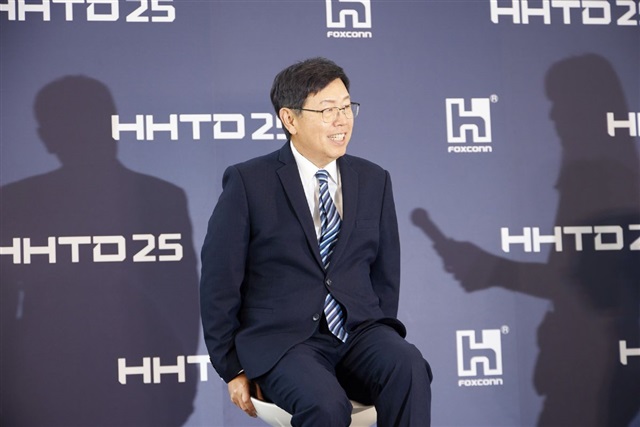
Taiwan Focuses on Local AI Infrastructure
Taiwan's Ministry of Digital Affairs (MODA) has launched a strategic initiative to incentivize Taiwanese companies to increase their investments in computing power dedicated to artificial intelligence. This move underscores a growing governmental awareness of the importance of having robust and nationally controlled computational infrastructures to support the development and adoption of advanced AI technologies, particularly Large Language Models (LLMs).
MODA's encouragement comes within a global context where the availability of computing resources has become a critical factor for innovation and competitiveness. The ability to process large volumes of data and to train or perform Inference for complex models requires significant hardware infrastructure, often based on high-performance GPUs with ample VRAM.
The Need for Computing Power for LLMs
The development and Deployment of LLMs demand immense computing power. Both for initial training and large-scale Inference, companies face challenges related to the availability of specialized hardware, such as latest-generation GPUs, and the management of complex software stacks. For organizations considering an on-premise Deployment, this entails careful planning of the Total Cost of Ownership (TCO), which includes not only the initial hardware cost but also operational expenses for power, cooling, and maintenance.
The decision to invest in self-hosted infrastructures offers significant advantages in terms of data sovereignty and regulatory compliance. Many companies, especially in regulated sectors like finance or healthcare, prefer to keep their data and models within their physical or logical boundaries, often in air-gapped environments, to ensure maximum security and adherence to stringent regulations. This approach contrasts with the adoption of public cloud services, which, while offering scalability and flexibility, may present trade-offs on these fronts.
Foxconn at the Forefront and Strategic Implications
In response to MODA's call, Foxconn, one of the global manufacturing giants, has already submitted a project proposal. This step highlights not only the willingness of Taiwanese industry to align with government directives but also its capacity to mobilize significant resources to contribute to building a national AI ecosystem. The commitment of players like Foxconn can accelerate the development of hardware and infrastructure solutions that support the entire AI value chain, from research and development to production Deployment.
The Taiwanese initiative reflects a broader global trend where governments and large enterprises are investing heavily in creating local AI computing capabilities. This is not only for economic or efficiency reasons but also to ensure technological independence and resilience in the face of potential supply chain disruptions or restrictions on access to external computational resources.
Future Prospects for Taiwan's AI Ecosystem
MODA's encouragement and the actions of companies like Foxconn could position Taiwan as an even more relevant hub for the development and Deployment of AI technologies. Investment in local computing power will not only stimulate internal innovation but can also attract talent and international collaborations, strengthening the island's position in the global technological landscape.
For companies operating in similar contexts, the evaluation between on-premise Deployment and cloud solutions remains a complex decision, influenced by factors such as TCO, security requirements, and the need for data control. AI-RADAR offers analytical Frameworks on /llm-onpremise to evaluate these trade-offs, providing useful tools for strategic decisions on AI infrastructure. The Taiwanese example demonstrates how governmental impetus can significantly shape these national-level choices.








💬 Comments (0)
🔒 Log in or register to comment on articles.
No comments yet. Be the first to comment!