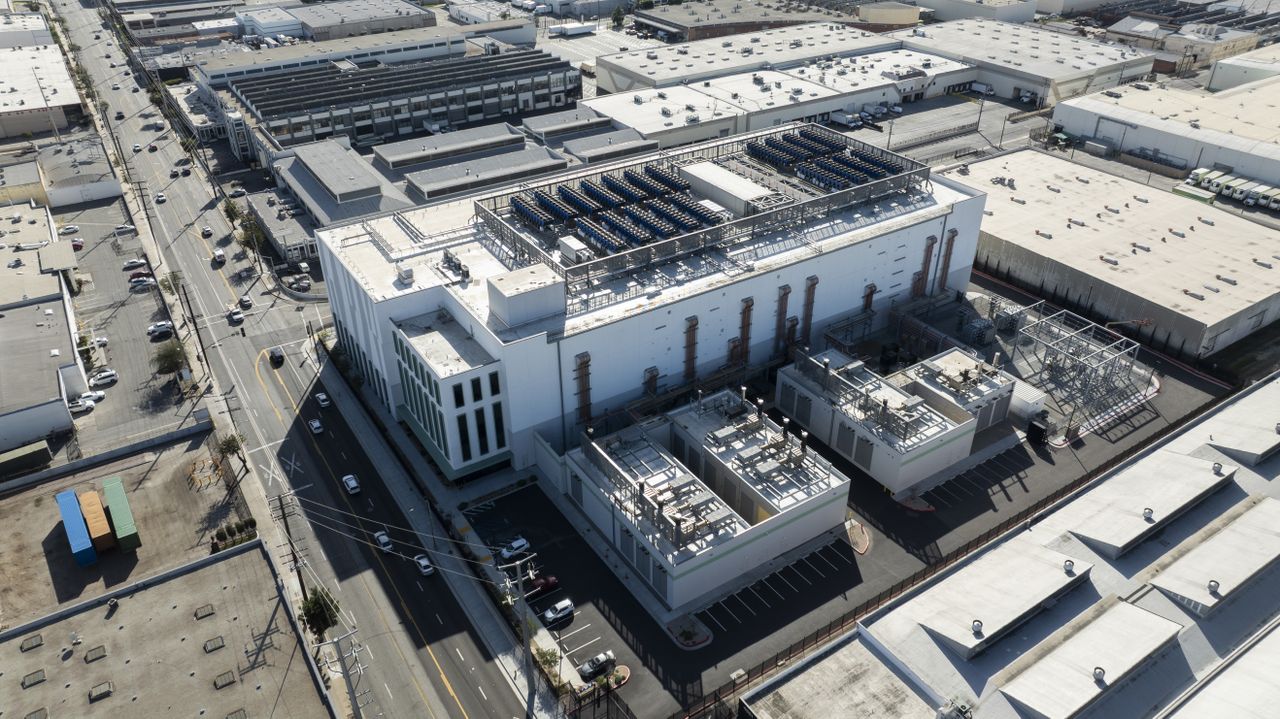
Missouri Town Ousts Council Over $6 Billion AI Data Center Approval Amid Rising Tensions
The approval of a massive artificial intelligence data center, with an estimated investment of $6 billion, has triggered an unprecedented political crisis in a small Missouri town. The decision led to the removal of half of the city council, a clear sign of the deep division and discontent the project has generated among residents.
Concurrently, a petition has been launched to call for the mayor's removal, highlighting how frustration is mounting, sometimes even escalating into violence, in various communities facing the arrival of such large-scale technological infrastructures. This scenario is not isolated but reflects a growing trend of local resistance to projects that, while promising economic development, raise significant questions about environmental and social impact.
The Context of AI Data Centers and Local Implications
AI-dedicated data centers represent critical infrastructure for technological advancement, but their construction entails considerable energy and water requirements, in addition to significant land occupation. Often, the choice falls on rural or peripheral areas, where space availability and access to energy resources may seem more straightforward. However, it is precisely in these contexts that the impact can be most acutely felt by local communities.
The $6 billion investment for the data center in Missouri underscores the colossal scale of these projects. Such a dimension implies not only an extended physical footprint but also a notable burden on existing infrastructures and the surrounding environment. Concerns range from water and energy consumption, to heat and noise generation, to landscape transformation and pressure on local services. These factors help explain the "frustration and violence" mentioned in the source, as residents perceive a loss of control over their territory and resources.
Sovereignty, Control, and TCO: The AI-RADAR Perspective
For companies and organizations evaluating the deployment of AI and LLM workloads, the choice between cloud and self-hosted solutions is strategic. On-premise data centers, like the one in question, offer unparalleled control over data sovereignty, regulatory compliance, and security—crucial aspects for sectors such as finance or defense, or for air-gapped environments. However, the Missouri case highlights that the decision to build and operate such an infrastructure is not merely technical or economic.
From a Total Cost of Ownership (TCO) perspective, a self-hosted deployment requires a significant initial investment (CapEx) but can offer long-term advantages in terms of operational costs and flexibility. However, TCO must also include indirect and social costs, such as those arising from community relations management and environmental impact mitigation. For those evaluating on-premise deployments, AI-RADAR offers analytical frameworks on /llm-onpremise to assess complex trade-offs that extend well beyond hardware specifications or inference performance alone.
The Challenges of Large-Scale On-Premise Deployment
The Missouri case serves as a warning for companies and technical decision-makers. While on-premise deployment ensures maximum control over infrastructure, data, and security, it also implies complex management that extends far beyond the data center's perimeter. The need to balance technical requirements, such as VRAM availability for Large Language Models or throughput capacity, with social and environmental responsibilities, becomes a critical success factor.
Planning large-scale AI infrastructure requires a holistic vision that considers not only silicio specifications or training pipelines but also community acceptance and long-term sustainability. The debate in Missouri underscores that technological innovation, to be truly effective and lasting, must integrate harmoniously with the social and environmental fabric in which it is embedded. Ignoring these dynamics can lead to project delays, additional costs, and, as seen, significant political and social turmoil.








💬 Comments (0)
🔒 Log in or register to comment on articles.
No comments yet. Be the first to comment!