
Introduction: The Local Context of AI Expansion
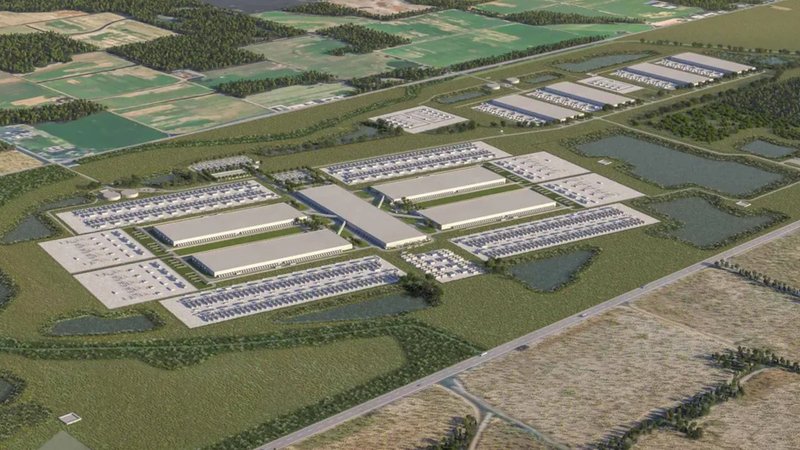
The global expansion of artificial intelligence, and particularly Large Language Models (LLM), demands increasingly powerful computing infrastructure. This growth translates into the construction of new data centers, often colossal in size, requiring vast land areas, significant energy resources, and advanced cooling systems. A recent incident in Oklahoma has brought to the forefront the challenges that arise when these infrastructural needs meet the realities of local communities.
Darren Blanchard, a local farmer, was arrested and jailed for trespassing during a town hall meeting dedicated to a new AI data center. The incident occurred after Blanchard exceeded his allotted speaking time by a few seconds, in an attempt to hand paperwork to counselors. This seemingly minor event serves as a wake-up call, highlighting the frictions that can emerge between technological development projects and residents' concerns.
The Implications of Large-Scale AI Infrastructure
The decision to deploy an AI data center, whether self-hosted or part of a broader infrastructure, involves considerations that extend far beyond the mere choice of GPUs or the configuration of a Framework. The scale required for modern LLM Inference and training imposes significant requirements in terms of energy consumption and environmental impact. A single data center can demand the energy equivalent of a small city, putting pressure on local power grids and raising questions about sustainability.
For companies evaluating an on-premise deployment, these aspects become direct responsibilities. It's not just about acquiring the necessary Silicio or managing the VRAM of the cards, but also about planning energy supply, heat management, and land impact. The Total Cost of Ownership (TCO) of an on-premise AI infrastructure must therefore include not only hardware and software costs but also long-term operational expenses related to energy, maintenance, and, as the Oklahoma case demonstrates, community relations.
Data Sovereignty and Local Control: A Dual Track
Discussions about data sovereignty and compliance, central themes for those choosing air-gapped or self-hosted solutions, often focus on legal and cybersecurity aspects. However, the Oklahoma episode reminds us that sovereignty also has a physical and local dimension. Control over one's data and infrastructure also implies managing the physical footprint of that infrastructure on the territory.
While companies strive to maintain control over their local stacks and ensure data privacy, they must also address the expectations and concerns of the communities that physically host these facilities. The choice between a cloud deployment and an on-premise alternative is therefore not just a matter of performance or initial costs, but also of taking direct responsibility for local impact. This includes managing water resources for cooling, noise and visual pollution, and the general perception of the project by residents.
Perspectives for Strategic and Conscious Deployment
The Oklahoma incident serves as a warning for all decision-makers in the tech sector. The expansion of AI cannot disregard open and transparent dialogue with local communities. For CTOs, DevOps leads, and infrastructure architects, the evaluation of an on-premise or hybrid deployment must integrate a thorough analysis not only of hardware specifications (such as GPU memory or Throughput) but also of social and environmental factors.
AI-RADAR is committed to providing analytical Frameworks to help companies navigate these complex trade-offs. The choice of where and how to deploy AI infrastructure is a strategic decision that influences not only operational efficiency and data security but also long-term sustainability and social acceptance of the project. Understanding and mitigating local tensions is as crucial as optimizing Inference pipelines or Fine-tuning models.








💬 Comments (0)
🔒 Log in or register to comment on articles.
No comments yet. Be the first to comment!