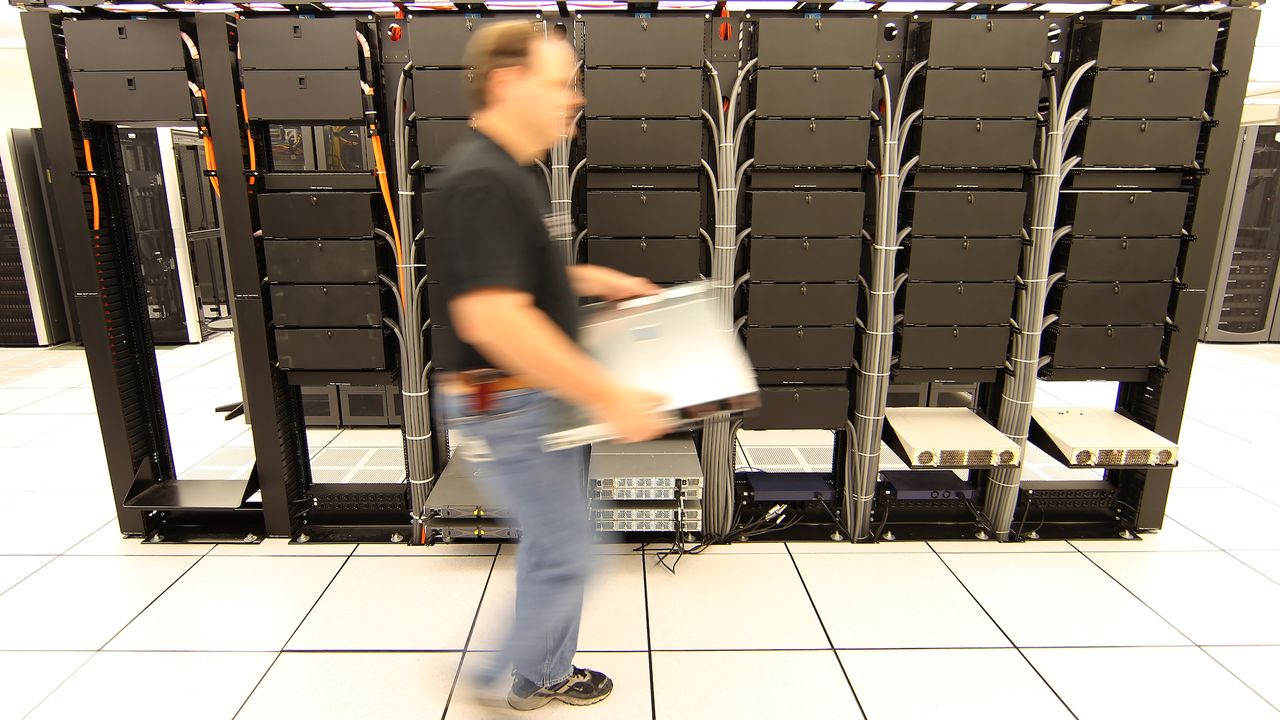
The news, terse but explosive, ricocheted through technical channels like a shockwave: Tesco, one of the UK’s largest supermarket chains, has just completed the migration of 40,000 servers away from VMware infrastructure. This is no trial or pilot; it’s an outright walkaway that strips Broadcom of a colossal customer and confirms the mass exodus from the platform is only gaining momentum.
The report, circulating in enterprise circles in recent hours, doesn’t offer technical details on the destination – whether an open-source hypervisor like KVM, an integrated appliance such as Nutanix, or a shift to the cloud – but the message is unmistakable: Broadcom’s new commercial course is burning bridges that VMware spent over two decades building atop on-premise infrastructure.
Broadcom’s licensing axe
Since Broadcom acquired VMware for $69 billion, the licensing model has been turned upside down. Perpetual contracts are gone, the flexibility of à la carte bundles erased. What’s left is a mandatory subscription model with multi-year commitments and prices that, according to industry reports, can triple compared to the past. The move, analysts note, is designed to extract maximum value from large accounts, yet it’s producing a boomerang effect: organizations with vast server fleets, like Tesco, run the numbers and discover that VMware’s Total Cost of Ownership has become unsustainable.
For a company running tens of thousands of on-premise workloads, the forced shift to subscriptions risks transforming a predictable cost line into an endless drain, with runaway increases and no way back. Saying goodbye, then, is no longer an extreme measure but an act of financial self-preservation.
On-premise infrastructure rocked
What makes Tesco’s decision emblematic is the scale: 40,000 servers is not a one-off in the enterprise world; it represents a processing estate that must stay online, secure and governed. Walking away from VMware triggers a complex machine of re-platforming, staff retraining and operational reorganization – costs a company is willing to shoulder only when the economic and strategic gain is crystal clear.
For those managing on-premise infrastructure, the Tesco story sounds an alarm bell. VMware was for years the steady reference point, the virtualization layer that made data manageable in-house, away from uncontrolled public clouds. That reference point is now wobbling. Alternatives exist – from mature KVM distributions (Proxmox, oVirt) to hyperconverged platforms – but each path carries trade-offs in reliability, enterprise support and in-house skills. Those evaluating an on-premise deployment for LLMs or critical workloads can no longer take a VMware pairing for granted; instead they must bake the hypervisor choice into the wider calculus of sovereignty and TCO.
Beyond cost: sovereignty and strategic autonomy
The Tesco case shines a light on a larger issue at the heart of deployment decisions: dependency on a single vendor for the foundational infrastructure layer. By pushing binding subscription models, Broadcom curtails customers’ contractual and technological flexibility, making long-term planning harder. In environments where data residency and regulatory compliance (GDPR, sector-specific rules) demand physical control, losing the freedom to choose the virtualization layer means ceding operational sovereignty.
It’s no accident that the fiercest technical debates of recent months revolve around the concept of “tempered vendor lock-in”: the search for an infrastructure that allows a change of course without having to rebuild the entire architecture. The move from VMware to open-standards-based solutions, despite its upfront burden, restores organizations’ control over the technology roadmap, reducing the risk of being held hostage by another party’s commercial decisions.
A signal for those building the on-premise future
Tesco, with its 40,000 servers, is not an isolated case but a symptom of a wider phenomenon: large enterprises are questioning the very foundations of their infrastructure. At a time when interest in local processing – from LLM inference to training on sensitive data – is rising for privacy and latency reasons, the VMware earthquake forces a reckoning. The next generation of on-premise architectures will need to be born already free from overly restrictive licensing bonds, leaning on free software or platforms with predictable pricing models.
For anyone starting today to design a self-hosted environment for AI workloads, the lesson is clear: the virtualization choice is as strategic as the hardware selection. Up front, what matters is licensing flexibility, workload portability and cost transparency over time. As Broadcom accelerates, the market responds with a silent but relentless diaspora.





💬 Comments (0)
🔒 Log in or register to comment on articles.
No comments yet. Be the first to comment!