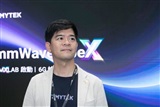
TMY Technology has received clearance for listing on the Taiwan Stock Exchange, a crucial milestone signaling the intent to consolidate its presence in capital markets after an operational turnaround driven by two verticals: satellite communications and defense. The news, confirmed by sources close to the company, turns a regulatory checkpoint into a credibility test for a group once squeezed by semiconductor commodity competition and now reshaped around high-barrier niches.
Roots of the pivot
The turnaround rests on a drastic choice: leaving the commodity chip fray to focus on encrypted payloads, advanced radar systems, and components for LEO constellations. While the consumer market continued to impose volumes and thin margins, the satellite division — backed by government contracts and partnerships with Asian space agencies — secured more predictable revenue streams. In parallel, military orders opened multi-year contracts sealed by secrecy clauses where supplier reliability outweighs price.
A listing as a credibility platform
For a company operating in sensitive domains, going public is more than finance. Admission to the Taiwan Stock Exchange after regulatory review means exposing accounts and procedures to a transparency level that reassures institutional clients. In many defense tenders, the ‘public company’ requirement eliminates potential competitors: a non-trivial competitive edge, especially when contracts exceed hundreds of millions of dollars.
Tech sovereignty and on-premise: the real core
Satellite and defense share a common thread that makes them quiet protagonists in the on-premise AI debate. Military communications and data collected by orbital sensors cannot transit through public clouds nor be processed in data centers outside their jurisdiction. They demand self-hosted stacks, dedicated hardware, and inference pipelines running in air-gapped environments. TMY Technology does not build LLMs, but its signal processing systems — often integrated with FPGA and NPU accelerators — form the onboard infrastructure where, tomorrow, AI models may execute. AI-RADAR’s insight is precisely here: anyone evaluating on-premise deployment for AI workloads must track developments of companies that craft the hardware and software building blocks for extreme environments, where latency, data integrity, and military certifications outweigh operational costs.
Looking past the ticker
The listing clearance also serves as a gauge of Asia’s tech momentum. Taiwan remains a silicon manufacturing hub, but the market increasingly rewards those shifting from volume to niche quality. In this light, TMY Technology’s listing is not a simple IPO: it’s recognition that security, resilience, and direct infrastructure control are tradable industrial assets. For IT decision-makers, the message is clear: satellite and defense, once confined to windowless rooms, are becoming natural incubators for the sovereign AIs of the future.





💬 Comments (0)
🔒 Log in or register to comment on articles.
No comments yet. Be the first to comment!