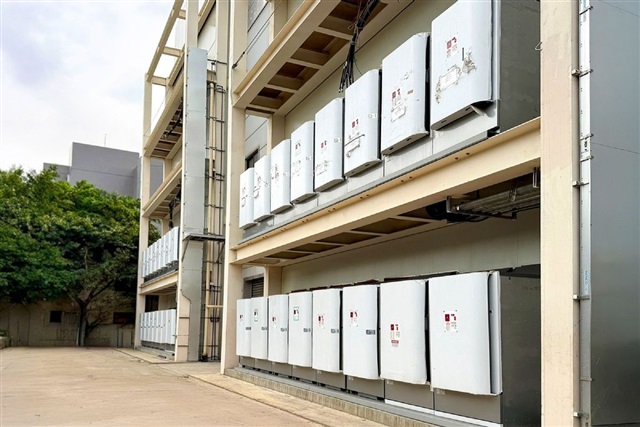
Topco and Bloom Energy: Taiwan's First On-Site Low-Carbon Data Center Power System Activated
Topco and Bloom Energy have announced the installation of Taiwan's first on-site power system based on Solid Oxide Fuel Cells (SOFC) for a data center. This joint initiative marks a significant step towards adopting more sustainable and low-carbon IT infrastructures in the region.
The project highlights a growing focus on decentralized and environmentally friendly energy solutions, particularly relevant for energy-intensive sectors like data centers. The implementation of an on-site system offers strategic advantages in terms of operational resilience and direct control over the power source.
SOFC Technology and the On-Premise Context
The installed system relies on SOFC (Solid Oxide Fuel Cell) technology, a type of fuel cell that generates electricity through an electrochemical reaction, without direct combustion. This process is inherently more efficient than traditional generators and produces significantly lower emissions, especially when fueled by natural gas or biogas.
For data centers, adopting an on-site power system like SOFC aligns perfectly with the needs of on-premise deployments. It ensures greater independence from the public electricity grid, reducing risks associated with service interruptions and price fluctuations. This direct control over energy is crucial for critical workloads, including those related to Large Language Models (LLM) inference and training, where power stability and continuity are non-negotiable parameters.
Benefits and Implications for Low-Carbon Data Centers
The installation of a low-carbon SOFC system brings multiple benefits. Firstly, it substantially contributes to reducing the data center's carbon footprint, supporting corporate sustainability goals and increasingly stringent environmental regulations. The ability to generate clean energy directly on-site decreases reliance on fossil fuels and complex transmission and distribution infrastructure.
Secondly, an on-site approach can positively impact the long-term Total Cost of Ownership (TCO). While the initial investment may be significant, operational costs can be optimized due to the high efficiency of fuel cells and the potential reduction in energy tariffs and transmission losses. Furthermore, data sovereignty and compliance are strengthened when the entire infrastructure, including power, is under the direct control of the operator, a crucial aspect for companies managing sensitive information.
Future Prospects and the Role of Infrastructure
The initiative by Topco and Bloom Energy in Taiwan represents a model for the future of data centers, where energy efficiency and sustainability become fundamental pillars of infrastructural design. The integration of advanced, low-emission energy generation technologies is essential to support the growing demand for computational power, particularly for artificial intelligence applications.
For organizations evaluating the trade-offs between on-premise deployments and cloud solutions for their AI workloads, the availability of robust and sustainable energy infrastructures is a determining factor. AI-RADAR offers analytical frameworks on /llm-onpremise to help assess these complex trade-offs, considering aspects such as data sovereignty, TCO, and hardware specifications. This Taiwanese project underscores how innovation in data center power is crucial for enabling the next generation of digital services.






💬 Comments (0)
🔒 Log in or register to comment on articles.
No comments yet. Be the first to comment!