
Recent reports suggest that Toto, the Japanese conglomerate known for its building materials and ceramics divisions, is doubling down on advanced semiconductor materials. The move comes as the chip industry races toward the 1-nanometer process node, driven in large part by AI’s unquenchable thirst for compute. It’s a concrete sign that the supply chain is reorganizing around a new generation of processors – the ones that will run tomorrow’s large language models.
The nanometer challenge
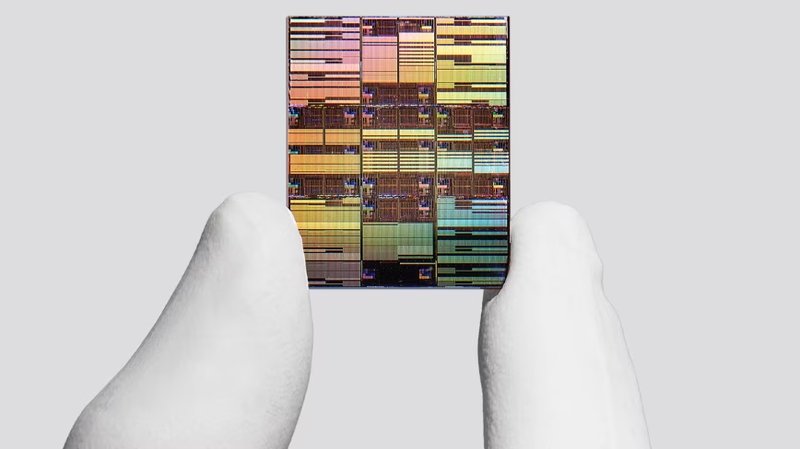
Shrinking transistors down to 1nm means abandoning traditional planar silicon architectures for entirely new materials and structures. Extreme ultraviolet (EUV) lithography already pushes the physical limits of light, but going below 2nm will require high-k dielectrics, metals like ruthenium for interconnects, and two-dimensional semiconductors such as transition metal dichalcogenides. This is where companies like Toto enter the stage: historically they have developed expertise in producing ultra-high-purity ceramic and glass materials that can be adapted to fab process chambers.
The stakes are enormous: 1nm chips promise a leap in energy efficiency and compute density that could reshape data centers, but also on-premise servers. Less power per watt means less heat to dissipate and lower electricity bills, a critical factor for anyone running local inference infrastructure.
Direct impact on LLM hardware
For organizations evaluating on-premise deployment of Large Language Models, the evolution of process nodes is hardly academic. Each new generation of GPUs or dedicated inference accelerators built on more advanced processes can deliver more VRAM, higher memory bandwidth, and better token-per-second throughput while maintaining – or even shrinking – the thermal envelope. This translates into a more sustainable total cost of ownership (TCO) when you decide to self-host a 70-billion-parameter model instead of relying on the cloud.
Moreover, running models with less aggressive quantization (such as FP16 instead of INT8) on more efficient hardware expands the realm of what’s feasible locally. Companies that care about data sovereignty and GDPR compliance find in these advances a concrete ally, allowing them to avoid transferring sensitive data outside their perimeter.
The big picture
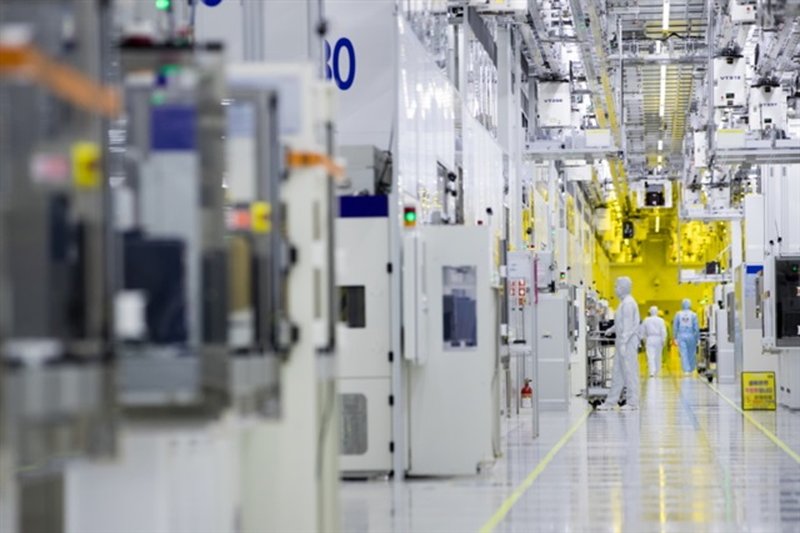
Toto’s interest in semiconductor materials is no outlier: the entire supply chain is accelerating to support the industry’s roadmap. Governments, through initiatives like the Chips Act in Europe and the US, are investing to secure manufacturing capacity, and the push from generative AI is squeezing timelines. While silicon giants like TSMC and Samsung remain the fabricators of record, the role of materials suppliers – often invisible – is becoming ever more strategic.
For the AI-RADAR community, which closely tracks deployment decisions, the direction is clear: the future of on-premise LLM hardware also runs through chemical labs and sintering furnaces. Investing in the right materials today means being able to train and serve larger models in-house tomorrow, with lower operational costs and without sacrificing control.



💬 Comments (0)
🔒 Log in or register to comment on articles.
No comments yet. Be the first to comment!