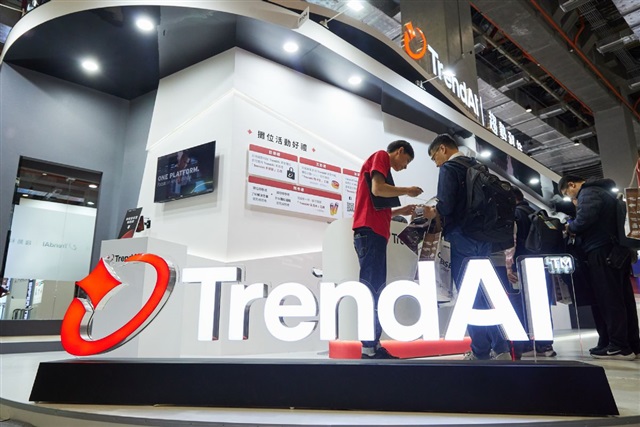
Trend Micro and Check Point have announced an expansion of artificial intelligence integrations into their enterprise security platforms. The news, reported in these hours, marks another step in cybersecurity vendors' race to embed advanced analysis capabilities into their products, with an increasing focus on LLMs.
It's not just about adding a chat pane to a console. The integrations in question, though technical details remain scarce, touch the core of security operations: threat detection, event correlation, response automation. Processes that require processing vast amounts of logs, network events, and endpoint signals, often in real time. Here, generative AI promises to reduce false positives and speed up investigations, but raises an inevitable question: where do these models run?
For a company handling sensitive data—a bank, a healthcare provider, a public body—the answer isn't trivial. Constantly sending logs and telemetry to a cloud API means losing control over data residency, with all the associated compliance risks. The opposite choice, running models locally, offers full sovereignty but brings a set of hardware constraints. GPUs with sufficient VRAM are needed to perform inference on increasingly large models, unless pushed toward aggressive quantization techniques that can degrade response accuracy.
It's here that on-premise deployment reveals its true cost. It's not just a matter of initial CapEx for purchasing servers with dedicated accelerators, but of overall TCO: energy consumption, cooling, maintenance, in-house expertise to manage inference pipelines and model updates. At the same time, the cloud alternative isn't free of surprises: variable latency, opaque operational costs that balloon with the volume of analyzed data, and that lingering taste of dependence on an external provider that many CISOs find hard to swallow.
The trend that Trend Micro and Check Point are riding isn't new, but their move confirms a direction: enterprise security is turning into an AI infrastructure problem. Choosing an on-premise stack for these workloads becomes a strategic decision, not just a whim of the IT department. And while vendors push their integrated solutions, those considering a self-hosted architecture still face important knots to untie: which hardware to sustain inference on frequently updated security models? Which serving framework to adopt to balance throughput and latency? How much does quantization really affect detection outcomes?
There are no one-size-fits-all answers, and the rush to adopt AI in cybersecurity risks pushing a structured analysis of trade-offs into the background. In a phase where every vendor promises miracles, the fact remains that the perimeter of defense is shifting inside data centers, and there the rules of the game change radically.







💬 Comments (0)
🔒 Log in or register to comment on articles.
No comments yet. Be the first to comment!