Crypto Scam and Geopolitical Tensions
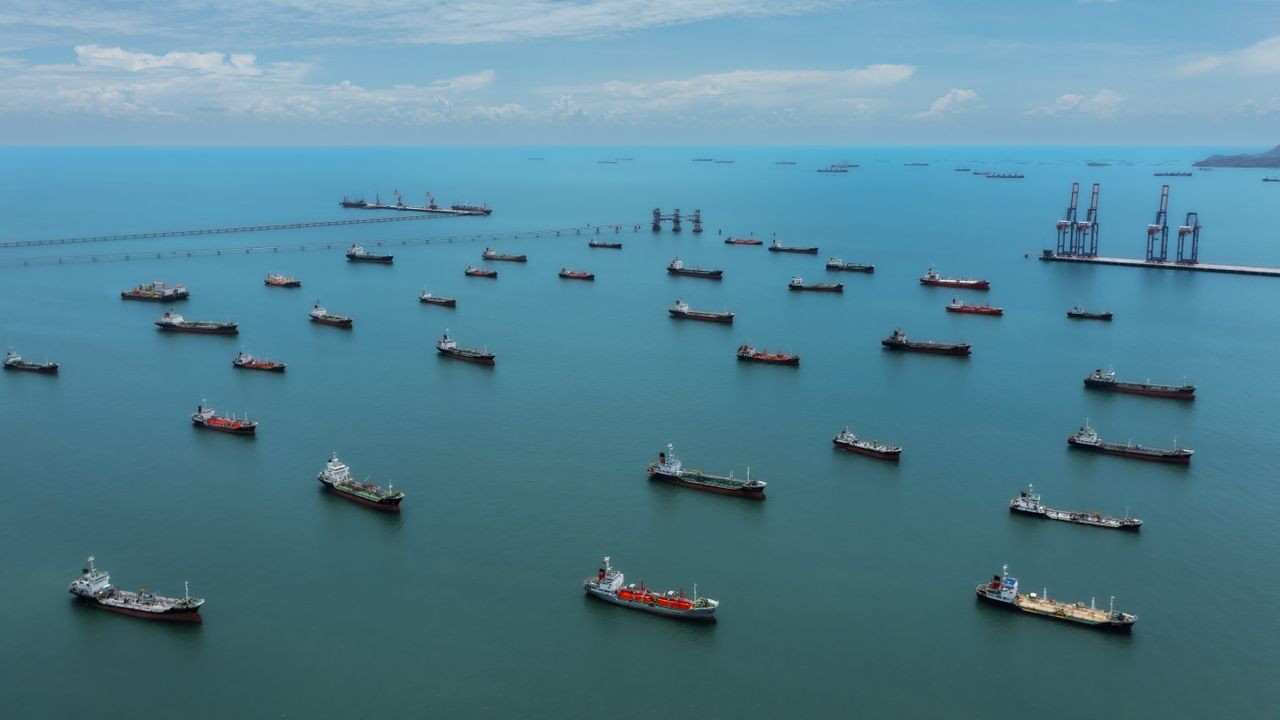
A complex cryptocurrency scam exploited geopolitical tensions in the Strait of Hormuz, one of the most strategic and sensitive maritime routes globally. The incident involved fake “Iranian authorities” who allegedly extorted payments from several oil tankers. These vessels, waiting to load their valuable cargo, found themselves at the center of a deception that had direct and dangerous consequences.
According to reports, two of the ships that fell victim to this fraud were fired upon, despite having already made the payments requested by the alleged intermediaries. This episode highlights how cybercriminals are increasingly adept at capitalizing on real crises and contexts of high uncertainty to perpetrate fraudulent schemes, with repercussions extending beyond mere economic damage to physical security and regional stability.
The Sophistication of Digital Threats
The nature of this scam, combining elements of social engineering with the use of cryptocurrencies and the impersonation of state authorities, reflects a worrying trend in the digital threat landscape. Malicious actors are no longer limited to simple cyberattacks but orchestrate complex campaigns that exploit human psychology, situational pressure, and the lack of robust verification mechanisms in critical contexts. The ability to credibly impersonate an authority and demand payments in hard-to-trace assets like cryptocurrencies makes these operations particularly insidious.
This type of fraud underscores a fundamental vulnerability: the difficulty of establishing trust and authenticity of communications in high-risk environments. Organizations operating in sensitive sectors, from maritime logistics to critical infrastructure management, must contend not only with technical threats but also those aimed at manipulating human decision-making through deception. The lesson is clear: security cannot be solely delegated to technology but must include rigorous protocols for identity and request verification.
Security and Data Sovereignty in AI Deployments
The incident in the Strait of Hormuz, while not directly related to the world of artificial intelligence, offers crucial insights for organizations evaluating the deployment of Large Language Models (LLM) and other AI workloads. The need to protect critical assets from external manipulation, fraud, and unauthorized access is an imperative that also extends to sensitive data and proprietary models. In this context, data sovereignty and control over the infrastructure become central elements.
For companies considering self-hosted solutions or on-premise deployment for their LLM, the ability to keep data within their physical and logical boundaries offers a superior level of control and security. Air-gapped environments, for example, can significantly mitigate the risks of external attacks or compromises similar to those observed in the scam. The evaluation of the Total Cost of Ownership (TCO) for an AI infrastructure must therefore include not only hardware and software costs but also investments in security, compliance, and the ability to autonomously manage the entire pipeline, from the training phase to inference. This approach ensures that sensitive models and data are protected from fraudulent schemes or unauthorized access, maintaining full compliance with regulations such as GDPR.
Lessons for Future AI Infrastructure
The episode of the attacked oil tankers serves as a warning about the complexity of security challenges in the digital age. For the AI infrastructure of the future, protection will not be limited to defending against traditional cyberattacks but must extend to safeguarding against sophisticated threats that aim to exploit human and contextual vulnerabilities. Decisions regarding the deployment of AI systems, both for fine-tuning models and for delivering inference services, must integrate a holistic view of security.
This implies not only adopting robust frameworks and implementing dedicated hardware with adequate VRAM and throughput specifications but also defining clear policies for access management, identity verification, and software supply chain protection. For those evaluating on-premise deployment, AI-RADAR offers analytical frameworks on /llm-onpremise to assess the trade-offs between control, security, and costs. The ability to manage the entire stack in a controlled environment is a strategic advantage for mitigating risks and ensuring operational resilience in an evolving threat landscape.









💬 Comments (0)
🔒 Log in or register to comment on articles.
No comments yet. Be the first to comment!