
The news arrives with the regularity of a war bulletin: AI chip supply bottlenecks refuse to ease, instead migrating and consolidating at critical points in the supply chain. The latest picture shows TSMC widening its competitive edge just as two key elements — HBM (High Bandwidth Memory) and CoWoS (Chip-on-Wafer-on-Substrate) packaging technology — become the market’s new choke points. This is not a temporary shortage; it is a structural realignment that rewards those who control vertical integration across silicon, packaging, and memory, and forces everyone else to rethink procurement, design, and deployment strategies.
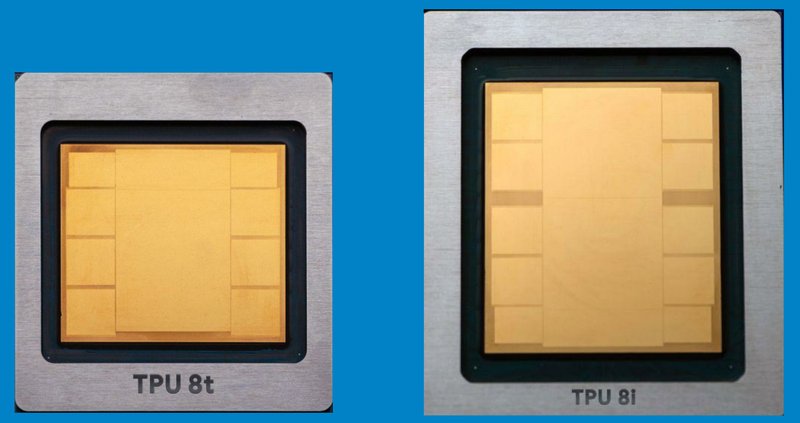
To grasp the scale of this shift, a step back is needed. The latest GPUs — and AI accelerators more broadly — owe their power not only to transistor scaling but to system architecture. HBM is stacked memory that places DRAM banks extremely close to the processor die, multiplying bandwidth and cutting power consumption compared to traditional GDDR. CoWoS, for its part, is TSMC’s interposer-based packaging technique that integrates logic chips and HBM on the same substrate, enabling interconnect densities unattainable with conventional approaches. Without these two technologies, the boards that drive large-scale LLM inference and training simply would not exist.
The rub is that both HBM and CoWoS require enormous capital investments and long lead times for capacity ramp-up. Fabs do not build advanced packaging lines as quickly as they add lithography nodes, and HBM memory, dominated by a handful of suppliers, faces demand growth that outstrips every capacity forecast. In this environment, TSMC is uniquely positioned: not only is it the sole provider of industrial-volume CoWoS, but its influence extends to the allocation of HBM supply, often sourced from partner companies yet integrated under TSMC’s control. Anyone needing AI accelerators — from cloud providers and hyperscalers down to enterprises evaluating on-premise deployment — must reckon with a single upstream bottleneck that dictates timelines, pricing, and hardware configurations.
This restructuring is far from neutral. On one hand, it further strengthens TSMC and, by extension, those with privileged supply agreements (typically large GPU vendors and a few cloud giants). On the other, it squeezes every actor trying to diversify hardware: alternative chipmakers, AI accelerator startups, and even providers of FPGA- or custom ASIC-based solutions. The advanced packaging and HBM crunch is not about nanometers; it is a system-level barrier that makes it difficult for anyone but the integrated players to bring a competitive product to market in reasonable time.
For those weighing on-premise deployment scenarios, the implications are concrete. Actual availability of servers equipped with high-end GPUs depends on TSMC’s ability to fulfill CoWoS orders and on memory vendors’ HBM output. This is not merely a pricing issue: even with budget in hand, lead times stretch and configurations may be constrained by what is physically available. Decision makers are forced to evaluate non-trivial trade-offs: accept previous-generation hardware, explore architectures that use conventional memory (with bandwidth and performance penalties), or shift workloads to managed cloud solutions — sacrificing data control and long-term cost predictability in the process. AI-RADAR has examined such trade-offs in analyses of on-prem LLM deployment strategies, highlighting that the choice is as much about governance as it is about technology.
A second-order effect emerges around data sovereignty. If AI accelerators become scarce, centralized resources, the push for local and air-gapped infrastructure risks slowing down: for public agencies, financial institutions, and regulated sectors, the inability to source adequate hardware in-house means either postponing AI projects that handle sensitive data or accepting significant performance compromises. Today’s bottlenecks are thus not just a supply-chain headache; they are a factor influencing regulatory compliance and the strategic autonomy of organizations.
Ultimately, the HBM and CoWoS bottlenecks signal a phase of brutal industry maturation: AI competition is no longer only about transistor density, but about system integration and control of the entire hardware value chain. TSMC embodies this model better than anyone, and the market is structuring itself accordingly. Organizations seeking to maintain flexibility and independence will have to live with this new reality for years, not months.




💬 Comments (0)
🔒 Log in or register to comment on articles.
No comments yet. Be the first to comment!