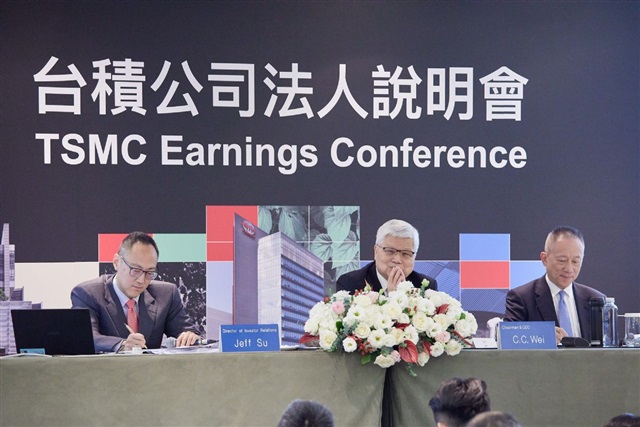
TSMC's Caution in the AI Market
The artificial intelligence sector, particularly that of Large Language Models (LLMs), is experiencing an unprecedented phase of expansion, fueled by massive investments and rapid innovation. However, the growing enthusiasm raises questions about the sustainability of such growth. In this context, the strategic decisions of key players like TSMC, the world's leading semiconductor manufacturer, take on crucial importance.
According to an analysis reported by DIGITIMES, an investor suggested that TSMC's cautious capital expenditure (capex) policy is acting as a brake, preventing the formation of a potential speculative bubble in the AI market. This perspective highlights how the prudent management of investments in production capacity can influence not only the supply chain but also the economic stability of an entire technology sector.
The Role of Capex and Hardware Availability
TSMC's capital expenditure is a fundamental indicator of its ability to expand the production of advanced chips, including those powering the latest generation of AI accelerators. These chips are the beating heart of training and Inference systems for LLMs, and their availability is a decisive factor for the large-scale adoption of AI in the enterprise.
A more conservative capex policy by TSMC may lead to more controlled growth in production capacity. While this could limit the supply of AI hardware in the short term, potentially keeping prices high and lead times extended, it could also prevent an excessive market saturation that, in a scenario of slowing demand, could lead to a price collapse and asset devaluation. For companies planning LLM deployments, this dynamic translates into greater attention to strategic planning and Total Cost of Ownership (TCO) management.
Implications for On-Premise Deployments
For CTOs, DevOps leads, and infrastructure architects evaluating self-hosted solutions for AI workloads, TSMC's decisions have a direct impact. Limited availability of advanced silicon can influence the choice between procuring proprietary hardware for on-premise deployments or relying on cloud services. Opting for bare metal or air-gapped infrastructure requires careful evaluation of lead times for high VRAM GPUs and the long-term TCO implications.
The cautious capital expenditure of a key supplier like TSMC can make rapid scaling of local AI infrastructures more complex, emphasizing the importance of long-term planning and strategic partnerships. For those evaluating on-premise deployments, analytical frameworks on /llm-onpremise can help assess the trade-offs between initial costs, operational flexibility, data sovereignty, and hardware procurement capability in a volatile market.
Future Outlook and Strategic Considerations
An investor's view on TSMC's capex strategy offers food for thought on the maturity of the AI market. A more measured approach to production capacity growth could indicate a willingness to build a more resilient ecosystem, less subject to boom and bust cycles. This is particularly relevant for companies investing in AI infrastructures, where supply chain stability and predictability are crucial.
In a landscape where the demand for compute power for LLMs continues to grow, TSMC's ability to balance expansion with caution will be a determining factor. Today's capex decisions will influence hardware availability, deployment strategies, and ultimately, the pace of AI innovation for years to come, directly impacting companies' ability to maintain control over their data and infrastructure.







💬 Comments (0)
🔒 Log in or register to comment on articles.
No comments yet. Be the first to comment!