TSMC and the CoPoS Supply Chain: Legal Turmoil and AI Hardware Impact
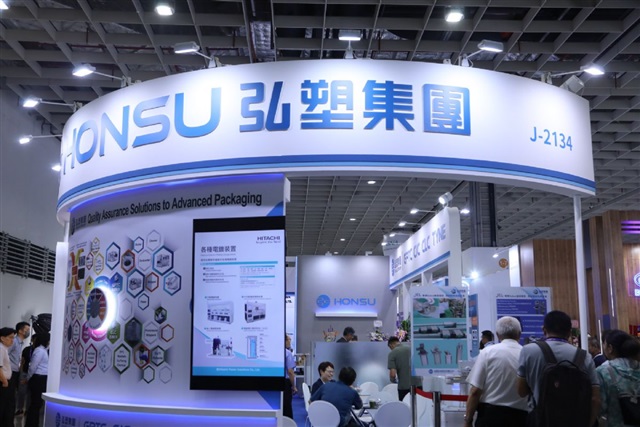
The global semiconductor supply chain, already under pressure, faces new challenges. Recently, CoPoS (Chip-on-Package-on-Substrate) equipment orders destined for TSMC, the world's leading chip manufacturer, have undergone a significant reshuffle. The cause lies in legal turmoil involving a Taiwanese equipment maker, casting a shadow over the stability of a crucial segment for artificial intelligence innovation.
This event highlights the fragility of the complex networks that underpin advanced hardware production. For companies relying on these components, particularly for the development and on-premise deployment of Large Language Models (LLMs), the news raises questions about the future availability and costs of necessary infrastructure.
The Role of Advanced Packaging in the AI Era
Advanced packaging, of which CoPoS is an example, represents a fundamental technology for creating the high-performance chips that power artificial intelligence. Techniques like CoWoS (Chip-on-Wafer-on-Substrate) and CoPoS enable the integration of multiple dies, including processors and HBM (High Bandwidth Memory), onto a single substrate. This integration is vital for overcoming the physical limitations of traditional architectures, offering an exponential increase in memory bandwidth (VRAM) and a reduction in latency.
These advancements are indispensable for the latest generation of GPUs and AI accelerators, which require massive amounts of data to be processed in parallel for LLM training and Inference. Without efficient and reliable advanced packaging, the ability to produce chips with the specifications required for intensive AI workloads would be severely compromised. The stability of the supply chain for these equipment types is therefore directly related to the industry's capacity to meet the growing demand for AI computing power.
Implications for On-Premise LLM Deployment
For CTOs, DevOps leads, and infrastructure architects evaluating on-premise LLM deployment, hardware supply chain stability is a critical factor. Disruptions, such as those affecting TSMC's CoPoS orders, can have direct repercussions on the Total Cost of Ownership (TCO) and project timelines. Limited availability of advanced GPUs, essential for LLM Inference and Fine-tuning, can lead to significant delays or increased acquisition costs.
Infrastructure decisions, which often balance CapEx and OpEx, data sovereignty, and compliance requirements, heavily depend on the predictability of the hardware market. A reshuffle of key equipment orders can force companies to reconsider their strategies, exploring alternatives or diversifying suppliers, where possible. Supply chain resilience thus becomes a non-negligible element in planning self-hosted or air-gapped environments for AI.
Future Outlook and Risk Mitigation
The incident involving TSMC and its Taiwanese supplier serves as a reminder of the complexity and interconnectedness of the global technological ecosystem. As the demand for AI computing power continues to grow exponentially, reliance on a limited number of key players in the production of advanced components exposes the industry to potential vulnerabilities.
For organizations aiming to build and maintain robust and scalable AI infrastructures, it becomes imperative to adopt risk mitigation strategies. This may include proactive procurement planning, evaluating different hardware architectures, or investing in internal research and development capabilities to optimize the use of existing resources. A deep understanding of supply chain constraints is crucial for making informed decisions and ensuring operational continuity in the rapidly evolving landscape of artificial intelligence.







💬 Comments (0)
🔒 Log in or register to comment on articles.
No comments yet. Be the first to comment!