Introduction
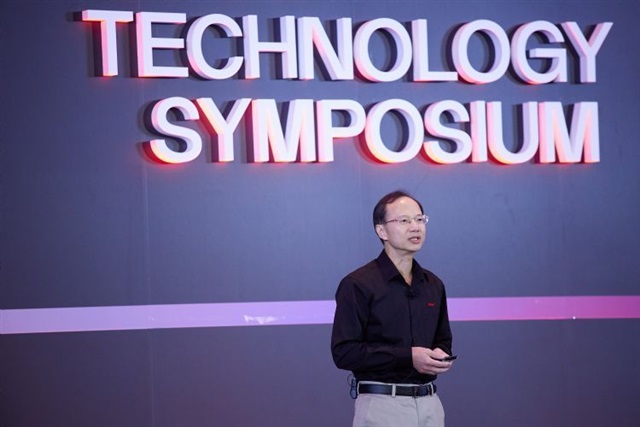
During its recent symposium, TSMC, the world's leading semiconductor manufacturer, highlighted two interconnected trends that are redefining the technological landscape: the rapid expansion of artificial intelligence and the consequent, growing demand for advanced packaging solutions. This event provided a clear perspective on how the industry is responding to the increasingly complex computational needs dictated by the advancement of Large Language Models (LLMs) and other AI applications.
Artificial intelligence, particularly in the field of LLMs, requires unprecedented computing power, which translates into a critical need for specialized hardware. Foundries like TSMC are at the heart of this revolution, being responsible for producing the chips that power data centers, edge systems, and on-premise infrastructures dedicated to AI. Their ability to innovate and scale production is directly related to the speed at which AI can progress and find new practical applications.
The Critical Role of Advanced Packaging in the AI Era
Advanced packaging is no longer merely a final step in the semiconductor manufacturing process; it has become a fundamental enabler for AI performance. Technologies such as TSMC's CoWoS (Chip-on-Wafer-on-Substrate), or similar 2.5D and 3D integration solutions, allow overcoming the physical limits of traditional chips. These innovations enable the integration of multiple dies on a single substrate, reducing distances between components and significantly improving memory bandwidth and power efficiency.
For LLMs, this translates into a greater ability to process massive datasets and manage models with billions of parameters. The availability of high VRAM and superior data throughput, made possible by advanced packaging, are essential for the inference and fine-tuning of these models. Without these solutions, current GPU architectures would struggle to meet the memory and interconnection requirements necessary for intensive AI workloads.
Implications for On-Premise Deployments
The push towards advanced packaging has profound implications for organizations considering on-premise deployments for their AI workloads. Latest-generation hardware, incorporating these technologies, offers superior performance but often comes with a higher initial cost (CapEx) and specific infrastructural requirements in terms of power and cooling. However, for companies prioritizing data sovereignty, regulatory compliance (such as GDPR), or the need for air-gapped environments, investment in self-hosted infrastructures becomes strategic.
The choice between cloud and on-premise for AI is never trivial. While the cloud offers scalability and flexibility, on-premise solutions guarantee total control over data and infrastructure, as well as potentially lower TCO in the long run for stable and predictable workloads. The availability of AI chips with advanced packaging is crucial to making on-premise deployments competitive in terms of performance. For those evaluating on-premise deployments, there are complex trade-offs that AI-RADAR analyzes through dedicated frameworks on /llm-onpremise, considering aspects such as data sovereignty and TCO.
Future Outlook and Market Constraints
The demand for AI chips with advanced packaging is set to grow further, driven by the continuous evolution of LLMs and the expansion of AI into new sectors. This places significant pressure on the supply chain and the production capabilities of foundries. Innovation in packaging and silicon design will be crucial to overcome bottlenecks and continue improving performance per watt.
Companies will need to navigate a market where access to the most performant hardware may remain a critical factor. The ability of TSMC and other industry players to scale the production of these advanced technologies will largely determine the speed at which artificial intelligence can be adopted and implemented on a large scale, in both cloud and on-premise environments, directly influencing global technological strategies.








💬 Comments (0)
🔒 Log in or register to comment on articles.
No comments yet. Be the first to comment!