TSMC's Financial Outlook for 2026
Taiwan Semiconductor Manufacturing Company (TSMC), the world's leading semiconductor manufacturer, has released its financial forecasts, indicating revenue growth exceeding 15% for the second quarter of 2026. This projection highlights the company's confidence in the future demand for advanced chips and its dominant position in the industry. TSMC's financial performance is a crucial indicator for the entire technology sector, given its central role in the global supply chain of essential components.
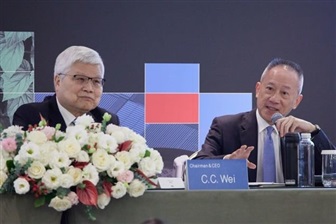
In addition to overall growth estimates, TSMC also anticipates that margins derived from production using the N3 process, its 3-nanometer technology, will surpass the company average. This information is significant because the N3 process represents one of the most advanced manufacturing technologies available, fundamental for producing high-performance processors, including GPUs and AI accelerators. TSMC Chairman, Dr. C.C. Wei, emphasized the strategic importance of these innovations.
The Strategic Role of the N3 Process in the AI Ecosystem
TSMC's N3 process is at the core of next-generation silicio production, essential for powering Large Language Models (LLM) and other artificial intelligence applications. The miniaturization of transistors, made possible by advanced nodes like N3, allows for the integration of a greater number of computing units into a smaller space, improving energy efficiency and overall performance. This is a critical factor for AI workloads, which demand enormous computational power for both training and inference.
For organizations aiming for on-premise LLM deployments, access to silicio produced with cutting-edge processes like N3 is vital. Such chips offer the throughput and low latency required to handle complex models and large data volumes in real-time. TSMC's ability to produce these components at scale directly influences the availability of high-end hardware on the market, a fundamental aspect for CTOs and infrastructure architects planning investments in private data centers.
Implications for On-Premise Deployments and TCO
TSMC's forecasts regarding N3 process margins and revenue growth have direct implications for the Total Cost of Ownership (TCO) of on-premise AI deployments. A stable and competitive supply of advanced chips can help mitigate long-term hardware costs, even if the initial CapEx for purchasing latest-generation accelerators remains significant. Dependence on a single foundry supplier like TSMC, however, also introduces considerations about supply chain resilience and risk diversification.
For companies prioritizing data sovereignty and regulatory compliance, self-hosted and air-gapped deployments are often the preferred choice. These environments require robust and high-performance hardware, whose availability is closely tied to TSMC's production capacity. Infrastructure planning must therefore consider not only technical specifications (such as VRAM and throughput) but also market dynamics and the ability of silicio suppliers to meet growing demand. For those evaluating on-premise deployments, analytical frameworks are available on /llm-onpremise that can help assess these complex trade-offs.
The Future of Silicio and Data Sovereignty
The continuous evolution of manufacturing processes, such as N3 and future nodes, is a key driver for innovation in artificial intelligence. TSMC's ability to maintain technological leadership and expand production is crucial for the entire industry. This directly impacts the ability of companies to build and maintain private AI infrastructures that ensure full control over data and operations, an increasingly stringent requirement in many sectors.
In a rapidly evolving technological landscape, the availability of cutting-edge silicio is not just a matter of performance, but also of strategic autonomy. Investment decisions in hardware for on-premise LLMs are intrinsically linked to the ability of chip manufacturers to provide solutions that balance power, efficiency, and cost. TSMC's projections offer a glimpse into the foundations upon which the next generations of AI infrastructures will be built, with a constant focus on security, compliance, and data sovereignty.







💬 Comments (0)
🔒 Log in or register to comment on articles.
No comments yet. Be the first to comment!