TSMC and the Roadmap for Future AI Chips
TSMC, the Taiwanese semiconductor manufacturing giant, has announced its plans for the introduction of the next A13 and A12 process nodes, targeting 2029 for the start of production. This strategic move, reported by DIGITIMES, highlights the company's commitment to supporting the growing demand for computing power in artificial intelligence. TSMC's roadmap is a crucial indicator for the entire technology industry, as its foundries are responsible for producing a wide range of chips that power devices and infrastructure globally.
The introduction of new process nodes is a fundamental step in the evolution of semiconductors. Each new generation, such as the future A13 and A12, promises smaller transistors, higher density, superior performance, and improved energy efficiency. These advancements are indispensable for addressing the increasingly complex demands of Large Language Models (LLM) and other AI workloads, which require enormous amounts of VRAM, high throughput, and parallel processing capabilities for training and Inference. TSMC's ability to maintain this pace of innovation is vital for the advancement of the entire AI sector.
The Impact of Advanced Nodes on On-Premise Deployment
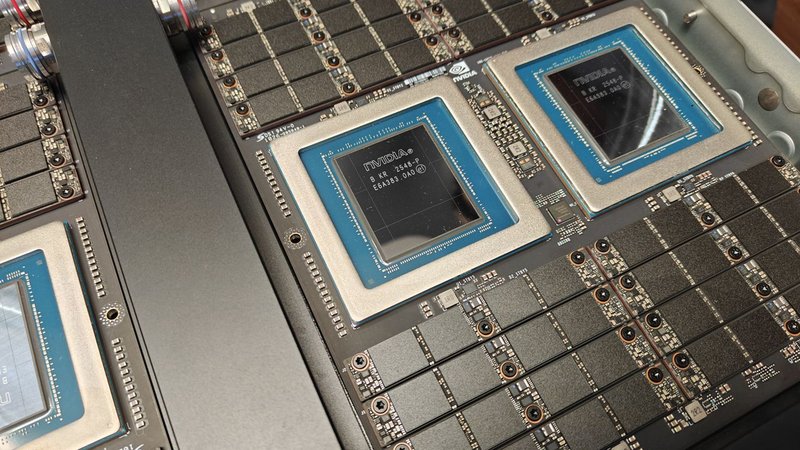
For CTOs, DevOps leads, and infrastructure architects evaluating deployment options for AI workloads, the evolution of process nodes has direct and significant implications. Chips based on technologies like A13 and A12 will enable the creation of GPUs and AI accelerators with significantly higher performance and reduced power consumption. This translates into a more favorable TCO (Total Cost of Ownership) for self-hosted and on-premise solutions, as it becomes possible to achieve more computing power per watt and per square meter of datacenter space.
The availability of more efficient and powerful hardware is an enabler for strategies prioritizing data sovereignty, compliance, and air-gapped environments. Deploying LLMs and other AI applications on local infrastructure becomes more feasible and cost-effective when the underlying silicio offers an optimal performance-to-power ratio. This reduces reliance on external cloud services and allows companies to maintain full control over their data and models. For those evaluating on-premise deployment, AI-RADAR offers analytical frameworks on /llm-onpremise to assess the trade-offs between self-hosted and cloud solutions, considering factors such as CapEx, OpEx, and specific workload requirements.
Future Prospects and Challenges in the AI Landscape
The 2029 target for the A13 and A12 nodes underscores the long planning and massive investments required in the development and production of cutting-edge semiconductors. The AI industry is constantly seeking greater computing power, pushing the limits of existing hardware capabilities. TSMC's ability to deliver these advanced nodes will be crucial for unlocking new possibilities in terms of model size, algorithm complexity, and processing speed.
These developments will not only influence the availability of chips for tech giants but will also have a cascading effect across the entire AI ecosystem, from startups to large research centers. The competition for the highest-performing silicio is intense, and TSMC's roadmap plays a key role in defining the pace of innovation. Maintaining a technological edge in process nodes is essential for TSMC to consolidate its leadership position and to ensure that the AI industry has the necessary hardware tools to continue its rapid evolution.






💬 Comments (0)
🔒 Log in or register to comment on articles.
No comments yet. Be the first to comment!