
AI Boom Drives TSMC's Revenue Surge
The artificial intelligence sector continues to demonstrate exponential growth, with its effects directly impacting key players in the technology supply chain. TSMC, the Taiwanese semiconductor manufacturing giant, has announced a significant 30% increase in its revenue, recorded in the first four months of 2026. This data, reported by Digitimes, underscores how the "AI boom" is the primary driver behind this financial expansion.
The rising demand for advanced chips, essential for training and inference of Large Language Models (LLMs) and other AI applications, is putting pressure on global production capacity. TSMC, with its leadership in advanced node technology, is uniquely positioned to capitalize on this trend, supplying the fundamental silicon that fuels AI innovation worldwide.
The Heart of Artificial Intelligence: Advanced Silicon
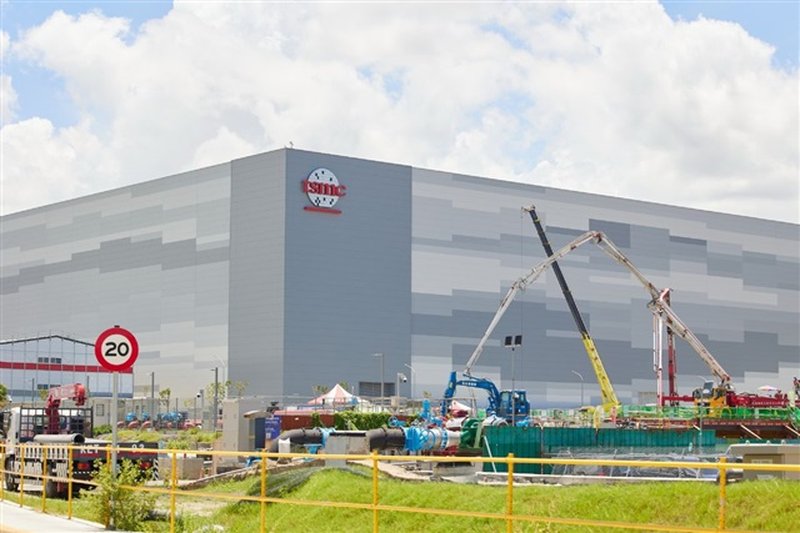
The infrastructure required to support the development and deployment of LLMs demands highly sophisticated hardware components. GPUs, particularly those with high amounts of VRAM and parallel computing capabilities, have become the cornerstone of every AI pipeline. The production of these high-performance chips is a complex and costly process, requiring massive investments in research and development, as well as state-of-the-art fabrication facilities.
TSMC's revenue increase is a direct indicator of the market's hunger for this type of silicon. Whether for servers training complex models or units for low-latency inference, the availability of high-performance hardware is a critical factor. The ability of a company like TSMC to meet this demand is therefore crucial for the speed and direction of artificial intelligence's evolution.
Implications for On-Premise Deployments
For organizations evaluating on-premise deployment strategies for their AI workloads, semiconductor market trends have direct implications. High demand for advanced silicon can translate into higher costs and longer lead times for hardware acquisition. This directly impacts the Total Cost of Ownership (TCO) of self-hosted solutions, making strategic planning and procurement more critical than ever.
The choice between a cloud infrastructure and a bare metal on-premise deployment often hinges on a careful analysis of CapEx versus OpEx trade-offs, in addition to fundamental considerations such as data sovereignty and compliance. In a context of strong demand, securing access to cutting-edge GPUs and robust infrastructure becomes a priority for those who wish to maintain full control over their data and models, even in air-gapped environments. For those evaluating on-premise deployments, analytical frameworks are available at /llm-onpremise to assess these trade-offs.
Future Outlook and Challenges
TSMC's growth trend highlights a clear direction: investment in AI hardware is set to continue at a sustained pace. This scenario presents both opportunities and challenges. On one hand, it stimulates innovation and the development of increasingly powerful and efficient chips. On the other, it raises questions about the sustainability of the supply chain and the ability of all market players to access the necessary resources.
Companies aiming to build and scale their AI capabilities will need to navigate a dynamic and competitive hardware market. Understanding silicon production dynamics and their implications for infrastructure availability and cost will be crucial for making informed and strategic decisions about future deployments, while ensuring performance and control over their artificial intelligence assets.






💬 Comments (0)
🔒 Log in or register to comment on articles.
No comments yet. Be the first to comment!