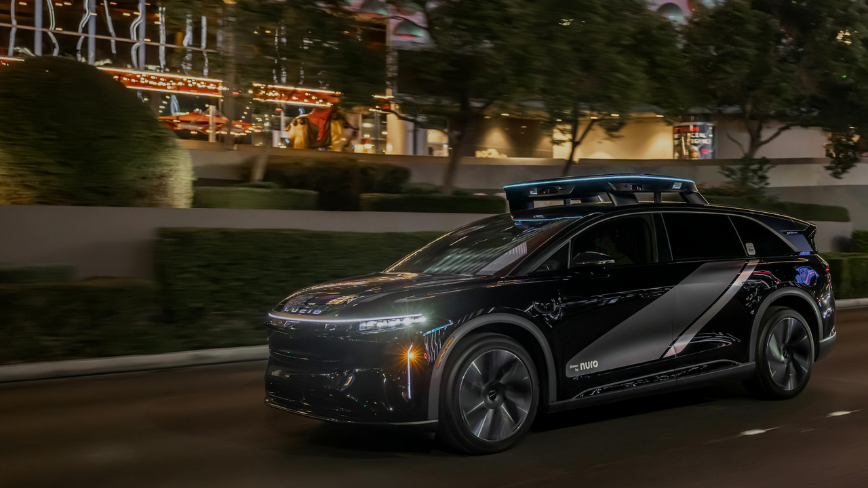
Uber and Nuro: Robotaxi Tests Begin in San Francisco
Uber and Nuro have initiated internal testing in San Francisco for a new premium robotaxi service. This initial phase involves the use of Lucid Gravity SUVs equipped with Nuro's autonomous driving system. The initiative marks a concrete step towards integrating autonomous vehicles into passenger transport services, although testing at this stage is limited to the companies' employees.
During the test rides, a human safety operator is always present behind the wheel. This practice is common in the early stages of autonomous technology development and Deployment, ensuring a level of supervision and immediate intervention if necessary. The presence of the operator underscores the caution and progressive approach the industry is taking in introducing fully autonomous vehicles onto public roads.
The Technological Core: Nvidia Drive AGX Thor
At the heart of Nuro's autonomous driving system, integrated into the Lucid Gravity SUVs, lies the Nvidia Drive AGX Thor platform. This hardware solution is specifically designed to support complex artificial intelligence and machine learning workloads, essential for environmental perception, path planning, and real-time vehicle control. The choice of a platform like Drive AGX Thor highlights the need for high computing capabilities directly on board the vehicle to handle the Inference of sophisticated AI models.
The Nvidia Drive AGX Thor platform is known for its ability to process large amounts of sensor data (cameras, radar, lidar) with low latency, a fundamental requirement for the safety and efficiency of autonomous driving. For companies evaluating AI Deployment at the edge, such as in autonomous vehicles, hardware selection is crucial. Factors like available VRAM, computational Throughput, and energy efficiency directly influence the performance and overall TCO of the solution.
Industry Implications and Uber's Strategy
Uber's commitment to acquiring at least 20,000 of these vehicles over the next six years signals a clear strategic direction towards automating its fleet. This move not only reduces reliance on human drivers in the long term but also promises potential operational cost optimizations and greater service scalability. An order of this magnitude has significant implications for the supply chain and the entire autonomous mobility ecosystem.
For companies operating large fleets, the transition to autonomous vehicles raises complex issues related to infrastructure management, maintenance, and continuous software updates. The ability to manage AI model Fine-tuning and over-the-air software Deployment becomes a critical factor. This scenario is particularly relevant for those considering self-hosted solutions or on-premise Deployment for data and AI model management, in order to maintain control and sovereignty over their technological assets.
Future Prospects of Autonomous Mobility
The commencement of these tests and Uber's commitment represent an important indicator of the growing maturity of autonomous driving technology. Although the path to full autonomy is still long and full of regulatory and technological challenges, initiatives like this demonstrate concrete confidence in the potential of robotaxis. The integration of advanced hardware platforms like Nvidia Drive AGX Thor is fundamental to overcoming technical obstacles and ensuring the necessary safety and reliability.
The autonomous mobility sector continues to evolve rapidly, with potential impacts on logistics, public transport, and ride-sharing services. For organizations exploring the adoption of complex AI solutions, it is essential to carefully evaluate the trade-offs between cloud solutions and on-premise Deployment, considering aspects such as latency, data security, and TCO. AI-RADAR offers analytical frameworks on /llm-onpremise to support these strategic decisions, providing tools to compare the constraints and opportunities of different infrastructural approaches.






💬 Comments (0)
🔒 Log in or register to comment on articles.
No comments yet. Be the first to comment!