Without helium, chips don't get made. At least, not the chips that power global data centers, artificial intelligence, and cloud infrastructure. Taiwan's semiconductor industry is now staring at a bottleneck that could disrupt the very workloads driving demand for compute power.
According to an analysis reported by AFP, Taiwan relies on Qatar for nearly 90% of its helium, an irreplaceable inert gas in key stages of semiconductor manufacturing: from cooling superconducting magnets in lithography machines to creating controlled atmospheres in dozens of chemical processes. 2026 is shaping up as the year when this single-supplier dependency could become a genuine crunch, with global supply already under strain from rising demand and structural limits on production.
The news carries exceptional weight when viewed against the map of advanced chip production. TSMC, which alone accounts for more than half of the global foundry market, has its production epicenter in Taiwan. Any slowdown or cost spike in helium would cascade onto the availability of processors, GPUs, NPUs, and other critical AI components, including those that power on-premise workloads. For enterprises evaluating self-hosted LLM deployments, this adds a geopolitical variable to already complex Total Cost of Ownership calculations.
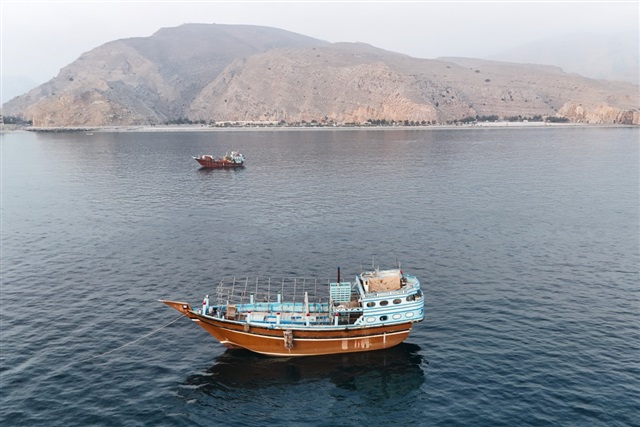
This isn't helium's first moment in the spotlight: shortages in 2019 and 2021 already exposed the fragility of a market where supply is concentrated in a few countries (Qatar, United States, Russia, Algeria) and where the closure of a single plant can send prices soaring. But Taiwan's one-way reliance on Qatar introduces an additional logistical and political risk, in a region – the Persian Gulf – subject to recurring tensions. Any disruption along the liquid gas shipping routes, which use specialized cryogenic tankers, would result in unacceptable downtime for foundries.
For those designing local AI infrastructure, the domino effect is clear. Fewer available chips mean longer lead times for servers and workstations equipped with high-VRAM GPUs essential for inference and fine-tuning of large language models. Cost pressure, moreover, risks making the evaluation between on-premise and cloud solutions even more critical, shifting the focus toward tighter capacity management and optimization at the framework level.
Taiwan's industry isn't idle. In recent years, helium recycling initiatives inside fabs have been launched and alternative supply sources have been explored, but the scale of demand is such that structural change takes time. Meanwhile, anyone investing in LLM hardware must accept that the helium variable, however distant it seems from the server room, is now part of the supply chain equation.
Risk concentration on a single source is a concern for the entire AI ecosystem, not just for big cloud operators. For organizations that prioritize data sovereignty and direct control over their machines, continuity of chip production is as strategic as model choice or deployment architecture. And today, that strategic foundation is measured in cubic meters of liquefied helium en route to Kaohsiung.






💬 Comments (0)
🔒 Log in or register to comment on articles.
No comments yet. Be the first to comment!