
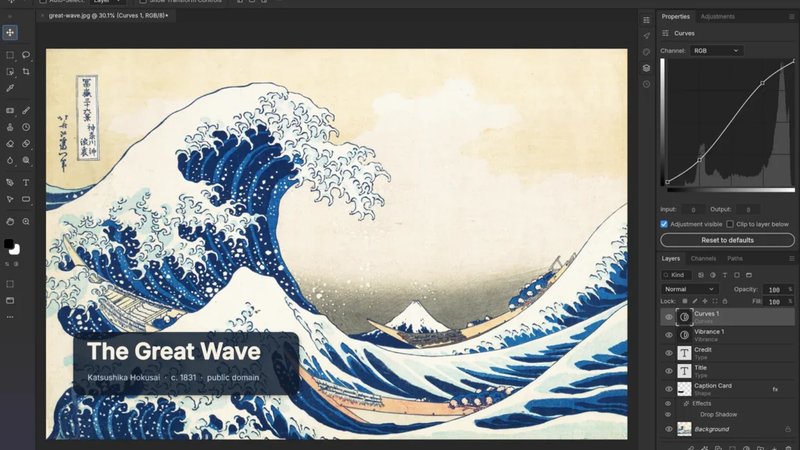
The news is the kind that raises an eyebrow: an independent developer reportedly rewrote a creative suite comparable to Adobe Creative Suite using Rust and with Claude's support, then released it for free. The source offers no verifiable technical details, so the exact scope of the project remains unclear. But the signal matters more than the single application.
The point is not whether the clone is truly complete or stable. It is that the cost of reimplementing complex software is changing. For years, the barrier to entry in markets dominated by professional suites has been the accumulated mass of features, proprietary formats, and module integration. An LLM assistant does not remove these barriers, but it drastically compresses the time needed to produce code, prototypes, and interfaces. This shifts competition from 'who has more features' to 'who guarantees maintenance, compatibility, and trust'.
There is a second, less visible effect. The choice of Rust is not neutral: it is a language that offers memory safety and performance close to C++, but with historically higher development costs. If a single developer can sustain a project of this scale using an LLM, it means the learning curve for tools considered demanding is lowering. Not because Rust has become simple, but because the assistant can absorb part of the syntactic and API complexity. The fact remains that overall design, file handling, and compatibility with proprietary formats are not problems solved by generating code.
For those looking at self-hosted alternatives in the creative sector, the story raises a concrete question: does it make sense to pay a cloud subscription to keep your assets on someone else's infrastructure, if local and free tools exist? But be careful: initial free availability says nothing about long-term sustainability, quality of support, or the ability to open files produced by commercial suites. Data sovereignty is not achieved simply by installing software on your computer; it requires open formats, reliable export, and a community able to fix bugs.
The third order of implications concerns incumbents. Adobe and similar companies do not lose customers because of a clone appearing on a public repository. But they lose the narrative monopoly on complexity. If a single individual can show a working alternative, however rough, the message for IT teams is clear: the bottleneck is no longer the amount of code to write, but governance, integration with existing workflows, and TCO. In this sense, the news does not mark the end of commercial suites. It marks the beginning of a phase in which value shifts from code to how it functions in the real world.




💬 Comments (0)
🔒 Log in or register to comment on articles.
No comments yet. Be the first to comment!