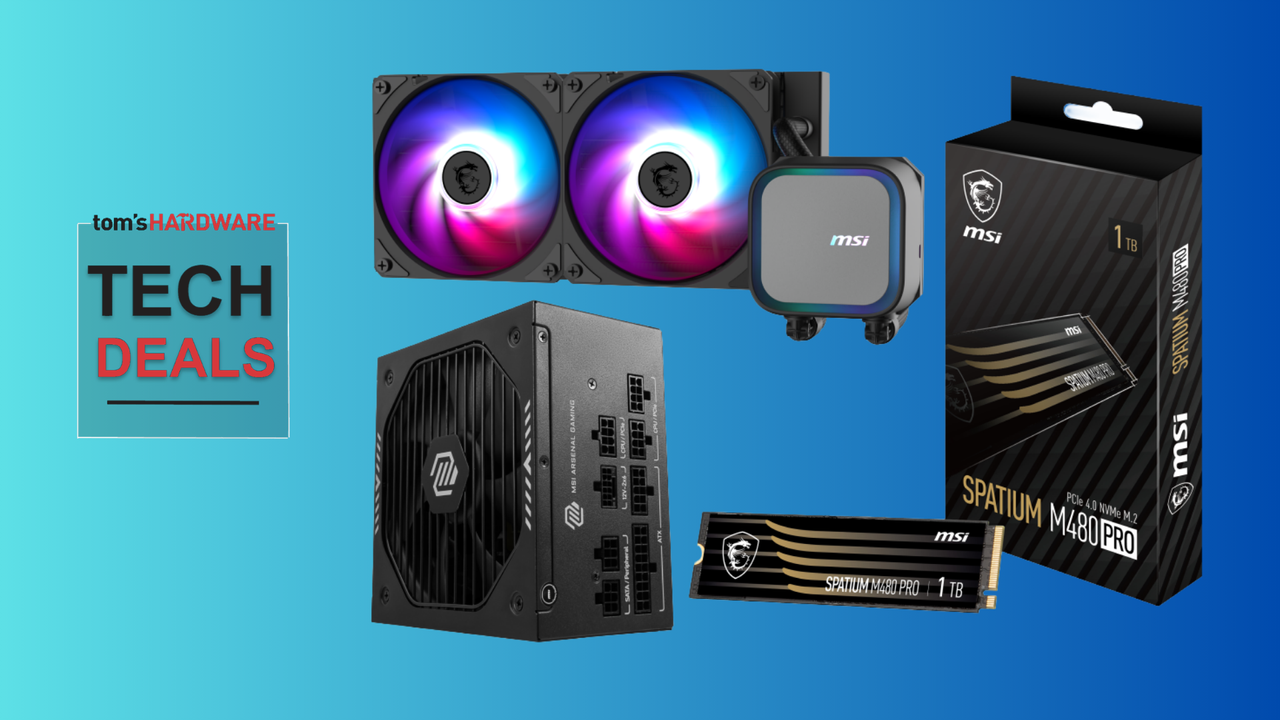
A Consumer Bundle for PC Upgrades
The hardware component market periodically offers interesting opportunities for upgrading desktop systems. A recent bundle, for example, features a 2TB PCIe 4.0 SSD, a 750W power supply, and a 240mm All-in-One (AIO) liquid cooling system, all for a total price of approximately $300, with an estimated saving of nearly $200 compared to purchasing the components separately. This offer is clearly aimed at those looking to improve the performance of a PC for gaming, productivity, or general use, ensuring high storage speeds, adequate power delivery, and effective thermal management for mid-range CPUs or GPUs.
However, for professionals and companies operating in the artificial intelligence sector, particularly with Large Language Models (LLM), it is crucial to recognize that infrastructure requirements diverge significantly from those of a typical consumer PC. While the specifications of such a bundle are advantageous for their segment, they are not remotely comparable to the computational power, storage, and cooling demands necessary for training or inference of enterprise-scale LLMs.
From Home Workstation to AI Infrastructure: Key Differences
Analyzing the bundle components from an AI perspective immediately highlights the discrepancies. A 2TB PCIe 4.0 SSD offers excellent performance for a single user, but LLM workloads require distributed storage solutions, often based on NVMe over Fabrics or arrays of ultra-high-speed SSDs, capable of managing terabytes or petabytes of data and sustaining extremely high throughput for accessing training datasets or model checkpoints. Latency and bandwidth become critical, far beyond the capabilities of a single drive.
Similarly, a 750W power supply is sufficient for a configuration with a single high-end GPU, but an LLM server can house multiple data center-class GPUs (such as NVIDIA H100s or A100s), each of which can require hundreds of watts. AI infrastructures need power supplies in the kilowatt range, often with N+1 redundancy, to ensure stability and operational continuity. The 240mm AIO cooling system, ideal for a CPU or a single GPU, is completely inadequate for a rack of AI servers, which employ massive air cooling solutions or more complex, large-scale liquid cooling systems to dissipate the heat generated by tens of thousands of compute cores.
Implications for On-Premise LLM Deployment
For organizations evaluating the deployment of LLMs in self-hosted or on-premise environments, hardware selection is a strategic decision that directly impacts performance, scalability, and Total Cost of Ownership (TCO). Adopting consumer components, even if seemingly cost-effective, would prove to be a false economy, unable to meet the VRAM, throughput, and latency requirements of modern LLMs. Data sovereignty, compliance, and security in air-gapped environments are priorities that demand robust infrastructure specifically designed for these purposes.
Planning an on-premise LLM infrastructure involves evaluating GPUs with high VRAM, high-bandwidth interconnects (such as NVLink or InfiniBand), distributed storage, and advanced cooling systems. These elements are crucial for managing the fine-tuning of complex models, large-scale inference with high batch sizes, and handling intensive data pipelines. For those evaluating on-premise deployments, AI-RADAR offers analytical frameworks on /llm-onpremise to assess trade-offs and specific requirements.
Beyond Single Components: The Strategic Vision for AI
The lesson emerging from the analysis of a consumer bundle is clear: hardware for artificial intelligence is not a simple extension of traditional PC components. It requires a holistic design that considers the entire technology stack, from power supply to cooling, from storage to network connectivity, all the way to software frameworks and the models themselves. On-premise deployment decisions are driven by the need for control, security, and long-term operational cost optimization, factors that transcend the price of a single component.
Investing in adequate AI infrastructure means ensuring the ability to innovate, maintain competitiveness, and protect critical assets such as data. Understanding the differences between consumer hardware and enterprise solutions is the first step to building a resilient, high-performing LLM infrastructure aligned with the organization's strategic objectives, avoiding the pitfalls of undersized or unsuitable solutions.





💬 Comments (0)
🔒 Log in or register to comment on articles.
No comments yet. Be the first to comment!