
Government Defense for xAI's AI Infrastructure
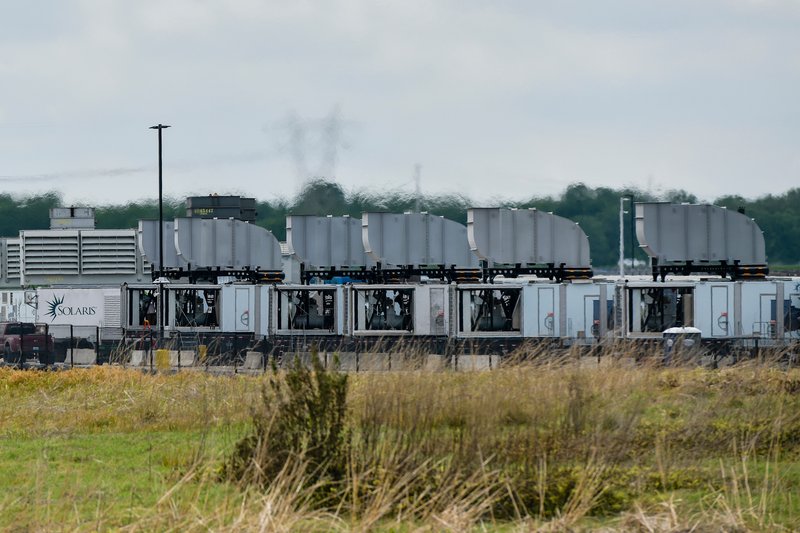
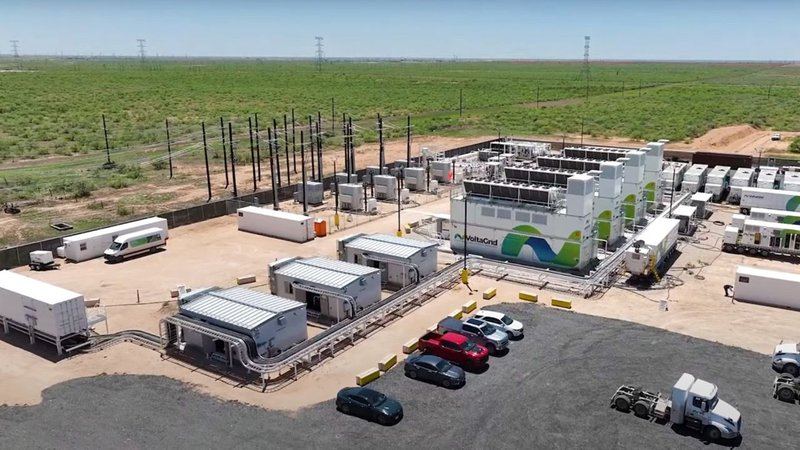
The technological and geopolitical landscape is increasingly intertwined, as demonstrated by the recent stance taken by the US Justice Department. The government agency has intervened in a pollution lawsuit, siding with xAI, Elon Musk's artificial intelligence company. At the heart of the dispute are the gas turbines that supply power to xAI's AI data center, which the government deems critically important for national security.
This move, also supported by the state of Mississippi, aims to dismiss a lawsuit brought by the NAACP. The primary argument is that the energy infrastructure in question is so strategic that it cannot be deactivated, highlighting a growing tension between the demands of advanced technological development and environmental concerns.
The Energy Footprint of AI Data Centers and On-Premise Choices
AI-dedicated data centers, particularly those hosting Large Language Models (LLMs) for training and inference, are known for their extremely high energy consumption. Powering thousands of high-performance GPUs requires a massive and constant supply of energy, making the choice of energy source a critical factor for any deployment.
For organizations opting for self-hosted or on-premise solutions, the availability of robust and reliable energy infrastructure is a fundamental prerequisite. Gas turbines, while raising environmental concerns, often provide baseload power capacity and stability that other sources, such as renewables, might not guarantee with the same continuity without advanced storage systems. This incident underscores how energy planning is a significant element in the Total Cost of Ownership (TCO) and the feasibility of a large-scale AI project.
National Security and Data Sovereignty in the AI Era
The Justice Department's statement, labeling xAI's turbines as "vital for national security," raises significant questions about the strategic role of artificial intelligence. The computing and data processing capabilities offered by AI data centers can be employed in critical sectors such as defense, intelligence, advanced scientific research, and the development of dual-use technologies. In this context, direct control over the physical infrastructure, including its power supply, becomes a key aspect of technological sovereignty and data security.
The ability to operate in air-gapped environments or with stringent compliance requirements, typical of on-premise deployments, is often linked to ensuring a fully controlled infrastructure. The controversy highlights the delicate balance that governments must strike between promoting technological innovation, environmental protection, and safeguarding national strategic interests.
Future Perspectives and AI Infrastructure Trade-offs
The legal case involving xAI and the US government is emblematic of the complex challenges accompanying the expansion of artificial intelligence. Decisions related to infrastructure, from the choice of specific hardware (such as GPUs with high VRAM) to the power source, are never purely technical but involve a wide range of economic, environmental, and strategic considerations.
For those evaluating on-premise LLM deployments, it is essential to carefully consider these trade-offs. The need to balance performance, TCO, environmental impact, and data security and sovereignty requirements demands thorough analysis. The xAI incident illustrates how even a data center's energy source can become a focal point of national interest, directly influencing deployment strategies and infrastructural choices.







💬 Comments (0)
🔒 Log in or register to comment on articles.
No comments yet. Be the first to comment!