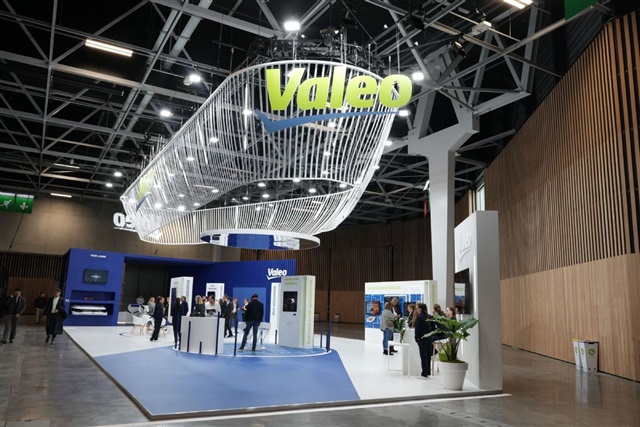
Valeo Redefines Strategy: Focus on AI, Robotics, and Defense
Valeo, a prominent player in the automotive sector, has announced a significant strategic reorganization, aiming to build a "second growth engine." This initiative focuses on three emerging, high-potential areas: AI data centers, robotics, and the defense sector. The decision comes at a time when the transition towards electrification and autonomous driving (E/EA), which has dominated the industry's agenda in recent years, is showing signs of slowing down.
Valeo's strategic shift highlights a broader trend in the global technological landscape: AI is no longer an exclusive domain of large tech companies but a critical infrastructural component permeating traditional industrial sectors. The investment in AI data centers, in particular, reflects the need for robust and scalable computing capabilities to support the development and deployment of Large Language Models (LLM) and other complex artificial intelligence workloads.
The Strategic Importance of AI Data Centers for Critical Workloads
The emphasis on "AI data centers" by a company like Valeo, especially in relation to sectors such as robotics and defense, raises fundamental questions regarding deployment strategies. For applications in these areas, data sovereignty, security, and direct control over infrastructure are often non-negotiable requirements. This prompts many organizations to evaluate self-hosted or on-premise solutions for their AI workloads.
An on-premise deployment offers significant advantages in terms of hardware control, latency, and throughput, crucial aspects for robotic systems requiring real-time responses or defense applications operating in air-gapped environments. Direct infrastructure management also allows for optimizing the Total Cost of Ownership (TCO) in the long term, balancing initial investments (CapEx) with operational costs (OpEx) and ensuring full compliance with stringent regulations.
Robotics and Defense: Specific AI Requirements
The robotics and defense sectors present unique challenges for artificial intelligence implementation. In robotics, AI is fundamental for perception, navigation, and autonomous manipulation. This requires high-speed, low-latency inference capabilities, often executed on specialized hardware at the edge or in local data centers to process large volumes of sensor data in real-time. The availability of sufficient VRAM and high-performance GPU accelerators is essential for managing complex models.
In the defense context, AI can support intelligence analysis, simulation, and autonomous system management. Here, data security and the ability to operate in isolated (air-gapped) environments are of paramount importance. Dedicated data centers allow sensitive data to be kept within controlled boundaries, complying with data sovereignty regulations and minimizing the risks of external attacks. The choice of hardware, from computing power to storage capacity, must be carefully evaluated to meet these stringent requirements.
Future Prospects and Trade-offs in AI Deployment
Valeo's move highlights a growing trend: companies are internalizing AI expertise and infrastructure to maintain control over strategic assets and differentiate themselves. However, building and managing on-premise AI data centers involve a series of trade-offs. They require significant investments in hardware (such as high-performance GPUs), specialized personnel, and cooling and power infrastructures.
For organizations evaluating the adoption of LLMs and other AI solutions, the choice between on-premise, cloud deployment, or a hybrid approach is complex. Factors such as TCO, compliance requirements, desired latency, and future scalability must be carefully analyzed. AI-RADAR offers analytical frameworks on /llm-onpremise to support decision-makers in evaluating these trade-offs, providing neutral guidance to navigate the complexities of AI infrastructure. Valeo's strategy is a clear example of how AI is shaping the industrial future, demanding thoughtful and strategic infrastructural decisions.









💬 Comments (0)
🔒 Log in or register to comment on articles.
No comments yet. Be the first to comment!