A Strategic Step for the AI Chip Supply Chain
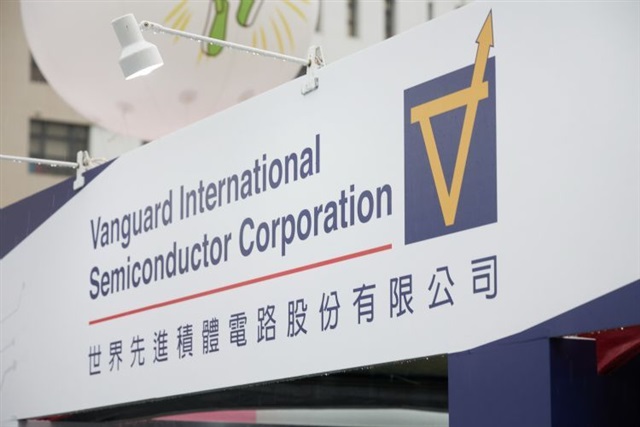
Vanguard International Semiconductor (VIS) has announced its entry into the CoWoS (Chip-on-Wafer-on-Substrate) supply chain, a strategic move that underscores the growing demand for advanced packaging technologies in the semiconductor industry. This expansion materializes through a new interposer foundry located in Singapore, which will operate with the support of TSMC, a global leader in chip manufacturing and advanced packaging solutions. VIS's integration into this supply chain is a clear signal of the importance of strengthening the production capacity of critical components for artificial intelligence hardware.
This announcement comes at a time when the demand for high-performance chips, particularly for Large Language Models (LLMs) and other AI applications, is exploding. The ability to efficiently produce and assemble these components is fundamental to sustaining innovation and the availability of AI solutions. For companies evaluating on-premise LLM deployments, the stability and resilience of the semiconductor supply chain are decisive factors for the Total Cost of Ownership (TCO) and long-term planning.
The Crucial Role of Interposers and CoWoS Technology
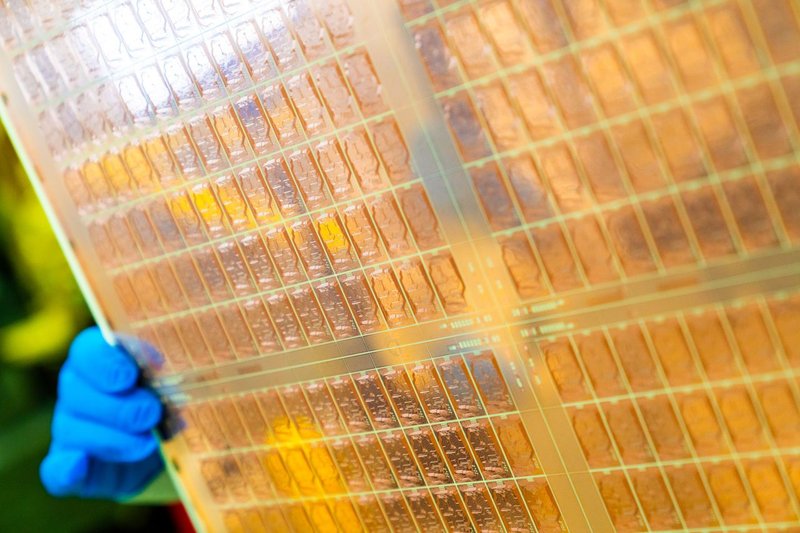
CoWoS technology represents a fundamental innovation in semiconductor packaging, enabling the integration of multiple chips, such as processors and High Bandwidth Memory (HBM) modules, onto a single substrate. At the heart of this technology are interposers, passive components that serve as high-density interconnection bridges between different dies, facilitating extremely fast and low-latency communication. This architecture is indispensable for overcoming the limitations of traditional packaging solutions and for enabling the performance required by next-generation AI accelerators.
HBM integration via CoWoS is particularly critical for LLM workloads, which demand enormous memory bandwidth (VRAM) to handle models with billions of parameters and extended context windows. A chip's ability to quickly access large amounts of data directly impacts inference throughput and training speed. VIS's new interposer foundry in Singapore, with TSMC's support, will help meet this growing demand, ensuring greater availability of these essential components.
Implications for the Supply Chain and On-Premise Deployment
The entry of a new player like VIS into the CoWoS chain, with the backing of a giant like TSMC, has significant implications for the entire global semiconductor supply chain. In a context of strong demand and geopolitical tensions, diversifying and strengthening production capacity in strategic regions like Singapore is crucial. This can help mitigate supply disruption risks and stabilize long-term costs for AI hardware.
For organizations planning on-premise LLM deployments, the availability and reliability of advanced chip supply are key factors. The ability to obtain GPUs with sufficient VRAM and throughput, based on packaging technologies like CoWoS, is directly related to the feasibility and efficiency of their local stacks. A more robust supply chain can translate into greater predictability for infrastructure investments, a fundamental aspect for CTOs and system architects who must balance CapEx and OpEx while ensuring data sovereignty and compliance in air-gapped or self-hosted environments. For those evaluating these scenarios, AI-RADAR offers analytical frameworks on /llm-onpremise to explore the trade-offs between self-hosted and cloud solutions.
Future Outlook and Industry Challenges
The expansion of CoWoS capacity through initiatives like those by VIS and TSMC is a necessary step to support the exponential growth of artificial intelligence. However, the industry continues to face significant challenges, including the need to further scale production, constantly innovate packaging technologies, and manage the complexities of an interconnected global supply chain. Localizing production in different regions can also contribute to greater resilience and a more balanced distribution of technological capabilities.
Ultimately, the ability to mass-produce advanced AI chips, enabled by technologies such as CoWoS and interposers, will be a decisive factor for the future of AI. This development not only strengthens Singapore's position as a technology hub but also highlights the industry's commitment to overcoming production bottlenecks to meet the insatiable hunger for computing power in the age of artificial intelligence.







💬 Comments (0)
🔒 Log in or register to comment on articles.
No comments yet. Be the first to comment!