VRAM for Qwen: An Analysis of On-Premise Hardware Configurations
The question of how much VRAM is necessary to run Large Language Models (LLMs) like Qwen on custom hardware configurations is increasingly central for CTOs, DevOps leads, and infrastructure architects evaluating on-premise deployments. Video memory capacity is a critical factor that determines not only the maximum model size that can be run but also performance in terms of throughput and latency.
This discussion often arises in community contexts, where users seek to optimize their resources for AI workloads. A recently proposed configuration, consisting of 11 NVIDIA RTX 3090 cards, 1 RTX 5090, and 1 RTX 5060 Ti, raises pertinent questions about the adequacy of such a setup for a specific LLM like Qwen. Analyzing this combination allows for an exploration of the typical constraints and trade-offs in self-hosted environments.
Configuration Analysis and VRAM Requirements
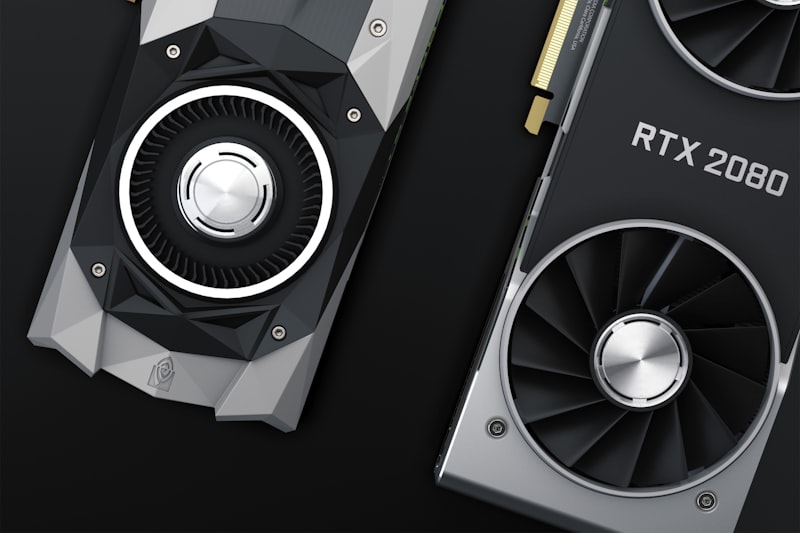
The proposed configuration includes a significant number of NVIDIA RTX 3090 cards, each equipped with 24 GB of VRAM. This makes them popular for AI workloads at a relatively lower cost compared to high-end enterprise solutions. The presence of 5000 series cards (RTX 5090 and RTX 5060 Ti), although not yet released at the time, indicates a forward-looking approach towards future hardware generations and the continuous pursuit of greater capacity and performance.
For an LLM like Qwen, VRAM requirements depend on several factors: the model's size (number of parameters), the level of Quantization used (e.g., FP16, INT8, or even more compressed formats), the length of the context window, and the desired batch size for Inference. Larger models, extended context windows, and bigger batch sizes proportionally demand more VRAM. For instance, a Qwen-72B model in FP16 can require hundreds of gigabytes of VRAM, necessitating multi-GPU configurations with high-speed interconnects.
Implications for On-Premise Deployment
Assembling a system with 13 GPUs, as described, presents significant challenges in an on-premise context. Beyond the total VRAM available, it is crucial to consider the interconnect bandwidth between GPUs (e.g., via NVLink or PCIe) to ensure efficient communication and minimize bottlenecks during distributed model execution. Heat management and power consumption become critical factors, directly impacting the Total Cost of Ownership (TCO) of the infrastructure.
Companies opting for self-hosted deployments often do so for reasons related to data sovereignty, regulatory compliance, or the need to operate in air-gapped environments. In these scenarios, the ability to scale hardware according to specific model and workload needs, while maintaining complete control over the environment, is a key advantage. However, this requires meticulous infrastructure planning, from GPU selection to networking and storage configuration.
Perspectives and Trade-offs
Determining whether the VRAM of a proposed configuration like this is "enough" for Qwen does not have a single answer. It depends entirely on the specific use case: is the goal low-latency Inference for a single user, Fine-tuning a large model, or running a service with high throughput for multiple simultaneous requests? Each scenario imposes different requirements in terms of VRAM, computational power, and I/O speed.
For those evaluating on-premise deployments, it is essential to balance hardware capacity with expected performance and budget constraints. Techniques like Quantization can drastically reduce the VRAM footprint, allowing larger models to run on less expensive hardware, but often at the cost of a slight loss in precision. AI-RADAR offers analytical frameworks on /llm-onpremise to evaluate these trade-offs, helping organizations make informed decisions about their local stacks and deployment strategies.






💬 Comments (0)
🔒 Log in or register to comment on articles.
No comments yet. Be the first to comment!