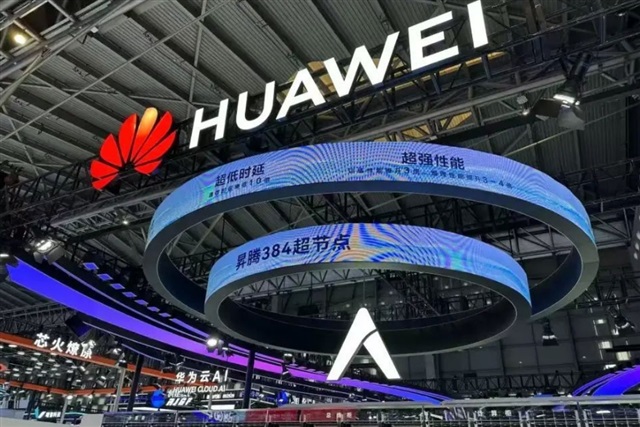
Shanghai, WAIC 2026. It's no longer just about parameter counts. The center of gravity in China's AI race has shifted toward something more concrete: compute supernodes powered by homegrown chips and a decisive push into real-world deployment. A gear change that redefines priorities for the entire ecosystem.
The conference showcased a key concept: the supernode. These are aggregations of domestic accelerators – think Huawei's Ascend lines or Baidu's Kunlun – connected by high-bandwidth interconnects and designed to scale inference of large language models without relying on foreign GPUs. It's an architecture that looks directly at self-hosted setups, moving away from the American-style cloud-centric paradigm.
Why does this shift matter? Because it transforms AI from a research competition into an industrial challenge. Supernodes are not lab testbeds: they are meant to be installed inside factories, energy grids, hospitals, cities. On-premise deployment that brings constraints of space, cooling, maintenance – but also the promise of lower latency and data sovereignty.
The real bottleneck, however, remains memory. Domestic chips, while improved, often provide less VRAM than their NVIDIA counterparts. For LLM inference with large context windows, memory capacity and bandwidth are the discriminating factor. Hence supernode design must balance aggressive quantization, load distribution across multiple nodes, and internal network architecture. A trade-off that directly impacts TCO: less spending on external cloud licenses, but more investment in local infrastructure and integration skills.
From a technological sovereignty perspective, the message is crystal clear. Decoupling from foreign supply chains is no longer a wish but an executing roadmap. Chinese enterprises in regulated sectors – finance, defense, telecoms – can leverage these systems to deploy LLMs without letting data leave the company perimeter. And while Western vendors struggle to meet data residency requirements imposed by GDPR or Chinese regulations, the domestic route shortens the compliance path.
Who gains from this reorganization? First, domestic chip makers, who see rising orders and can iterate faster thanks to a captive market. Local system integrators and software houses specializing in optimization tools (from compilers to model distribution) also find fertile ground. Conversely, NVIDIA and international cloud providers lose a huge market, not so much in current share but in future growth: if supernodes become the standard for industrial AI in China, the need for imported H100 or B200 GPUs will shrink drastically.
A structural aspect worth noting: the supernode as a minimum deployment unit. It echoes the lever of edge micro-datacenters, but with unprecedented computational density. For those evaluating on-premise in other geographies, China's lesson is that hardware autonomy can drive software innovation: lightweight serving frameworks, VRAM optimization techniques, local orchestration. AI-RADAR often observes that the maturity of an on-prem ecosystem is measured by its ability to do inference on non-top-tier hardware, and China is leapfrogging ahead.
One question remains open: how long can domestic chips keep pace with frontier architectures? The race is not just about volumes, but about supporting larger and larger models and ever longer interactions. If the supernode solves deployment today, tomorrow it could become a silent bottleneck. But for Beijing, the calculus is clear: better an imperfect system under your own control than perfect dependence on third parties.






💬 Comments (0)
🔒 Log in or register to comment on articles.
No comments yet. Be the first to comment!