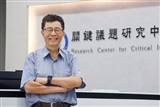
This is not just a laboratory announcement. Academia Sinica, Taiwan’s foremost research body, has decided to bet on industrial scale for quantum chips, leaning on the island’s well-established semiconductor tool ecosystem. The goal is clear: move quantum computing from experimental exercise to a technology that can be manufactured with the same pace and reliability that sustain the entire classical processor industry.
The manufacturing knot
Fabricating quantum chips is not like producing conventional CPUs or GPUs. Qubits – whether superconducting, spin-based, or trapped-ion – demand cryogenic environments, exotic materials, and process tolerances that strain even the most advanced lines. Yet many steps remain strikingly familiar: lithography, thin-film deposition, etching, bonding. This is where Taiwan’s tool base, already honed on nanometer-scale nodes for giants like TSMC, can be adapted. Academia Sinica intends to leverage this installed capacity to move from artisanal production to volumes capable of feeding a broader computing ecosystem, bringing down the cost per qubit and making quantum systems more accessible.
Why it matters for on-premise AI workloads
For an observer focused on on-premise deployment of Large Language Models, the topic might seem distant. But convergence between quantum computing and AI workloads is accelerating. Several hybrid frameworks already explore models where a quantum processor sits alongside GPUs to handle particularly heavy inference or fine-tuning tasks. If manufacturing shifts to industrial volumes, the cost of entry to this hardware drops, and with it the possibility of integrating it into on-premise racks. In a scenario where data sovereignty and pipeline control are non-negotiable, having quantum nodes produced in a geopolitically defined ecosystem (Taiwan) becomes a supply-security factor, much like what already happens for GPUs in self-hosted servers.
The advantage of existing tools
The real competitive edge is not qubit design but the ability to take it into production without building a new supply chain from scratch. Taiwan boasts suppliers of lithography, inspection, and packaging equipment that serve the entire global chip industry. Adapting these platforms to quantum materials and geometries means capitalizing on decades of know-how, avoiding the bottlenecks that have stalled other initiatives. For infrastructure managers assessing the TCO of an AI data center, the outlook is tangible: a more diversified specialized processor supply chain reduces vendor lock-in and provides negotiating leverage on acquisition and maintenance costs.
A look ahead
Academia Sinica’s move signals that quantum is no longer just a physics challenge but a manufacturing engineering problem. If the project reaches the promised scale, the ripple effect will also touch the compute centers that today host GPU clusters for LLMs. On-premise infrastructure, already in the spotlight for handling sensitive data and compliance, could gain quantum accelerators produced in no-longer-artisanal volumes. A trajectory that AI-RADAR will keep monitoring, crossing emerging hardware with deployment strategies that can keep pace with an innovation that does not wait.





💬 Comments (0)
🔒 Log in or register to comment on articles.
No comments yet. Be the first to comment!