
Waymo Expands Fleet with Ojai Robotaxi
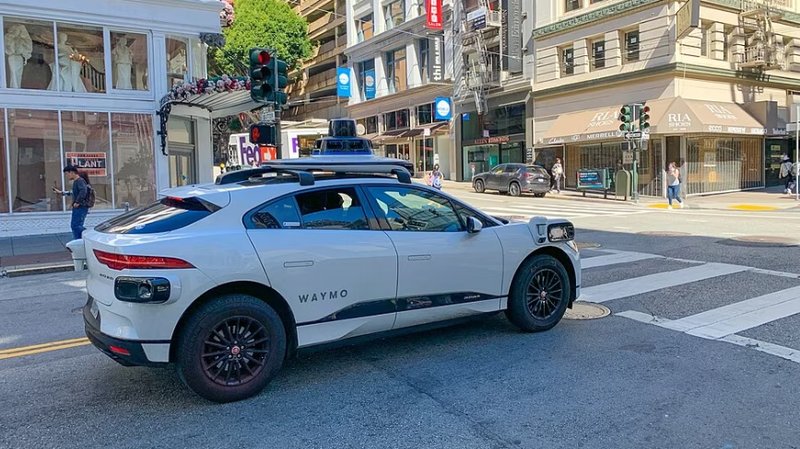
Waymo, Alphabet's pioneering company in the autonomous driving sector, has announced the introduction of its latest robotaxi, named Ojai. These vehicles, characterized by a pale-blue livery, will begin operating for the public starting today, with services active in California and Arizona. The arrival of Ojai marks a significant step in the expansion of Waymo's operations, solidifying its presence in key markets for autonomous mobility.
Waymo's decision to introduce a new robotaxi model highlights the continuous technological and operational evolution in the sector. Each new vehicle represents not only an addition to the fleet but also an opportunity to integrate improvements in user experience and service efficiency. The deployment of Ojai in two key states underscores the company's commitment to scaling its operations and making autonomous driving an increasingly widespread reality.
AI at the Edge: Challenges and Opportunities in Autonomous Vehicles
The operation of a robotaxi like Ojai relies on a complex artificial intelligence architecture that operates in real-time directly on board the vehicle, a paradigm known as AI at the edge. This approach is fundamental to ensuring immediate and safe decisions, processing enormous amounts of data from sensors (cameras, LiDAR, radar) with minimal latency. The need to process data locally reduces reliance on constant, high-bandwidth cloud connections, which is essential for safety and reliability.
To support these capabilities, autonomous vehicles require specialized hardware, often based on silicon designed for accelerating the Inference of machine learning models. VRAM management, processing throughput, and energy efficiency are critical constraints. Companies must balance the complexity of Large Language Models (LLM) or other perception models with available hardware resources, often resorting to techniques like Quantization to reduce model footprint without significantly compromising accuracy. This scenario presents analogies with on-premise deployments, where direct control over hardware and data is a priority.
Manufacturing Context and Supply Chain Implications
A notable aspect of the Ojai robotaxi is its production in China. This choice raises important questions and considerations regarding the global supply chain and geopolitical implications for companies operating in strategic sectors such as autonomous driving. The origin of components and final assembly can influence not only production costs and timelines but also aspects related to cybersecurity and data sovereignty.
For organizations evaluating critical AI deployments, transparency and control over the supply chain become decisive factors. Reliance on external suppliers, especially in complex international contexts, requires careful risk assessment. This is particularly relevant for those adopting self-hosted or air-gapped strategies, where trust in the integrity of hardware and software is paramount. Diversification of sources and understanding supply chains are essential to mitigate potential vulnerabilities and ensure compliance.
Future Prospects and the TCO of Autonomous Mobility
The launch of Ojai by Waymo reflects the maturation of the autonomous mobility market, but also persistent challenges. The large-scale deployment of robotaxi fleets entails a significant Total Cost of Ownership (TCO), which includes not only the initial costs of vehicle acquisition and supporting infrastructure but also operational expenses for maintenance, energy, software updates, and data management. Optimizing these costs is crucial for the long-term sustainability of the service.
For companies considering the adoption of complex AI solutions, whether for autonomous driving or other workloads, a thorough analysis of the trade-offs between cloud and self-hosted solutions is essential. AI-RADAR offers analytical frameworks on /llm-onpremise to evaluate these aspects, providing tools to compare costs, performance, and data sovereignty requirements. The success of initiatives like Ojai will depend not only on technological advancement but also on the ability to effectively manage the entire lifecycle of AI deployment, from silicon to the final service.






💬 Comments (0)
🔒 Log in or register to comment on articles.
No comments yet. Be the first to comment!