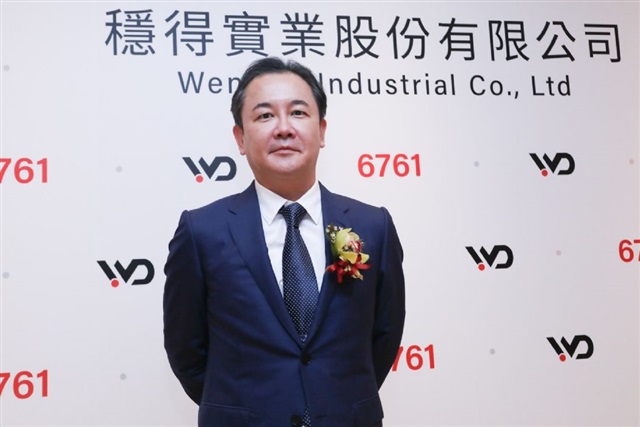
Wendell Industrial Eyes IPO: A Signal from the AI Market
Wendell Industrial, a company known in the AI server testing sector, is finalizing preparations for an initial public offering (IPO) of its high-power lab unit. The news, reported by DIGITIMES and confirmed by Chairman Kao Chih-hung, highlights a period of strong dynamism in the artificial intelligence infrastructure market. This strategic move by Wendell reflects a broader trend: the increasing need for robust and reliable hardware to support increasingly complex AI workloads.
The IPO is primarily driven by the constantly growing demand for rack equipment, essential components for setting up high-performance data centers and computing labs. For companies developing and deploying AI solutions, the availability of advanced testing infrastructures is crucial to ensure the efficiency and reliability of their systems, from Large Language Models (LLMs) to computer vision models.
The Surging Demand for AI Infrastructure
The global artificial intelligence market continues to expand at a sustained pace, fueling unprecedented demand for specialized hardware. AI servers, high-performance GPUs (such as the NVIDIA A100 and H100 series), high-speed storage, and low-latency networking solutions have become indispensable elements for training and inference of AI models. This growth is not limited to large cloud providers but also extends to a growing number of companies choosing to build and manage their own on-premise infrastructures.
The need to test and validate these complex hardware configurations is fundamental. High-power lab units, like Wendell Industrial's, play a key role in ensuring that systems can operate under stress, meeting performance, energy efficiency, and stability requirements. This is particularly true for AI workloads, which can push hardware to its limits, requiring careful calibration and optimization.
On-Premise: Control, Sovereignty, and TCO
Wendell Industrial's push towards an IPO also underscores the increasing importance of on-premise deployments for AI applications. Many organizations, particularly those operating in regulated sectors such as finance, healthcare, or public administration, prefer to maintain direct control over their data and infrastructures. This approach ensures greater data sovereignty, regulatory compliance, and security, aspects often difficult to fully manage in public cloud environments.
Furthermore, for large-scale and long-term AI workloads, the Total Cost of Ownership (TCO) of an on-premise solution can be more advantageous compared to the operational expenditures (OpEx) of the cloud. Although the initial investment (CapEx) is higher, direct hardware management and resource optimization can lead to significant savings over time. For those evaluating on-premise deployments, AI-RADAR offers analytical frameworks on /llm-onpremise to assess the trade-offs between costs, performance, and control.
Future Outlook for AI Hardware
Wendell Industrial's upcoming IPO is a clear indicator of the maturation and expansion of the AI hardware market. The demand for rack equipment and specialized testing services will continue to grow in parallel with the adoption of artificial intelligence across every sector. This scenario drives companies to invest in robust and scalable infrastructure solutions, capable of supporting the training and inference needs of the most advanced models.
The future will likely see further innovation in hardware, with the introduction of new chips and architectures optimized for AI, and a growing emphasis on energy efficiency and sustainability. Companies like Wendell Industrial, which provide essential services for validating these technologies, will be key players in a constantly evolving ecosystem, ensuring that AI infrastructures can meet the performance and reliability expectations demanded by the market.







💬 Comments (0)
🔒 Log in or register to comment on articles.
No comments yet. Be the first to comment!