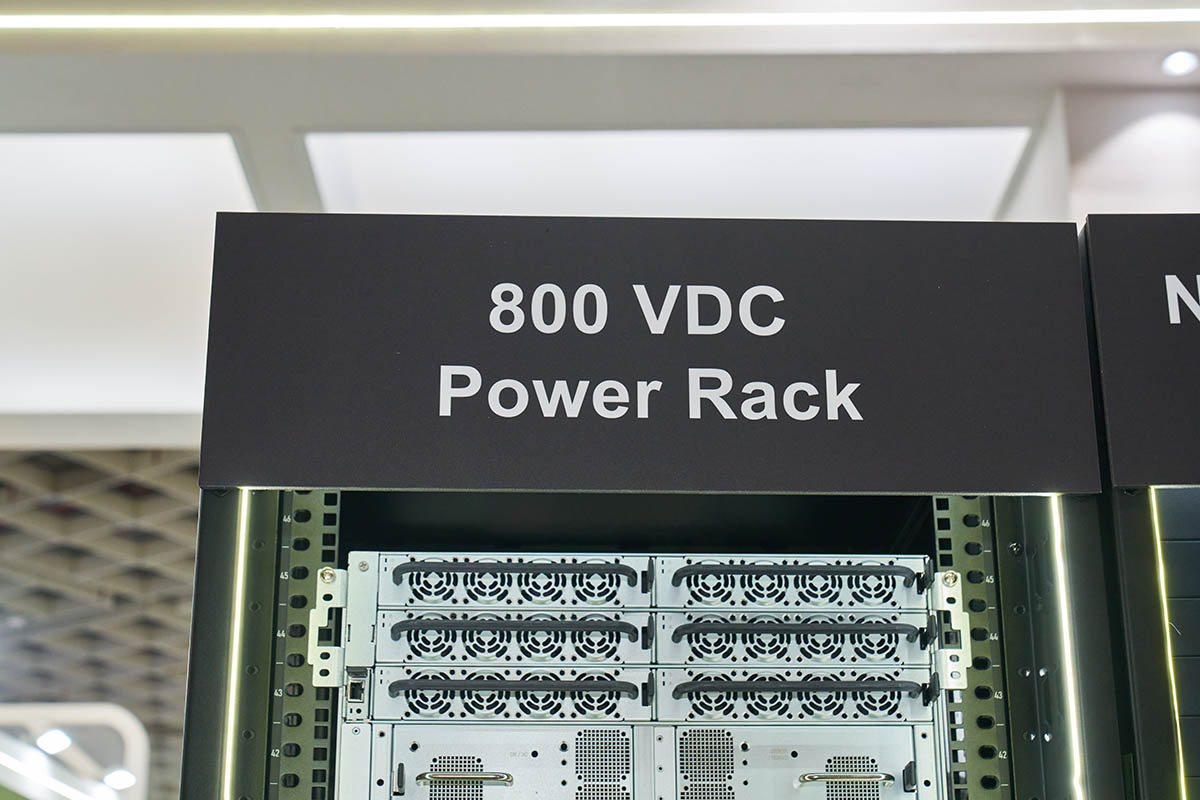
Non bastano più GPU e CPU a piena immersione: ora anche le sbarre di distribuzione della potenza finiscono sotto liquido. Al booth di Wiwynn, l'ultima generazione di componenti DC a 800 V di TE Connectivity ha attirato l'attenzione proprio per questo: il raffreddamento a liquido non è più un optional confinato ai chip, ma diventa parte integrante dell'infrastruttura elettrica che alimenta gli acceleratori AI di prossima generazione.
Il componente sotto i riflettori
Il cuore della dimostrazione è una sbarra (busbar) in grado di gestire carichi fino a 800 V in corrente continua, pensata per convogliare potenze crescenti verso i server che ospitano i carichi di lavoro AI. La novità sta nel sistema di raffreddamento a liquido integrato direttamente nel corpo della sbarra, una soluzione che serve a contenere la temperatura di un componente normalmente passivo ma che, con centinaia di ampere in gioco, diventa a sua volta un generatore di calore non trascurabile.
TE Connectivity e Wiwynn collaborano per portare questo approccio all'interno di rack sempre più densi, dove ogni watt conta e dove la catena di alimentazione deve essere efficiente quanto i processori che serve. Non sono stati diffusi benchmark specifici, ma il passaggio a distribuzione a 800 V è già di per sé un indicatore: tensioni più alte riducono le correnti e quindi le perdite resistive, ma richiedono isolamenti e meccanismi di protezione più sofisticati.
Perché il raffreddamento a liquido arriva sulle sbarre
La spinta arriva direttamente dalle roadmap degli acceleratori AI. I modelli di calcolo attuali, sia per il training che per l'inference su larga scala, stanno portando i consumi delle singole schede ben oltre i 700 W, con proiezioni che per le prossime generazioni superano il kilowatt. In un rack da decine di nodi, la potenza totale può raggiungere decine di kW, e la distribuzione in bassa tensione (48 V o 12 V) comporterebbe correnti ingestibili senza barre di rame massicce e costose. Ecco perché il settore sta migrando verso architetture a 400 V, 800 V e oltre, mutuando in parte soluzioni dall'automotive e dall'industria pesante.
Il problema è che anche una sbarra a 800 V, quando attraversata da migliaia di ampere, scalda. In un ambiente già saturo di calore come un datacenter AI, ogni grado conta. Il raffreddamento a liquido della sbarra non è quindi un vezzo tecnicico ma una necessità per mantenere l'efficienza, evitare punti caldi e, in ultima analisi, permettere densità di potenza altrimenti irrealizzabili con raffreddamento ad aria.
Implicazioni per chi sceglie l'on-premise
Per le organizzazioni che valutano deployment on-premise di infrastrutture AI su larga scala, segnali come questo hanno un peso concreto. La gestione termica è uno dei fattori che più incidono sul Total Cost of Ownership (TCO) e sulla fattibilità stessa di un cluster di training o inference self-hosted. Componenti come busbar raffreddati a liquido promettono di ridurre lo spazio necessario, semplificare la manutenzione e contenere i costi energetici operativi.
Allo stesso tempo, introducono una complessità ingegneristica che richiede competenze specifiche e un ecosistema di fornitori in grado di integrare potenza, raffreddamento e controllo in un unico sistema. Non è un caso che soluzioni di questo tipo emergano da collaborazioni tra specialisti di connessioni elettriche (TE Connectivity) e integratori di rack (Wiwynn): è la prova che la next-gen AI non si gioca solo sui silicio, ma su tutto ciò che gli sta intorno.
Oltre la barra: verso rack completamente liquid-cooled
L'adozione di sbarre DC raffreddate a liquido è l'ultimo tassello di una tendenza più ampia: il passaggio da raffreddamento a liquido selettivo a quello totale. Se fino a ieri si discuteva di raffreddamento diretto solo per CPU e GPU, oggi la frontiera include VRM, moduli di memoria, e ora la distribuzione di potenza. L'obiettivo è ambienti a temperatura controllata con minime perdite di efficienza, fondamentali anche per la sovranità dei dati: chi gestisce carichi sensibili in-house deve poter contare su infrastrutture fisiche affidabili e prevedibili.
Mentre aspettiamo che questi componenti arrivino sul mercato in volumi consistenti, la dimostrazione di Wiwynn e TE Connectivity fissa un punto importante: l'infrastruttura elettrica non è più un commodity dimenticato, ma un terreno di innovazione direttamente proporzionale alla fame di calcolo dell'IA.







💬 Commenti (0)
🔒 Accedi o registrati per commentare gli articoli.
Nessun commento ancora. Sii il primo a commentare!