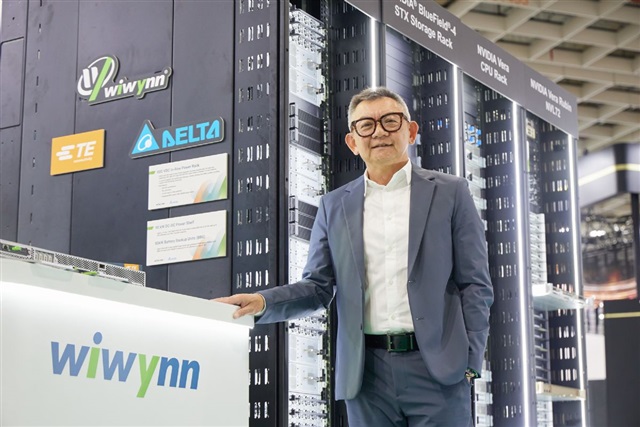
The AI Market: Wiwynn Forecasts Steady Growth
Wiwynn, a prominent server infrastructure provider, recently shared an optimistic outlook on the future of the artificial intelligence market. According to their analysis, the sector will not face a speculative bubble in the next four years, a statement that contrasts with some widespread concerns about a potential market overheating. This forecast is based on the observation of a significant surge in capital expenditures (CapEx) by customers, a key indicator of long-term confidence and investment in the AI segment.
The increase in CapEx suggests that companies are heavily investing in physical assets and dedicated AI infrastructure, rather than relying solely on operational expenditure (OpEx) models typical of cloud services. This orientation is particularly relevant for technical decision-makers, such as CTOs and infrastructure architects, who must plan deployment strategies that balance control, performance, and TCO.
The Impact of Investments on On-Premise Infrastructure
The growing CapEx trend highlighted by Wiwynn has direct implications for on-premise deployment strategies. Companies choosing to invest in their own infrastructure for AI workloads, including Large Language Models (LLMs), often do so for reasons related to data sovereignty, regulatory compliance, and the need for air-gapped environments. An increase in capital expenditures means that organizations are actively acquiring dedicated hardware, such as high-performance GPUs with ample VRAM, bare metal servers, and high-speed storage solutions, to build and manage their local AI stacks.
This approach allows for granular control over the entire development and deployment pipeline, from training to inference. However, it requires meticulous planning regarding infrastructure procurement, installation, and management, including aspects such as power, cooling, and network connectivity. The choice between an on-premise deployment and cloud-based solutions thus becomes a complex strategic evaluation, where TCO and specific workload requirements play a fundamental role.
Hardware Specifications and Requirements for AI Workloads
The expansion of investments in AI infrastructure translates into a growing demand for hardware with well-defined specifications. For LLM training and inference, GPUs are at the forefront, with stringent requirements in terms of VRAM, compute capability (e.g., Tensor Cores), and memory bandwidth. Models like NVIDIA's H100 or A100, with their 80GB VRAM configurations, have become de facto standards for intensive workloads, enabling the management of increasingly larger models and extended context windows.
Beyond GPUs, the efficiency of an on-premise AI deployment also depends on high-speed networking, often based on InfiniBand or 400Gbps Ethernet, to ensure high throughput between compute nodes. Storage also plays a crucial role, with all-flash NVMe solutions minimizing latency in accessing datasets. The correct integration of these components is essential to optimize performance, both in terms of tokens/sec for inference and training time for more complex models.
Future Outlook and Strategic Deployment Decisions
Wiwynn's vision of sustained AI growth for the next four years reinforces the need for companies to adopt a long-term infrastructure strategy. This involves not only selecting the most suitable hardware but also defining resilient and scalable architectures capable of evolving with the demands of AI models. The evaluation of trade-offs between CapEx and OpEx, between total control and flexibility, is at the heart of technological leaders' decisions.
For those evaluating on-premise deployments, AI-RADAR offers analytical frameworks on /llm-onpremise to understand the trade-offs between control, cost, and scalability. The ability to autonomously manage infrastructure, implement techniques like quantization to optimize VRAM usage, and leverage Open Source frameworks for orchestration are all elements that contribute to a favorable TCO and greater data sovereignty. Wiwynn's forecast suggests that these strategic investments will continue to generate value for an extended period.










💬 Comments (0)
🔒 Log in or register to comment on articles.
No comments yet. Be the first to comment!